



Identity & Access Management
Articles on managing identity and access across complex, shared-device environments.
.webp)
Featured
What is Privileged Identity Management (PIM)?
Privileged identity management (PIM) governs the lifecycle of elevated access roles: who holds them, under what approval, and for how long. This guide covers how PIM differs from PAM and IAM, how the role lifecycle works from request through automatic revocation, and why PIM breaks down in shared-device and frontline environments where multiple workers share terminals. It covers compliance requirements under HIPAA, PCI DSS, SOC 2, and NIST 800-53, and explains what individual-level attribution actually requires at the point of access. Practical best practices and a phased starting point are included.


What is Identity Lifecycle Management?
Identity lifecycle management (ILM) governs every digital identity in an organization from creation to deactivation, covering employees, contractors, vendors, and non-human identities. This guide covers the joiner-mover-leaver model, what breaks when ILM is poorly managed: orphaned accounts, privilege creep, stale access, and why the standard model struggles in high-turnover, shared-device environments. It covers compliance exposure under HIPAA, PCI DSS, and CMMC, and explains how passwordless authentication closes the individual attribution gap that shared terminals create.
%20(convert.io).webp)
What is Identity Governance and Administration (IGA)?
Identity governance and administration (IGA) is the framework organizations use to define, review, and document who has access to what, across the full identity lifecycle. It sits above IAM, providing the policy layer that decides what access should exist, not just whether it works. Core IGA capabilities include access certifications, SoD enforcement, lifecycle management, and audit-ready compliance reporting for HIPAA, SOX, GDPR, and PCI DSS. This guide covers what IGA means, how it differs from IAM, what a working program includes, and where standard IGA assumptions break down in shared-device and frontline operational environments.
MFA vs Adaptive MFA
MFA vs adaptive MFA is one of the most consequential authentication decisions organizations face as credential-based attacks continue to accelerate. Traditional MFA applies a fixed second-factor challenge to every login regardless of context, while adaptive MFA evaluates real-time risk signals and adjusts the authentication requirement per attempt. This blog covers how both approaches work, where traditional MFA still holds up, where adaptive MFA has a clear operational advantage, and why the gap between them is most visible in shared-device and frontline environments. It also covers the passwordless-plus-adaptive combination and what to actually evaluate when selecting a solution.
IAM vs PAM: What's the Difference
IAM and PAM are two foundational access management disciplines that organizations frequently conflate, but they govern different users, different risks, and different layers of the security stack. IAM manages identity and access for the entire workforce. PAM focuses specifically on privileged accounts with elevated access to critical systems and data. Most organizations underestimate the gap between their IAM coverage and what PAM is actually designed to protect. That gap widens significantly in shared-device and shift-based environments such as healthcare, manufacturing, logistics, and retail, where standard access management assumptions break down. This guide covers what IAM and PAM are, how they differ, where each falls short on its own, and what organizations in high-stakes environments need to get both right.
.webp)
What is Active Directory (AD)? A Security-Focused Guide
Active Directory is Microsoft's centralized identity and access management service, and the most targeted piece of infrastructure in modern ransomware attacks. This guide covers how AD works, how attackers move through it using techniques like Pass-the-Hash, Kerberoasting, Golden Tickets, and DCSync, and what the business impact of a breach looks like in operational environments. It also addresses where standard AD security models break down in shared-device and frontline workplaces, and how AD hardening maps to a Zero Trust architecture.

What is OCR? A Guide for Identity-Driven Environments
Optical character recognition converts scanned images and printed documents into machine-readable, editable data, eliminating manual re-entry and making static content actionable. Most organizations understand OCR as a document tool but underestimate its role as the first step in identity verification and access control workflows. This guide covers how OCR works at a technical level, the four types of OCR technology, where accuracy degrades in operational environments, and how OCR connects to passwordless authentication and IAM in shared-device and frontline workplaces.

Healthcare IAM Best Practices: A Step-by-Step Guide
Healthcare identity and access management governs who authenticates into clinical systems, what they can access, and how long that access stays active. Most healthcare organizations underestimate where their IAM programs actually fail: orphaned contractor accounts, shared workstation credentials, manual audit prep, and access models that were never designed for rotating frontline workforces. This guide covers the healthcare IAM best practices that address both the security and operational gaps, from RBAC and MFA to automated provisioning, HIPAA compliance mapping, and purpose-built access control for shared-device and high-turnover environments.
Identity Proofing vs Identity Verification: Key Differences and Why You Need Both
Identity proofing establishes that a claimed identity is real and belongs to the person presenting it, once, before access is granted. Identity verification confirms the same proofed person is present at every login, transaction, and sensitive event afterward. Confusing the two leaves organizations exposed on both ends: fake hires and synthetic identities enter through weak proofing, while account takeover exploits weak verification. This guide breaks down how each process works, the NIST IAL/AAL framework behind them, how they differ from authentication and KYC, and why shared-device frontline environments need both redesigned.
Identification vs Authentication: Key Differences Explained
Identification and authentication are two sequential steps that decide who gets into a system. Identification is the claim of identity, and authentication is the proof behind it. This guide explains what each term means, how the two differ, how they work with authorization, and where they behave differently on shared devices. It covers the types of identification, the three authentication factor categories, a real login flow, and the failure points shared logins create in healthcare, manufacturing, logistics, and retail. Getting identification vs authentication right is the foundation of secure, low-friction access.
LDAP vs Active Directory: What's the Difference?
LDAP and Active Directory are often used interchangeably, but they solve different problems. LDAP is the protocol that lets applications query and authenticate against a directory. Active Directory is Microsoft's directory service that uses LDAP, alongside Kerberos, to manage users, devices, and policies. This guide breaks down how the two relate, when to use each, and where their legacy design starts to strain in shared-device and frontline environments.
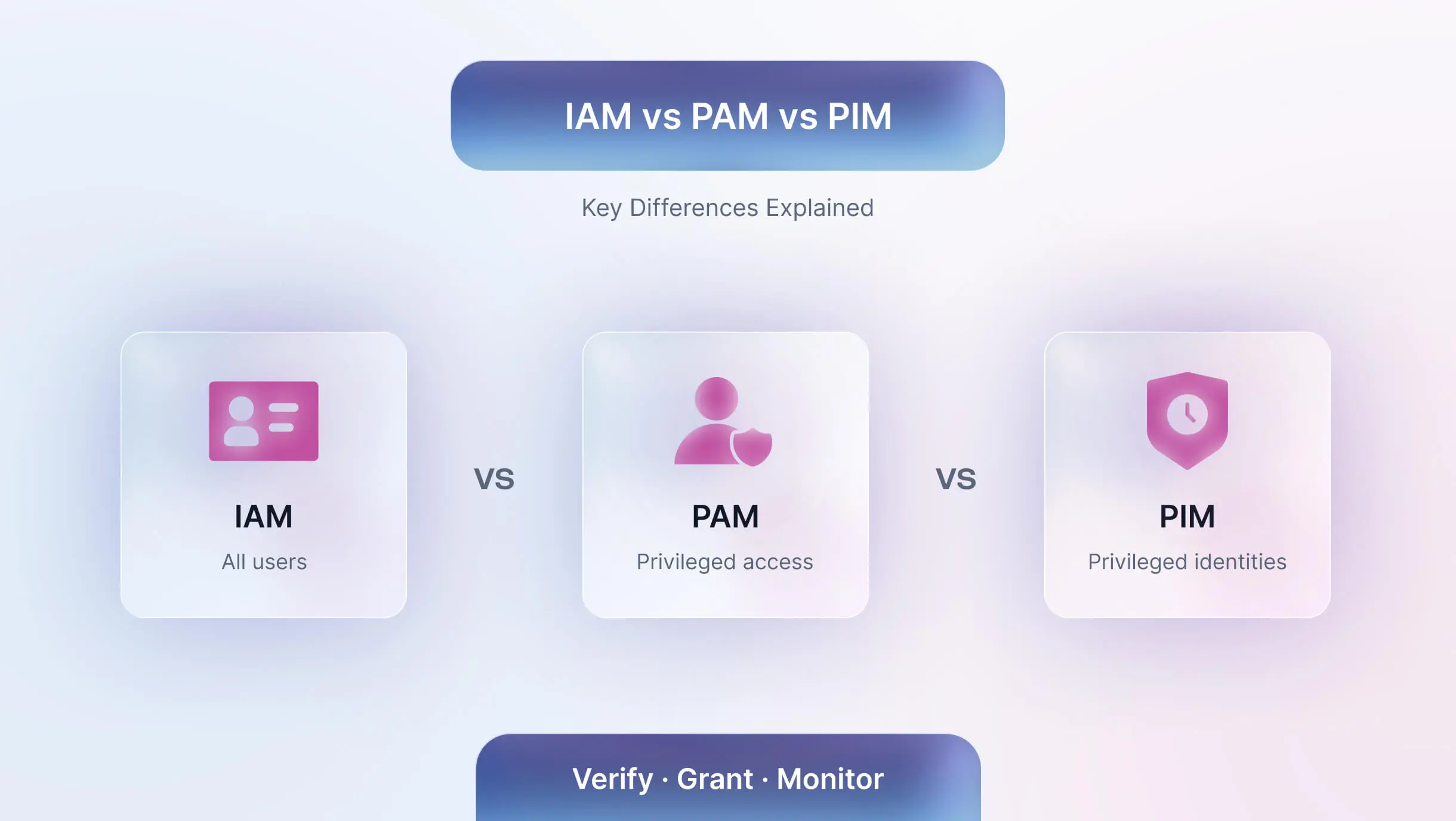
IAM vs PAM vs PIM: Key Differences Explained
IAM, PAM, and PIM get used interchangeably, but each governs a different layer of access. This guide breaks down what each framework actually controls, clears up the hierarchy confusion found across most vendor content, and shows how they work together. It also covers where standard IAM, PAM, and PIM assumptions break down in shared-device and frontline environments common in healthcare, manufacturing, logistics, and retail.

Why Shared Devices Break Traditional IAM (And What Comes Next)
Every IAM system sold in the last two decades was built on a quiet assumption: one person, one device. On the frontline, that assumption has never been true.

Care Without Friction: How Verified Trust is Modernizing Clinical Identity
OLOID and Ping Identity's Verified Trust for Clinical Workforce replaces legacy identity infrastructure with a cloud-native framework built for modern care. Verified onboarding cuts enrollment from days to minutes, with portable credentials that travel across facilities. Passwordless Tap-and-Login delivers seamless access to shared workstations and EHRs, with stepped-up assurance only when needed. Self-service recovery closes a leading healthcare attack vector.
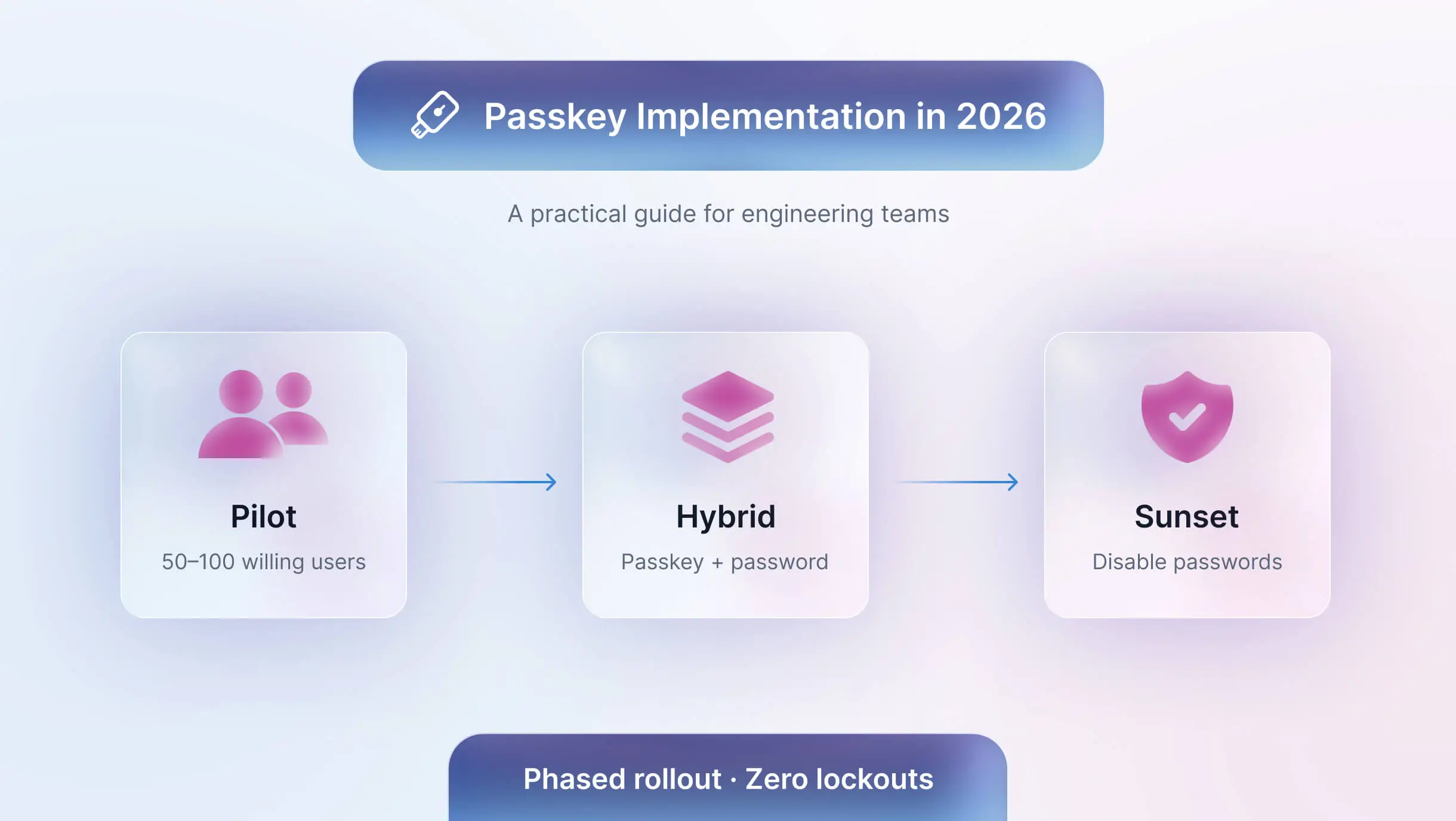
Passkey Implementation: A Practical Guide for Engineering Teams in 2026
Most engineering teams know passkeys work. The harder question is how to ship them in production without stalling on the details that actually matter. This guide walks through how passkeys compare to your existing auth stack, the build vs. buy decision, and how to design an account recovery flow that does not reintroduce risk. It also covers a phased rollout approach and why standard passkey assumptions break down in shared device and frontline environments.

How to Evaluate, Strengthen, and Future-Proof Your Identity Provider Security
Identity provider security governs every authentication decision an organization makes: who gets in, what they can access, and whether the system granting that access can itself be trusted. When IdP security is strong, credentials stay centralized, access is auditable, and attackers have no easy path in. When it is weak or poorly configured, a single compromised IdP hands attackers authenticated access to every connected application at once. This guide covers how identity providers work, what securing them actually requires, where most deployments leave gaps, and why environments with frontline workers and shared workstations demand a different approach to IdP security altogether.
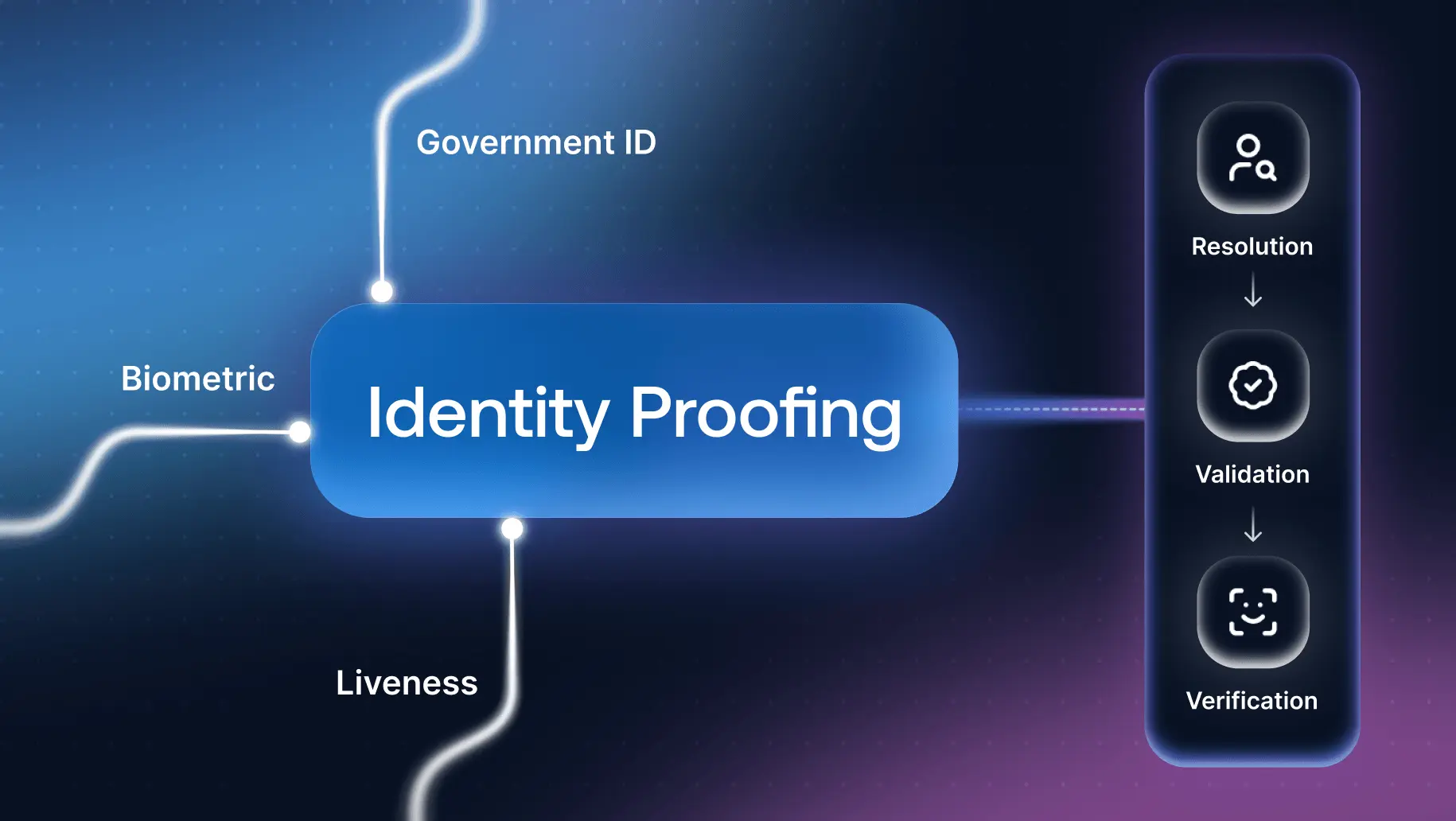
What is Identity Proofing? A Complete Guide
Identity proofing governs the foundational question every access decision rests on: Is this person actually who they claim to be? When proofing runs well, only verified individuals get credentials, onboarding is secure, and account recovery cannot be exploited. When it runs poorly, synthetic identities slip through, help desk attacks succeed, and unauthorized access goes undetected for months. This guide covers the NIST proofing process, key verification methods, compliance obligations, and what identity proofing looks like when traditional verification flows break down.
What is User Provisioning and Deprovisioning?
Provisioning and deprovisioning govern the full identity lifecycle, from the moment a user gets access to the moment that access is removed. When these processes run well, the right people get in, and former employees get out, automatically and immediately. When they run poorly, orphaned accounts, privilege creep, and credential exposure fill the gap. This guide covers the JML framework, SCIM automation, compliance obligations across GDPR, HIPAA, and SOX, and the metrics that tell you whether your program is actually working.

What Is LDAP? How It Works and When to Use It
LDAP is the open, vendor-neutral protocol that enterprises have relied on for over 30 years to store user credentials, authenticate identities, and authorize access to resources. It organizes directory data in a hierarchical tree structure and supports two authentication methods: simple authentication and SASL. While LDAP remains foundational for legacy applications, Linux servers, and on-prem infrastructure, its plain-text default transmission and on-prem design create real security and scalability challenges.
RBAC vs ABAC vs PBAC: The Complete Guide to Access Control
RBAC, ABAC, and PBAC are the three primary access control models organizations use to govern who can access what. RBAC is simple and role-driven. ABAC is dynamic and context-aware. PBAC centralizes access logic into organization-wide policies. Most mature organizations layer all three rather than relying on one model alone. Choosing the wrong model, or inheriting one without evaluating it, creates security gaps that compound silently over time. In environments where shared devices and rotating workforces are the norm, the stakes of that decision are even higher.
.webp)
Policy-Based Access Control (PBAC): How It Works and Why It Matters
Policy-based access control is a dynamic authorization model that governs access through centrally defined policies combining user roles, resource attributes, actions, and environmental context. Unlike RBAC, which assigns permissions at the role level, PBAC evaluates every access request in real time against the full context of who is asking, what they want, and under what conditions. While PBAC delivers significant gains in security, auditability, and compliance alignment, it requires disciplined policy governance and careful testing before rollout.
What Is Just-in-Time (JIT) Access? A Complete Guide
Just-in-time access ensures that user access is granted only when needed, instead of relying on permanent access that stays active unnecessarily. It replaces traditional access control methods by introducing time access and moving toward zero standing access across systems. With JIT access, users request temporary access to specific resources such as access to production or other sensitive systems. Access is approved based on defined access control policies and is automatically revoked once the task is completed. This approach helps reduce unnecessary access and minimizes the risk of unauthorized access to privileged accounts.

What is Just-in-Time Provisioning? How It Works & When to Use It
Just-in-time provisioning is a modern approach to user account creation that eliminates delays by provisioning users at login instead of in advance. It relies on identity providers and SSO workflows to assign access instantly based on real-time identity data. While JIT provisioning improves onboarding speed and reduces IT workload, it does not handle the full identity lifecycle. Organizations often combine it with SCIM provisioning to manage updates and deprovisioning.
What is Least Privilege Access? Definition, Benefits, and Implementation
Least privilege access is a security principle that ensures users, applications, and systems receive only the minimum permissions required to perform their tasks. By limiting unnecessary access rights, organizations reduce their attack surface and lower the risk of privilege misuse or credential compromise. The approach helps prevent attackers from escalating privileges or moving laterally across systems after a breach. Least privilege is also a foundational component of modern zero trust security and identity access management strategies.
.webp)
What is Cloud Identity and Access Management (IAM)? A Complete Guide
Cloud identity and access management plays a central role in modern cloud security by verifying identities and controlling access across cloud environments. As enterprises adopt more cloud services, a well-designed IAM system enhances security through role-based access control, lifecycle management, and continuous monitoring while closing gaps in identities and access across frontline and shared environments.
.webp)
What is Zero Trust Network Access? A Complete Guide for Modern Enterprises
This guide explains Zero Trust Network Access (ZTNA), why traditional VPN-based security falls short, and how identity-driven access works in modern enterprises. It walks through ZTNA architecture, core principles, deployment models, and real-world use cases. The article highlights how ZTNA limits lateral movement and secures remote, cloud, and shared environments. It also shows how OLOID strengthens Zero Trust in shared workstation scenarios with continuous identity assurance.

Digital Identity Verification: A Complete Guide to Remote Identity Proofing
Digital Identity Verification enables organizations to confirm user identities remotely without physical presence or passwords. Businesses implement this technology to prevent fraud, accelerate onboarding, and meet global KYC/AML compliance requirements. This guide explores verification methods, implementation strategies, real-world applications, and best practices for success. Compliance officers, fintech executives, and security teams gain actionable frameworks for deploying robust identity verification across digital channels.


What is SCIM? The Complete Guide to System for Cross-domain Identity Management
SCIM, or System for Cross-domain Identity Management, is an open standard protocol that automates user provisioning and deprovisioning across cloud applications. This blog explains how SCIM eliminates manual identity management tasks, reduces security risks, and streamlines employee lifecycle workflows. Learn the implementation strategies, real-world use cases, solutions to common challenges, and best practices for deploying SCIM effectively in your organization.

Federated Identity Management: Complete Guide to Secure Cross-Domain Authentication
Federated Identity Management enables secure authentication across multiple organizations without creating separate accounts for each system. This blog explores how FIM works, key protocols like SAML and OAuth, implementation steps, real-world use cases, and best practices. Learn how enterprises use federation to reduce password fatigue, enhance security, and streamline access across cloud applications and partner ecosystems.

LDAP vs ADFS: Differences, Use Cases, and How to Choose the Right Approach
LDAP and ADFS represent fundamentally different approaches to enterprise authentication and identity management. LDAP provides directory-based authentication for on-premises systems, while ADFS enables federated identity with single sign-on capabilities. This guide compares architectural differences, protocol support, and use cases for both systems. Learn when each approach fits best and how modern identity platforms bridge traditional and cloud-native authentication requirements.

Credential Rotation: What It Is, Why It Matters, and How to Implement It
Credential rotation systematically replaces passwords, keys, and tokens to limit exposure from compromised credentials. Organizations face growing risks from static credentials that attackers exploit for unauthorized access. This guide explains rotation concepts, benefits, implementation steps, and automation strategies. Learn the best practices for rotating different credential types and building enterprise policies that strengthen security posture.

Making every day-in-the-life of frontline workers frictionless & secure!
Get the latest updates! Subscribe now!
