




MFA vs Adaptive MFA

Key Takeaways
- Traditional MFA applies the same challenge to every login regardless of context, creating predictable patterns that attackers have learned to exploit through MFA fatigue, SIM-swapping, and real-time phishing kits.
- Adaptive MFA evaluates risk signals in real time and adjusts the authentication challenge accordingly: seamless for low-risk sessions, strict for high-risk ones.
- Shared-device and frontline environments expose the biggest gap in traditional MFA, where session-level identity verification matters more than device-level authentication.
- Combining passwordless authentication with adaptive session controls removes the phishable password layer and extends risk-based verification throughout the session lifecycle, not just at login.
- When evaluating solutions, risk scoring depth, failure mode handling, and specific compliance alignment (NIST 800-63, HIPAA, PCI-DSS) matter more than feature lists.
A security analyst at a logistics company pulls up the access logs on a Monday morning. Over the weekend, the same warehouse terminal logged 14 separate sessions. Different workers, different shifts, same device. Every session used the same OTP flow and the same static challenge, regardless of who was using the terminal or what they were trying to access.
Then she spots it: Session 11, 2:47 AM. A login that cleared MFA without issue, but accessed inventory records no warehouse worker on that shift had any reason to open. It has the signature of a hijacked session, not a stolen password.
Traditional MFA said yes. The credential was valid, the OTP was entered correctly, and access was granted. But something was clearly wrong, and the system had no way to flag it.
Credential compromise remains a significant security concern. According to the IBM 2024 Cost of a Data Breach Report, stolen or compromised credentials were the most common initial attack vector, responsible for 16% of all breaches globally, and those breaches took the longest to identify and contain at an average of 292 days. Nearly ten months before anyone even knew the door had been left open.
Multi-Factor Authentication (MFA) is a security process that requires users to verify their identity using two or more independent factors before access is granted: something they know, something they have, or something they are. Adaptive MFA builds on that foundation by adding a real-time risk engine: it evaluates contextual signals per login attempt and adjusts the authentication challenge based on actual risk, not just credential validity.
This blog breaks down how both approaches work, where each holds up, and where the difference between them becomes operationally significant.
What is Traditional MFA?
MFA became a baseline security control for protecting access beyond passwords alone. The logic is simple: even if a password is stolen, a second factor stops the attacker cold.
The Three Factor Types
- Something you know: password, PIN, security question
- Something you have: OTP via SMS or email, TOTP app, hardware security key
- Something you are: fingerprint, facial authentication, behavioral biometrics
Why It Became the Default
MFA spread quickly because it was easy to deploy, easy to explain to users, and immediately better than passwords alone. It satisfied compliance checkboxes across PCI-DSS, HIPAA, NIST, and SOC 2. For years, adding a second factor was considered enough. For most environments at the time, it was.
What is Adaptive MFA?
Adaptive MFA builds on the MFA foundation by introducing a risk engine that runs before deciding which authentication challenge to apply, or whether to challenge at all.
How the Risk Engine Works
Every login attempt triggers a real-time risk assessment. The engine calculates a risk score and routes the attempt to one of four outcomes:
- Low risk → seamless access, no prompt
- Medium risk → silent background check or soft challenge
- High risk → step-up authentication required (biometric, TOTP, hardware key)
- Very high risk → access blocked, security team alerted
What Signals It Evaluates
The engine ingests contextual data across multiple dimensions:
- Device fingerprint (registered or unknown?)
- Geographic location vs. the user's historical pattern
- IP address reputation (flagged ranges, Tor exit nodes, anonymizing proxies)
- Time of access vs. typical login behavior
- Impossible travel detection (two logins from distant locations within an implausible window)
- Network type (corporate VPN, public Wi-Fi, unmanaged home network)
- Behavioral patterns (navigation speed, keystroke rhythm, session anomalies)
- Consecutive failed authentication attempts
The system builds a baseline over time for each user. Deviations from that baseline raise the score. Normal patterns keep it low.
MFA vs Adaptive MFA
| Dimension | Traditional MFA | Adaptive MFA |
|---|---|---|
| Authentication flow | Fixed, same for every login | Dynamic, adjusted per risk score |
| Risk assessment | None | Continuous, multi-signal |
| User experience | Consistent friction for all | Friction proportional to actual risk |
| Phishing resistance | Partial (depends on factor type) | High, especially with behavioral signals |
| Insider threat detection | Limited | Built-in via behavioral baselines |
| Impossible travel detection | Not available | Common adaptive risk signal |
| Compliance audit trail | Standard logs | Rich contextual event data |
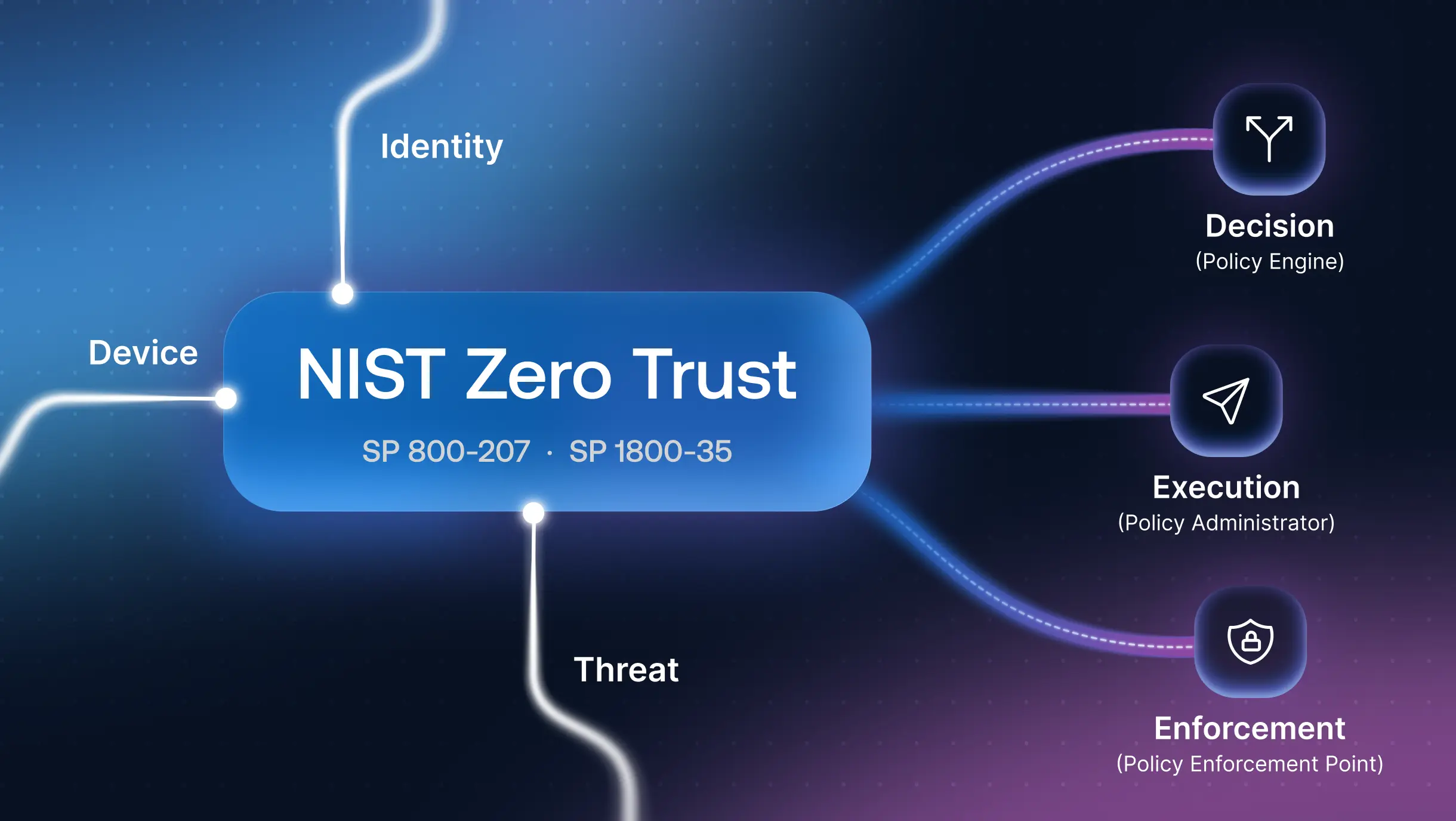
| Zero Trust alignment | Supports Zero Trust principles | Strong alignment with risk-based access |
| Best fit | SMBs, legacy apps, compliance mandates | Enterprises, cloud apps, high-risk or high-volume environments |
The sharpest difference is in what each approach assumes. Traditional MFA assumes every login carries the same risk. Adaptive MFA assumes no two logins are identical and responds accordingly.
Where Traditional MFA Still Holds Up
Traditional MFA continues to deliver meaningful protection in specific contexts:
- Small or controlled user bases where login behavior is predictable and the cost of adaptive infrastructure outweighs the benefit
- Legacy applications that cannot integrate with a risk-scoring engine without significant refactoring
- Compliance-first mandates where the regulatory requirement specifies MFA without prescribing a sophistication level
- Internal workforce tools where friction is acceptable, and the threat profile is low
For organizations at the beginning of their identity security journey, well-configured MFA using stronger factors such as hardware security keys or other phishing-resistant authenticators is a strong starting point
Where Adaptive MFA Wins
High-Volume Consumer and Enterprise Apps
In high-volume environments, applying the same second-factor challenge to every attempt creates compounding friction, inflates SMS costs, and drives abandonment. Adaptive MFA lets low-risk sessions through without interruption and reserves the challenge for the attempts that actually warrant it.
Regulated Industries: Healthcare, Manufacturing, Financial Services
In healthcare, a clinician accessing patient records on a trusted hospital network during a shift should not face the same friction as someone attempting remote access from an unrecognized device at midnight. In financial services, PSD2 Strong Customer Authentication requirements in Europe have made risk-based authentication the expected standard. NIST guidance emphasizes matching authentication strength to the level of assurance required, which can inform how organizations design risk-based authentication policies.
Shared-Device and Frontline Environments
This is where the gap between the two approaches becomes most operationally significant.
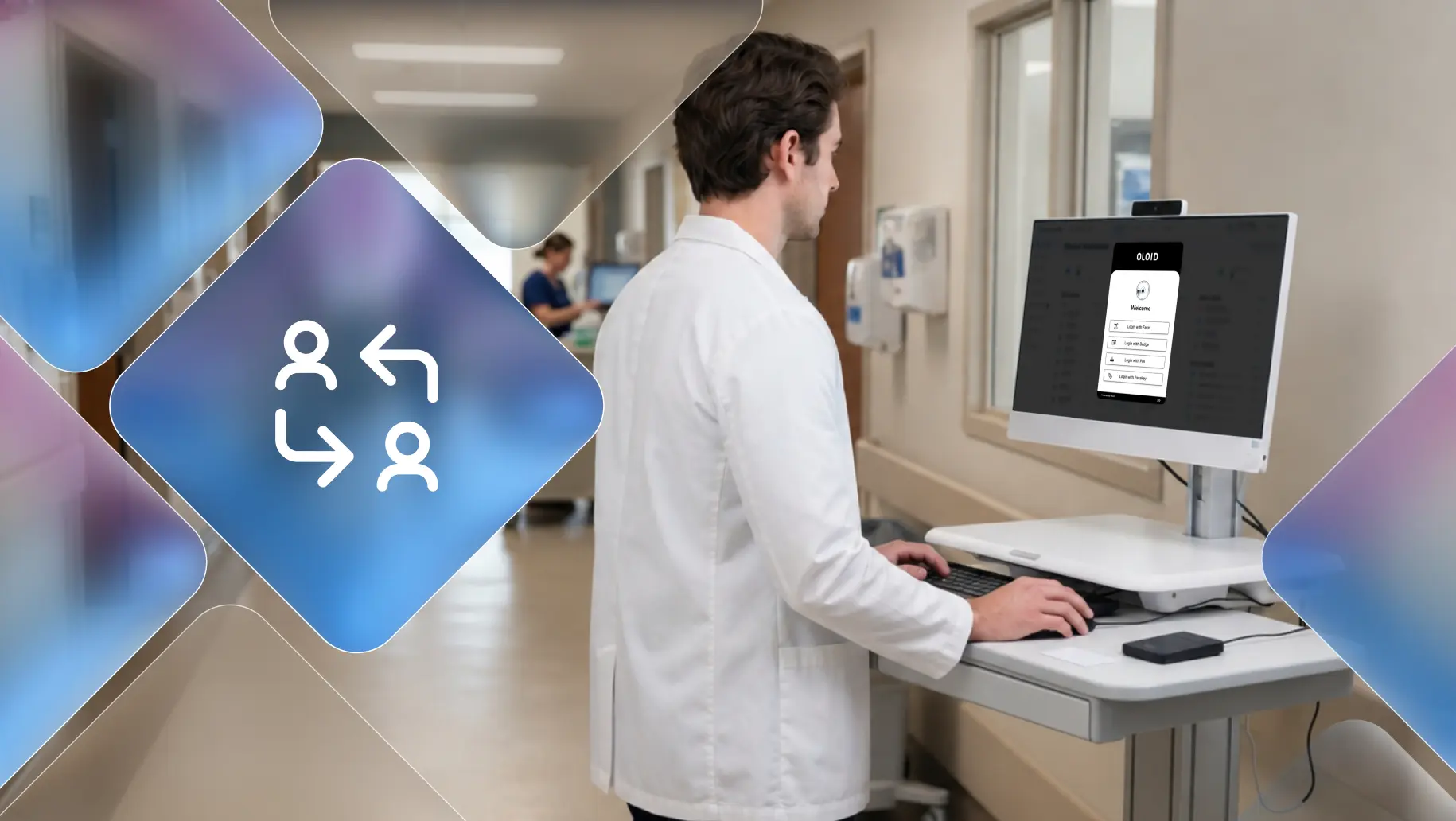
In environments where multiple workers share a single terminal across shifts, traditional MFA creates a recurring problem: authentication is tied to the device session, not the individual. A nurse in a hospital wing, a logistics worker clocking into a warehouse terminal, a retail associate at a point-of-sale station- each needs their identity verified per session, not per device. A static OTP model can become cumbersome in these environments because each worker may need to complete a separate authentication flow at every handoff.
Adaptive MFA evaluates each login attempt independently. It can recognize that the same device is being used by a new session after a shift change and apply appropriate verification without requiring the same level of friction that would apply to a completely unknown access attempt. OLOID’s phishing-resistant MFA, built specifically for frontline and shared-device environments, layers this kind of session-level identity verification into workflows where standard IAM tools were never designed to operate.
The Passwordless and Adaptive Combination
Most discussions of MFA vs adaptive MFA assume a password sits underneath both. Increasingly, it does not.
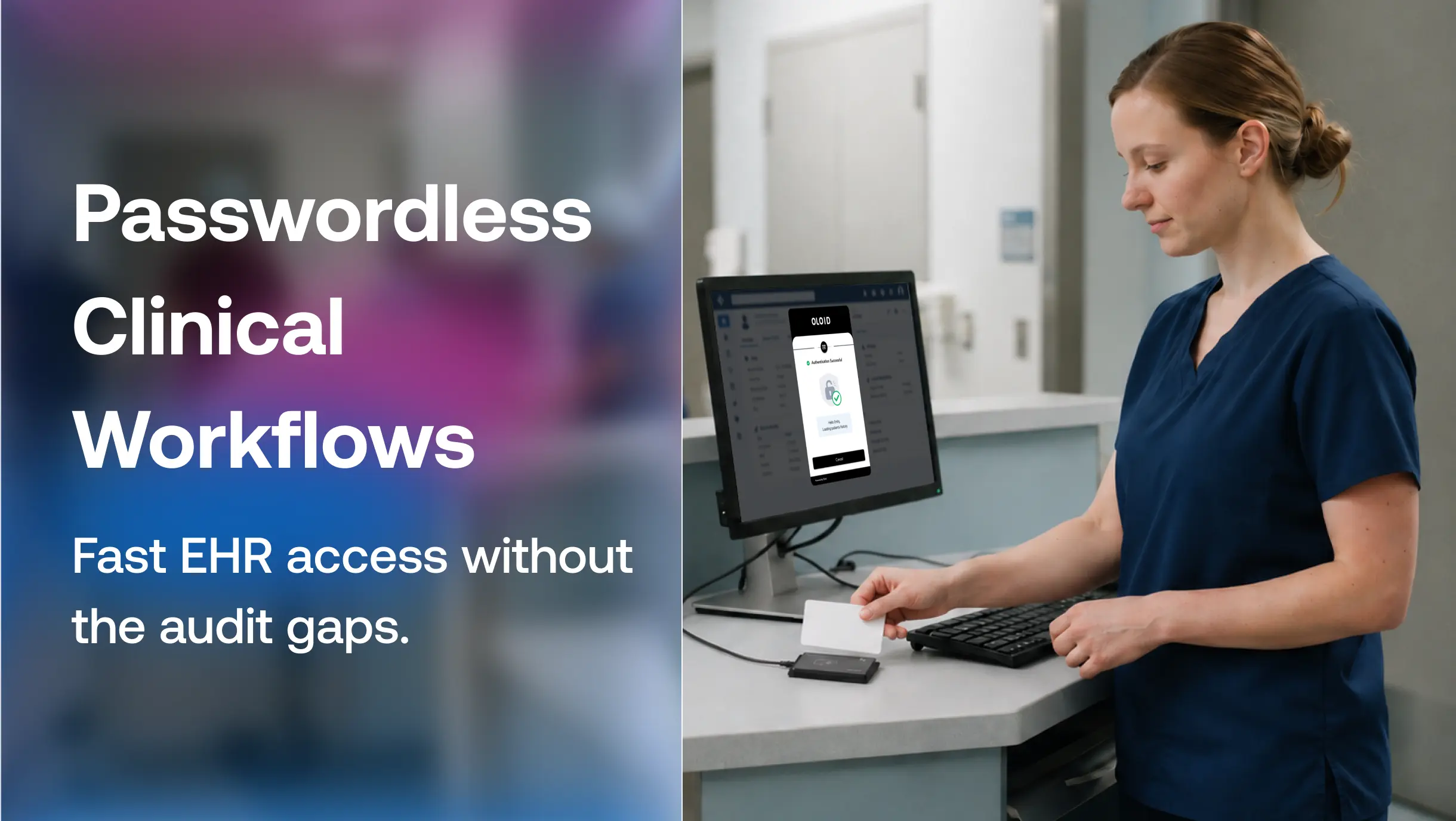
When passwordless authentication (FIDO2, passkeys, biometrics, badge tap) replaces the password as the primary factor, adaptive logic shifts to governing session elevation rather than gatekeeping login. A user authenticates via fingerprint or badge. The adaptive engine monitors session behavior. If something changes, for example: access to a resource outside the user's normal scope, a behavioral deviation mid-session, a privilege escalation attempt, the system responds with step-up verification.
It removes the phishable password layer entirely, and it applies risk-based controls at session level rather than only at login. That's a form of continuous authentication, not a one-time check. For frontline workers who cannot carry personal devices or authenticate via TOTP apps, passwordless-first authentication paired with adaptive session controls is a more practical architecture than a password layer with a second factor bolted on.
Implementation: What to Evaluate in a Solution
Risk Scoring Depth
Not all risk engines are equal. Evaluate how many signal types the engine ingests, whether it builds individual user baselines or uses population-level heuristics, and how quickly it adapts when behavior changes legitimately (a user traveling for work, a shift schedule change, a new device rollout).
Failure Mode Handling
Every risk engine produces false positives and false negatives. A false positive locks out a legitimate user at the wrong moment (a clinician mid-shift, a warehouse worker during peak hours). A false negative lets a compromised session through. Ask vendors how they handle both: what the escalation path looks like for blocked legitimate users, and what signals triggered recent false negatives in comparable environments.
Compliance Alignment
Map your requirements before selecting a solution. NIST 800-63B defines three Authenticator Assurance Levels; AAL2 requires phishing-resistant MFA for sensitive resources. HIPAA's access controls standard requires that access to electronic protected health information be limited to authorized users. PCI-DSS 4.0 mandates MFA for all access into the cardholder data environment. Adaptive MFA generates richer audit logs than static MFA, which matters during assessments and incident investigations.
Conclusion
Traditional MFA solved a real problem. But the environments security teams protect today look nothing like the ones it was designed for. Workers share terminals across shifts. Clinicians move between workstations mid-round. A single device logs dozens of sessions before anyone reviews the access log.
In those conditions, a static second-factor challenge tells you someone entered the right code. It does not tell you who was actually at the screen, or whether that access made any sense.
Adaptive MFA answers both questions. It evaluates each login on its own terms: the device, the location, the behavior, the time, and whether anything about that attempt deviates from what normal looks like for that user. Security tightens where it needs to. Friction disappears where it does not.
OLOID takes that logic further, bringing session-level identity verification to the frontline and shared-device environments where standard authentication tools were never built to operate. If your workforce shares hardware, works in shifts, or operates across distributed sites, your authentication layer needs to keep up. Adaptive MFA is how that starts.
FAQs
1. What is the main difference between MFA and adaptive MFA?
Traditional MFA applies a fixed second-factor challenge to every login. Adaptive MFA evaluates real-time risk signals; device, location, behavior, IP reputation and adjusts the challenge level based on what that specific login attempt actually looks like.
2. Is adaptive MFA more secure than traditional MFA?
Yes, in most threat environments. Adaptive MFA detects anomalies that traditional MFA ignores, including impossible travel, behavioral deviations, and high-risk IP addresses. It also reduces MFA fatigue by not prompting low-risk users unnecessarily, which lowers the chance of users approving malicious push requests out of habit.
3. Can adaptive MFA replace traditional MFA entirely?
Adaptive MFA builds on MFA rather than replacing it. It uses the same factor types (biometrics, TOTP, hardware keys) but applies them selectively based on risk. Organizations moving toward adaptive auth should phase out weaker factors like SMS OTP and move toward phishing-resistant methods as the underlying layer.
4. Does adaptive MFA work for shared devices or frontline environments?
Yes, and this is where it has the clearest advantage over traditional MFA. In shared-device environments, adaptive MFA can verify individual sessions independently rather than trusting the device session from a previous user, which is a gap traditional MFA cannot close efficiently.
5. What compliance frameworks support or require adaptive MFA?
NIST 800-63B AAL2 and AAL3 support risk-based authentication mechanisms. PCI-DSS 4.0 mandates MFA for cardholder data environment access. HIPAA requires access controls that limit PHI access to authorized users. Adaptive MFA can support these requirements when implemented with appropriate authentication factors, access controls, logging, and organizational policies. It can also provide richer contextual information for security monitoring and incident investigations.
Get the latest updates! Subscribe now!

