



Passwordless authentication for healthcare
Fast, Secure, and Compliant Access for Doctors, Nurses, and Hospital Staff.
In healthcare, where every second matters, doctors, nurses, and clinical staff need rapid, secure access to patient records, EHR systems, and controlled substance prescription processes. Passwords introduce delays, pose hygiene risks, and complicate compliance with healthcare regulations.

Instant access for patient care & emergency response

Immediate, Secure Access to Patient Records
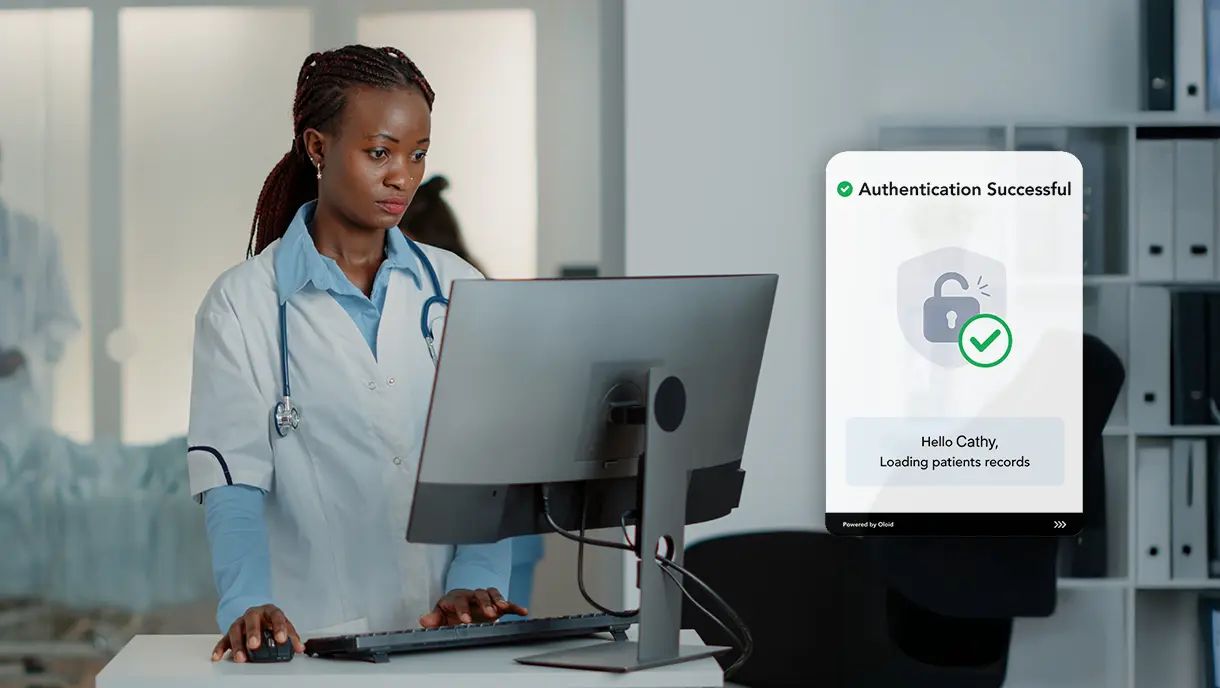
Doctors and nurses can access EHRs, medical devices, and patient data quickly, reducing delays in care and enhancing clinical responsiveness.

Strengthened Regulatory Compliance
OLOID’s solution meets HIPAA and DEA requirements, preventing unauthorized access and protecting patient and prescription data. 21 CFR Part 11 compliant.

Improved Workflow for Clinical Trials
Quick, secure access allows healthcare teams to focus on patient care rather than login processes, enhancing efficiency and patient satisfaction.
Why OLOID?
OLOID’s passwordless platform is specifically designed for hospital environments, ensuring that healthcare professionals, including doctors and nurses, can access critical systems seamlessly, whether they’re managing electronic health records, issuing prescriptions, or handling patient data. Built with HIPAA and DEA compliance in mind, OLOID empowers staff to focus on patient care, not passwords.
- Reduced IT and Helpdesk Support: Fewer password resets mean lower support costs, enabling IT teams to focus on critical infrastructure.
- Hygienic Access for Infection Control: Contact-free authentication aligns with hospital hygiene protocols, reducing contamination risk in sterile areas.


Quick, Reliable Authentication for Doctors and Nurses Across Devices
OLOID’s authentication solutions—face recognition, NFC badge tap, and PIN—give healthcare professionals secure, immediate access to EHR systems, medication administration records, and medical devices. This capability supports fast, secure shift changes and allows doctors and nurses to respond quickly in emergencies without the delays of password entry.
- Automated
- Fast and Secure
- Compliant
Contact-Free Authentication in Sterile Environments
Hygienic, Hands-Free Access for Infection Control
In operating rooms, cleanrooms, and other sterile areas, OLOID’s contactless options like facial recognition and badge tap allow doctors and nurses to access devices without direct contact. This maintains infection control standards and reduces contamination risk, supporting safe and compliant patient care.
- Hands-free
- Fast and Secure
- Compliant
Device-less Multi-Factor Authentication (MFA) for EPCS Compliance
DEA-Compliant Access for Controlled Substance Prescriptions
OLOID’s deviceless MFA meets DEA standards for Electronic Prescriptions for Controlled Substances (EPCS), allowing authorized doctors to securely complete the prescription process for controlled substances without needing personal devices or hardware keys. This simplifies secure prescribing, meeting regulatory requirements and supporting efficient, paperless workflows.
- No personal devices needed
- Security for Controlled Substances
Enhanced Security with Automatic Logout for Patient Privacy
Continuous Protection with Presence Detection
OLOID’s presence detection feature automatically logs users out when they step away, ensuring that sensitive patient information remains secure and in compliance with HIPAA standards. This continuous security measure supports data integrity and privacy for all users, safeguarding patient trust.
- Automated presence detection
- Auto logout for additional security
- Safeguarding patient records
Schedule a demo
Featured integrations
OLOID platform seamlessly integrates with your existing infrastructure for easy install & ongoing management.



















Related posts
HIPAA-Compliant Authentication: Requirements, Methods, Best Practices & Implementation
HIPAA-compliant authentication ensures secure identity verification before accessing protected health information. This guide explains the technical safeguard requirements and approved authentication methods for the security rule. Learn how to implement HIPAA-compliant authentication methods, best practices, and how modern solutions meet compliance obligations.

SSO for Healthcare: Simplifying Access While Strengthening Security
The write-up explains how Single Sign-On (SSO) simplifies access to multiple healthcare systems, reducing password fatigue, improving clinical efficiency, and strengthening data security. It highlights unique compliance needs, key features of healthcare-focused SSO, implementation best practices, and how OLOID’s passwordless authentication platform enhances security, streamlines workflows, and supports HIPAA and DEA EPCS compliance for modern healthcare environments.


The Complete Guide to Healthcare Access Management
Healthcare access management protects patient data while ensuring clinical staff can access critical systems instantly. This guide explores how identity and access controls secure sensitive health information against breaches and insider threats. Learn about the core components that make access management work, from authentication methods to audit trails.
FAQs on passwordless authentication for healthcare workers
How does OLOID enable fast access to EHR systems on shared clinical devices?

OLOID enables instant, passwordless access to EHR systems using contactless authentication such as face recognition, badge tap, mobile credentials, or PIN. Clinicians can securely log in with a single gesture and move between shared workstations, WOWs, and exam rooms without re-entering usernames and passwords. Each session is tied to a verified identity, ensuring accurate attribution for charting, orders, and audit trails.
Is OLOID compliant with HIPAA and EPCS requirements?
OLOID is designed to support HIPAA, HITECH, and EPCS compliance requirements. The platform enforces strong identity verification on shared devices, maintains detailed audit logs, and ensures access is limited to authorized users. OLOID does not store biometric images; biometric templates are encrypted and managed according to the organization’s security and privacy policies. For controlled substance prescribing, OLOID supports step-up authentication workflows aligned with DEA identity assurance and audit standards.
How does contactless authentication support infection control and patient privacy?
Contactless authentication eliminates the need for shared keyboards or touch-based login methods in high-traffic clinical environments, supporting infection prevention protocols. OLOID also uses presence detection to ensure sessions remain active only while the authenticated clinician is physically present. If a user walks away, sessions can automatically lock or log out, helping protect patient records and reduce privacy risks on shared devices.
Can clinicians use the same credentials across multiple devices and locations?
Yes. A single OLOID identity can be used across multiple shared devices and clinical settings throughout a shift. Whether moving between nurse stations, patient rooms, or mobile carts, clinicians can authenticate quickly without managing separate accounts or passwords, while maintaining consistent session control and user attribution.
How does OLOID reduce IT burden in healthcare environments?
By eliminating passwords on shared devices, OLOID significantly reduces help desk tickets related to resets, lockouts, and shared credential misuse. The platform integrates with existing IAM, HR, and EHR systems to automate provisioning and deprovisioning, streamline access management, and reduce operational overhead for healthcare IT teams.
Making every day-in-the-life of frontline workers frictionless & secure!
Get the latest updates! Subscribe now!
