



RFID badge authentication
Badge-based Authentication provides quick, secure access using existing RFID or biometric badges for login or multifactor authentication (MFA).

Re-imagine the authentication processes with RFID as a factor

Unified PACS Integration
Seamlessly integrates with almost every physical access control system (PACS), consolidating data from multiple PACS systems and card formats within the same organization.
.webp)
Offline Authentication
Badge-based authentication supports offline mode for uninterrupted access in low-connectivity environments. Data automatically syncs with the server when connectivity is restored.
.webp)
Alternative & Supplemental Factors
For users who opt out of Badge, the platform supports alternative methods such as Face, NFC, QR code, or PIN. Badge can also be combined for flexible MFA configurations.
Badge authentication
OLOID’s badge-based authentication offers a fast and reliable way to access devices and applications. Designed for seamless integration, it works with existing RFID badges and supports flexible MFA configurations for enhanced security.
- Single Tap Authentication: Login or MFA is completed in under one second with a simple badge tap.
- Compatibility with Existing Badges: Supports all major RFID badge types, ensuring easy adoption without new hardware investments.
- Location Portability: A single badge works across all office locations, eliminating the need for reconfiguration.
- Supports Legacy & On-Prem Systems: Fully compatible with both modern and legacy PACS systems, whether on-premises or cloud-based.


.webp)
.webp)
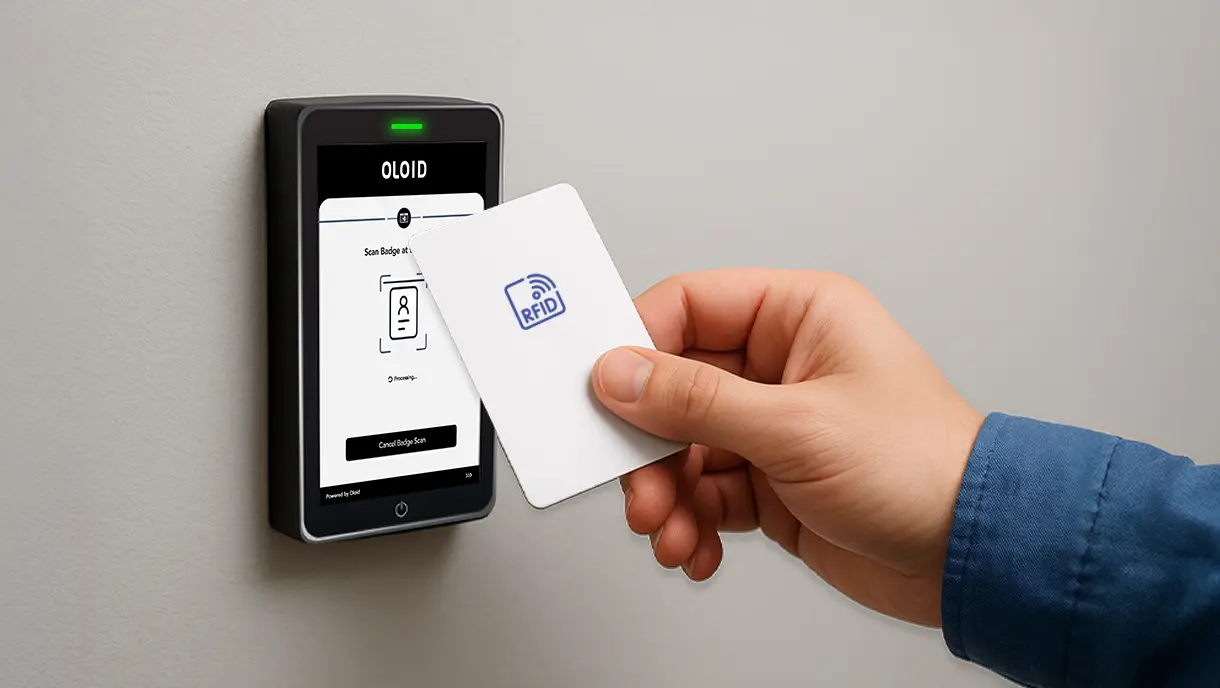
OLOID’s badge-based authentication ensures secure, rapid credential capture and verification
How It Works:
- The user taps their RFID badge on a compatible reader.
- Credential information is captured and authenticated in less than one second.
- Access is granted for login or MFA, enabling secure workflows.
- Hardware Requirements: No specialized setup is needed—works with widely available USB badge readers like HID® Omnikey® 5022 and rf IDEAS Badge Readers.
Supports a wide range of devices, systems and applications
The Badge-based authentication integrates seamlessly with a wide range of devices and applications. Badge based authentication is compatible with Windows, iOS, Android, and web platforms, offering a consistent experience across devices.
- Tablets
- Kiosks
- Windows PCs
- Thin Clients
- Web & Native Applications
Flexible Credential Onboarding Options
OLOID offers flexible onboarding options tailored to organizational needs:
- Assisted Setup: Supervisors can guide employees through enrollment.
- Self-Service Onboarding: Employees can onboard themselves using secure links, saving IT resources.
- Zero-Touch Onboarding: Automates badge setup by integrating with physical access control systems (PACS) like Pro-Watch, EBI, and WinPak.
- Unified Data Management: Consolidates data from multiple PACS systems and supports multiple card formats within the same organization.
- Location Portability: A single badge works seamlessly across all office locations.
Privacy, Security & Compliance
Badge-based authentication meets the same rigorous standards as OLOID’s other solutions:
- End-to-End Encryption: Badge credentials are securely encrypted at rest and in transit using AWS KMS with AES-256, ensuring compliance with global data protection standards.
- Data Auto-Deletion: Badge data and metadata are automatically removed when users are deactivated in HR or SSO systems, minimizing data retention risks.
- SOC 2 Type II Certification: Meets industry standards for operational effectiveness and data security, making it reliable for enterprise deployments.
- Compliance: Fully aligned with GDPR, HIPAA, and other global data protection regulations.
Ideal Usage Scenarios
OLOID’s badge-based authentication is ideal for diverse environments, including:
- Shared workstations for frontline workers and rotating shifts
- High-Security Environments: Use cases requiring multifactor authentication.
- Flexible Deployments: Scenarios leveraging existing badges to reduce adoption friction.
- Organizations with Multiple PACS Systems: Unified access control for companies managing multiple PACS systems and card formats.
- Organizations seeking seamless access across devices and platforms
Sign up for a Free Trial
Featured integrations
OLOID platform seamlessly integrates with your existing infrastructure for easy install & ongoing management.




























Related posts
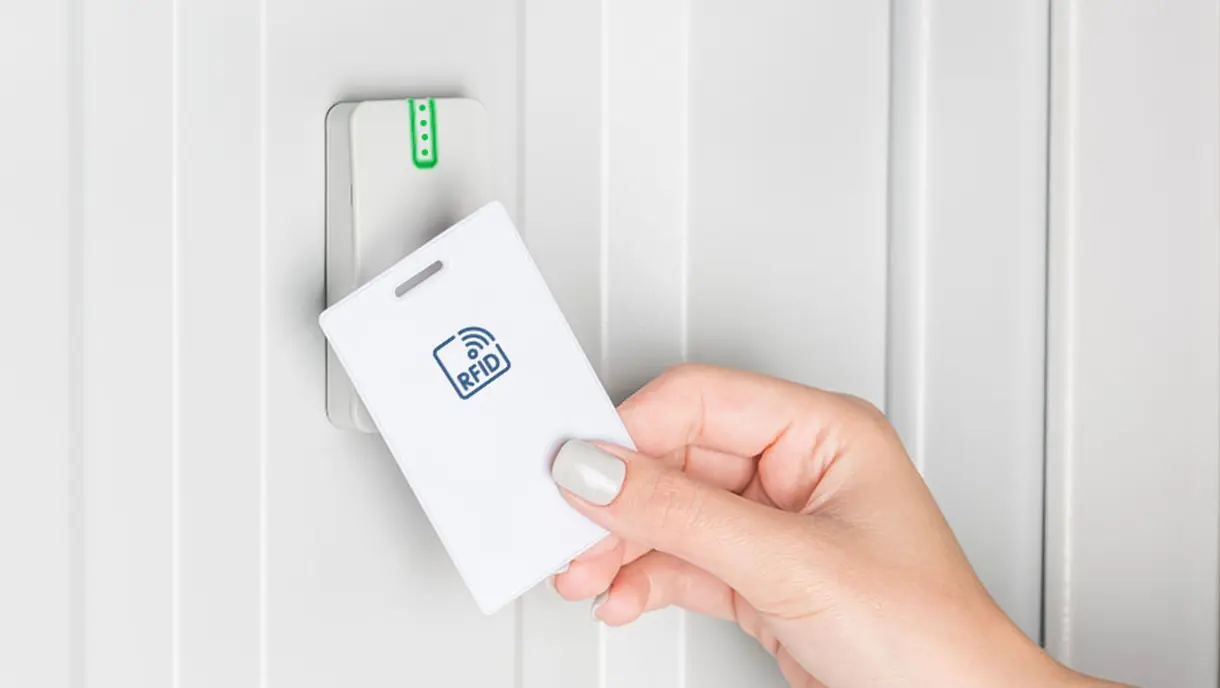
What Is RFID Authentication and How Does It Work?
RFID authentication uses radio frequency technology to enable secure, contactless identity verification. It works through RFID tags and readers to grant quick and reliable access, making it a strong alternative to traditional methods like passwords or PINs. This blog explores how RFID authentication works, its applications, benefits, challenges, and best practices for effective implementation.

How Zero-Touch PACS Makes RFID Badge Authentication Seamless Across Enterprises
RFID badges are mostly used to handle only physical access, requiring separate digital logins. Zero-touch PACS integration changes this by automatically syncing badge credentials across all systems. This guide covers implementation benefits, technical architecture, and how enterprises achieve unified authentication without manual IT provisioning overhead.

RFID vs NFC vs BLE: Best Access Tech for Your Business
This post explores the differences between RFID, NFC, and BLE technologies to help businesses choose the best access and connectivity solution. It explains how each technology works, compares their range, speed, security, and cost, and highlights ideal use cases for various applications. Gain insights into which option suits your needs for asset tracking, payments, IoT devices, or long-range communication.

FAQs on RFID badge authentication for frontline systems
Can OLOID work with our existing RFID badges?

Yes. OLOID integrates with your existing RFID badges - including the same physical access cards employees already use - and extends them to passwordless login for shared devices and applications. With zero-touch integration to your HR, IAM, or physical access control systems (PACS), badge credentials issued for physical access automatically become valid for digital authentication without manual enrollment.
What badge readers and formats are compatible with OLOID?
OLOID works with standard enterprise RFID badge readers that support common proximity and smart card formats, including HID, WAVE ID, rf IDEAS, and other ISO 14443–compatible technologies. These readers are widely deployed in physical access environments and can also be installed at workstations, POS systems, kiosks, and shared terminals to enable badge-based login.
Can a single badge be used across multiple locations?
Yes. When identity and access systems are centrally managed, a single RFID badge can authenticate employees across multiple office locations for both physical entry and digital access. Credentials are verified against the user’s centralized identity, allowing one badge to function consistently across the enterprise.
How fast and resilient is badge authentication?
Badge authentication is near instant, typically completing in sub-second time when a badge is tapped or presented to a reader. OLOID also supports offline-tolerant authentication. If connectivity to backend systems is temporarily unavailable, locally cached policy and credential data allow authorized users to continue accessing systems. Events are securely synchronized once connectivity is restored.
Can badge authentication support MFA and strong security controls?
Yes. An RFID badge can serve as a possession factor and be combined with additional factors such as a PIN, biometric verification, or mobile credential to meet higher assurance or compliance requirements.
Badge credential data is protected through secure issuance, encrypted identifiers, and authenticated exchanges between the badge and system. OLOID also maintains detailed audit logs of authentication events to support security monitoring and regulatory compliance.
Badge credential data is protected through secure issuance, encrypted identifiers, and authenticated exchanges between the badge and system. OLOID also maintains detailed audit logs of authentication events to support security monitoring and regulatory compliance.
Making every day-in-the-life of frontline workers frictionless & secure!
Get the latest updates! Subscribe now!
