



Deviceless phishing resistant MFA
Frontline workers often can’t rely on mobile devices or hardware tokens for authentication. Our deviceless MFA solution provides secure, frictionless access using face recognition or badges, ensuring strong security in any work environment.

Industry use cases
Effortless, Secure Access for Frontline Workers with SSO
Manufacturing
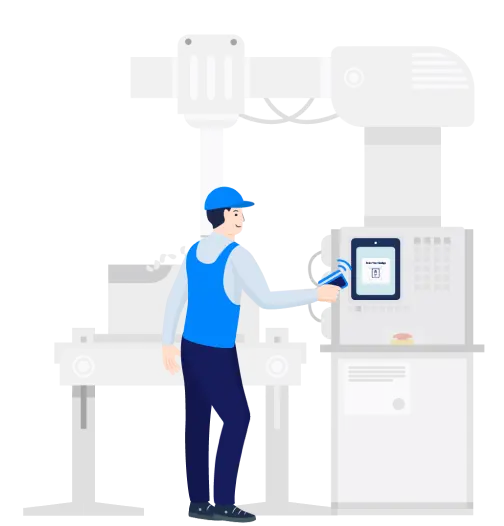
Enable secure access to sensitive areas, machinery controls, and production systems without the need for personal devices. Ensure compliance with safety and security protocols.
Retail
Store associates use badge-based MFA for quick, secure access to POS terminals, inventory systems, and internal apps. Enhances security without slowing down customer service.

Healthcare
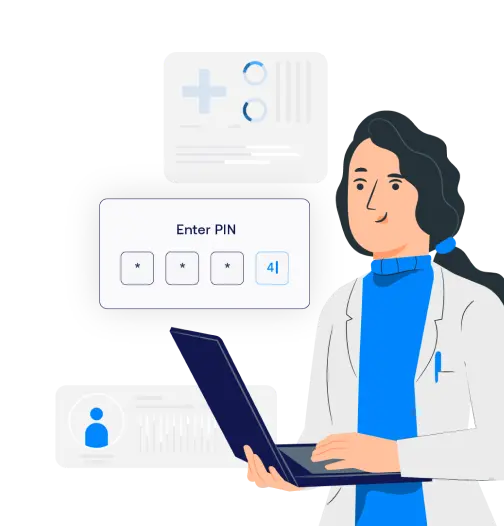
Doctors and nurses access patient records securely without needing mobile phones. Ideal for sterile environments where hands-free, quick access is critical.
Pharmaceuticals
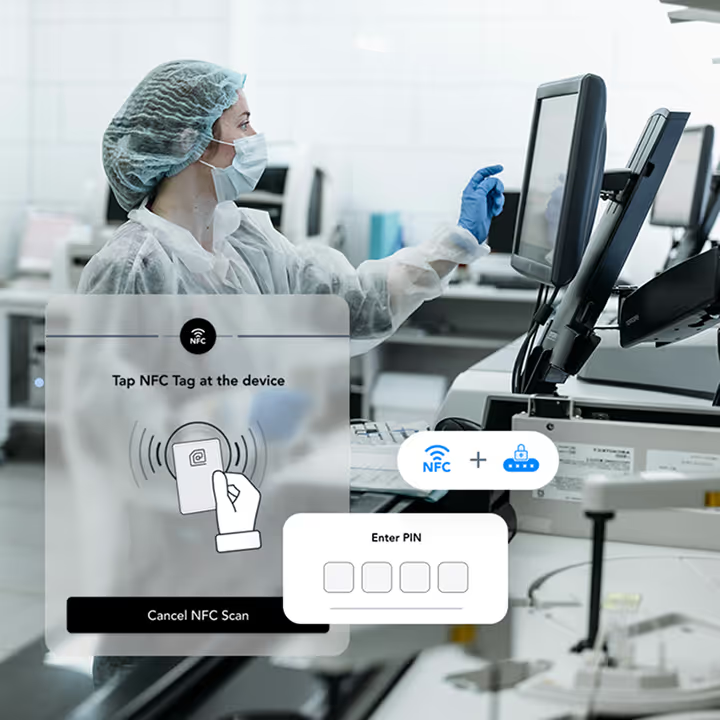
Secure access to labs, production areas, and sensitive data with face or badge-based authentication, ensuring compliance and preventing credential theft.

Contact Centers
Ensure that agents have a fast, secure way to authenticate without relying on their phones. Improve service quality and secure access to customer data.

Achieve high security without the need for devices
.webp)
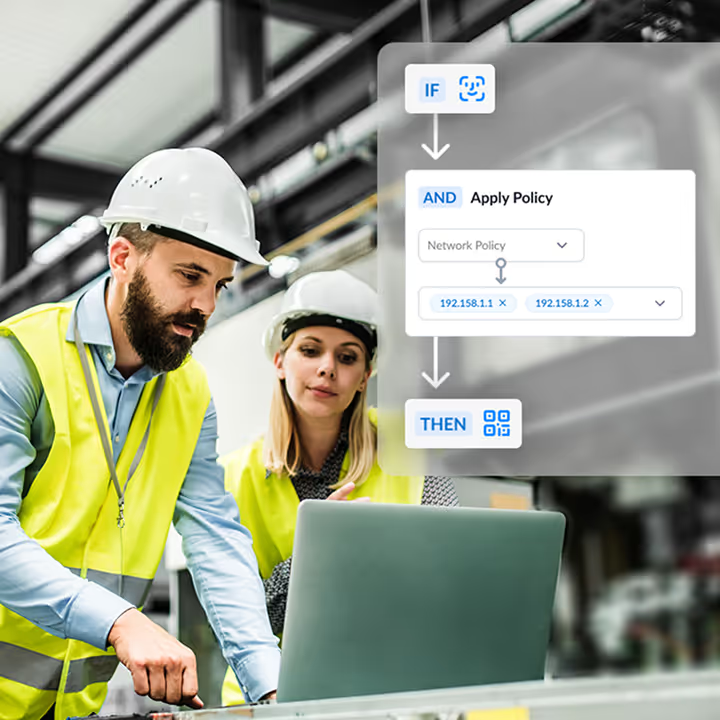
No Personal Devices Needed
Use face recognition or badges to authenticate, ideal for sterile environments in healthcare, secure areas in manufacturing, and fast-paced retail settings.
- No personal device needed
- Ideal for sterile environments
- Ease of Access
Phishing-Resistant MFA
Protects against social engineering and credential theft with non-transferable physical authentication.
- Non-transferable authentication
- Protect against credential theft
- Conditional access
Smooth Integration with Existing Systems
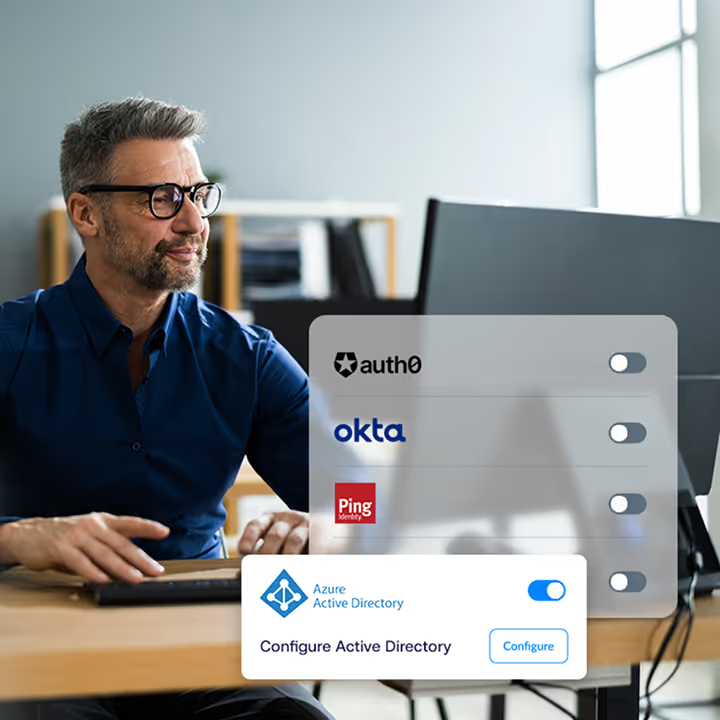
Works seamlessly with your current SSO systems like Okta and Azure AD, allowing for a smooth transition to passwordless, deviceless MFA.
- Easy integration with SSO
- Smooth transition to Passwordless
- Meet Industry regulations
Contextual Access Controls and Granular Policies
Adjust MFA requirements based on user roles, device types, and security contexts to enhance protection where it’s needed most.
- Meet your RBAC requirements
- Ensure approval flows
- Manage user roles and device types
Schedule a demo
Flexible and secure authentication that fits well
Choose amongst many form factors. Allow your staff to unlock any smart device with the same credentials.

Major Hospital System Enhances EHR Access and EPCS Compliance for Doctors and Nurses
Problem:
A large hospital system struggled with slow, repetitive logins across shared devices, contamination risks in sterile environments, and high IT support costs from frequent password resets. Doctors and nurses needed secure, immediate access to EHR systems and an efficient way to meet EPCS requirements, especially during high-pressure situations.
Solution:
OLOID’s passwordless authentication enabled healthcare staff to access EHR systems, complete EPCS-compliant prescriptions, and log into other devices using facial recognition and badge tap. Automatic onboarding and logout features streamlined access and reinforced security.
Impact:
The hospital reduced login times by 30%, decreased IT support requests by 40%, and saw improved hygiene compliance. Doctors and nurses reported more efficient access to patient information, directly enhancing care quality and patient outcomes while maintaining full regulatory compliance.


“The transition from ADP swipe cards to the OLOID facial recognition program has been a seamless process. With swipe cards, we had issues with lost cards, shared cards, and employees forgetting to clock in and out altogether. With OLOID, all our employees have to do is show their faces and easily clock in and out without any problems.”

Related posts
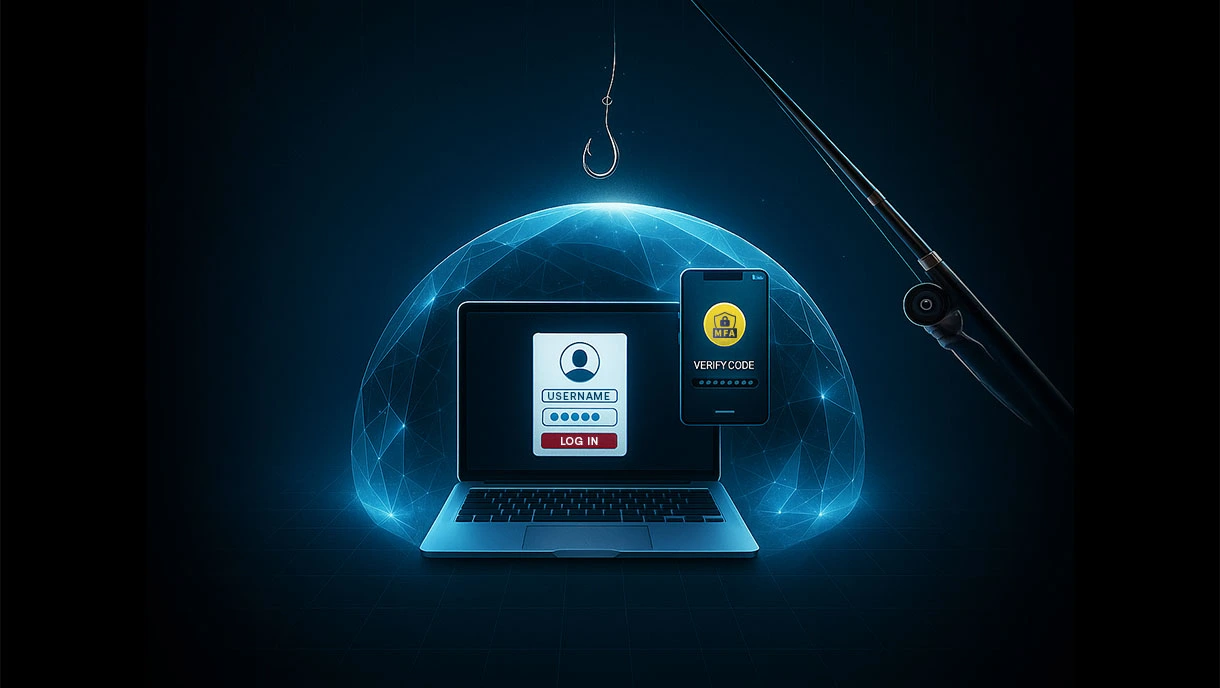
Phishing-Resistant MFA: Complete Guide to Modern, Secure Authentication
Traditional multi-factor authentication fails against modern phishing attacks. Phishing-resistant MFA uses cryptographic technology and hardware-bound credentials to eliminate vulnerabilities that attackers exploit. This guide covers how it works, key technologies like FIDO2 and security keys, implementation steps, and real-world attack scenarios it blocks. Learn the benefits, including faster logins and stronger security.


A Complete Guide to Passwordless MFA Without Mobile Devices
Traditional smartphone MFA fails in regulated industries due to safety restrictions and device bans. Learn seven deviceless authentication solutions - biometric scanners, hardware keys, badge systems, and proximity wearables - that provide enterprise security for frontline teams without requiring personal phones or creating compliance violations.


What Is Passwordless MFA? A Complete Guide to Secure and Frictionless Authentication
Passwordless MFA eliminates traditional passwords while maintaining multi-factor security through biometrics, security keys, and device-based authentication. This comprehensive guide explores what passwordless MFA is, its business benefits, implementation strategies, and best practices for overcoming common challenges. Learn how leading organizations are adopting passwordless multi-factor authentication to strengthen security, improve user experience, reduce IT costs, and meet compliance requirements.
FAQs on phishing resistant MFA for frontline systems
What makes OLOID’s MFA phishing-resistant?

OLOID’s MFA is phishing-resistant because it eliminates transferable secrets such as passwords, SMS codes, and push approvals. Authentication is based on verified physical identity and possession factors—such as face recognition and employee badges—that cannot be easily intercepted, replayed, or socially engineered in phishing attacks.
Why is deviceless MFA important for frontline and shared-device environments?
Frontline workers often do not carry mobile phones, hardware tokens, or personal authentication devices. OLOID’s deviceless MFA allows secure authentication using factors workers already have—such as their face or employee badge—making it practical for shared workstations, retail floors, factories, and clinical settings.
How does deviceless MFA integrate with existing SSO systems?
OLOID integrates with leading SSO providers such as Okta and Microsoft Entra ID (Azure AD), extending phishing-resistant MFA into enterprise applications and web services without replacing your existing identity infrastructure. This allows organizations to strengthen security while maintaining their current IAM framework.
Can MFA requirements be customized by role, risk, or environment?
Yes. OLOID supports policy-driven authentication controls that adjust MFA requirements based on user role, device type, application sensitivity, or security context. Organizations can configure step-up authentication or layered factors to meet operational and compliance requirements.
What authentication options are available if biometrics cannot be used?
If biometric authentication is not suitable, OLOID supports alternative secure factors such as employee badges, NFC credentials, QR codes, or PINs. These can be used individually or combined to maintain strong, phishing-resistant authentication while accommodating workforce and regulatory requirements.
Making every day-in-the-life of frontline workers frictionless & secure!
Get the latest updates! Subscribe now!
