




What is Zero Trust Network Access? A Complete Guide for Modern Enterprises

.webp)
Key Takeaways
- Zero Trust Network Access shifts security from location-based trust to identity-driven access control. Access is granted based on who the user is, the state of their device, and contextual risk signals.
- ZTNA limits exposure by granting access only to specific applications, not the entire network. This reduces lateral movement and contains potential breaches.
- Unlike VPNs, ZTNA enforces continuous verification. Trust is never permanent, and access can be restricted if risk changes during a session.
- ZTNA strengthens containment but does not replace broader security controls. It must integrate with endpoint protection, monitoring, and incident response.
- The future of zero trust security is identity-first and context-aware, extending beyond remote access into shared and operational environments.
Security is no longer an abstract concept locked away in data centres. It is a daily priority for every organisation, big or small, because threats have grown faster than the tools we once trusted. According to Gartner, 63% of organisations worldwide have already fully or partially adopted a zero-trust strategy. That shows security leaders are shifting away from old perimeter models toward identity-centric approaches. Despite that progress, another study found that only about one in three employers currently implement Zero Trust Network Access (ZNTA) for remote workers, even though a majority recognise the risk of traditional access models. Awareness is high, implementation still lags. Security has changed faster than the infrastructure built to protect it. Employees work from anywhere. Applications run in multiple environments. Devices connect to networks that companies do not control.
The old model assumed one thing: if you were inside the network, you were trusted. That assumption no longer works. ZTNA removes trust based on location. It verifies identity, checks device health, and grants access only to the specific application a user needs. It does not open the network. It opens a single door. And it keeps checking while that door remains open. ZTNA is not about building stronger walls. It is about eliminating blind trust from access decisions.
In this article, we will explain what ZTNA is, why traditional access models fail, how ZTNA works, where it applies, and why identity-driven access is becoming the foundation of modern enterprise security.
What is Zero Trust Network Access?
Zero Trust Network Access (ZTNA) enables secure access to specific applications by verifying user identity and device health before and during each session, without exposing the broader network.
Why ZTNA Exists: The Problem It Solves
A. The Collapse of the Traditional Perimeter
Enterprise security was built on a simple assumption: users inside the network were trusted. That model worked when work happened in offices, applications lived in data centres, and traffic stayed within predictable boundaries.
As remote connectivity became necessary, organizations extended this same trust model outward through VPNs. VPNs connected users directly to the corporate network to support remote access. Once authenticated, users often received broad network access rather than access to specific applications. Segmentation was limited, and internal systems remained widely visible. This design meant that authentication often unlocked more of the network than a user actually needed. When credentials were compromised, attackers could move across systems with minimal resistance. Many breaches escalated because internal access controls lacked depth and relied too heavily on initial trust. ZTNA replaces that approach with controlled, identity-based access.
B. The Modern IT Reality
The network perimeter did not disappear suddenly. It faded as work and technology changed. Work is now mobile. Employees work from home, shared spaces, branch offices, and while travelling. Contractors and vendors need temporary access. Partners connect systems across company boundaries. At the same time, applications moved beyond the data center. Some run in private infrastructure, many run in public cloud, and others exist only as SaaS platforms. Data constantly moves between these environments, often without touching a corporate network. This creates a distributed access environment. There is no single edge anymore. There are many entry points, each with different risk levels.
Adding to this complexity, devices add another layer of risk. Corporate laptops exist alongside personal devices. Some endpoints are fully managed, others are not. Users often connect from networks that may not be secure. So the question is no longer "Are you inside the network?" The real questions are:
- Who is requesting access?
- What are they accessing?
- Is their device secure right now?
- Should access be allowed at this moment?
ZTNA is built to answer these questions.
C. The Risk Drivers Behind the Shift
The weaknesses of the traditional model become clear when you examine how modern attacks unfold. Most breaches begin with credential theft. Phishing, password reuse, and token theft allow attackers to log in as legitimate users. If that identity unlocks broad network access, the initial compromise quickly expands. That expansion typically happens through lateral movement. Once inside, attackers probe for sensitive systems and escalate privileges. Flat networks and excessive access make this movement easier, which is why ransomware campaigns spread so rapidly.
The same pattern applies to third-party access. Vendors often receive more access than required, and persistent VPN connections increase exposure. When external identities are treated as broadly trusted, the attack surface grows further.
Across all these scenarios, the common issue is overexposure. Too much visibility, connectivity and assumed trust. ZTNA addresses this by narrowing access to specific applications instead of opening large portions of the network. If credentials are compromised, movement is restricted by design. It does not eliminate risk, but it limits how far an incident can spread. In modern security, containment is as important as prevention.
Core Principles of ZTNA
ZTNA represents a shift in how organizations think about access within a broader zero-trust security model. ZTNA removes the idea that trust can be permanent. Instead, it treats access as a decision that must be earned and continuously validated.
Verify explicitly
Every access request must prove identity through strong authentication. ZTNA does not rely on network location or prior trust. It evaluates who the user is, how they authenticated, and whether that authentication meets policy requirements before granting access.
Enforce least privilege
Users receive access only to the specific applications required for their role. They do not gain broad network visibility or indirect access to adjacent systems. By narrowing reach from the start, ZTNA reduces unnecessary exposure and limits potential impact if credentials are compromised.
Assume breach
ZTNA operates with the understanding that credentials can be stolen. Instead of assuming authentication equals safety, it limits what any authenticated identity can access. This containment-focused design ensures that even valid credentials cannot open the entire environment.
Deny by default
Access is not automatic after login, policy must explicitly allow it. Being connected to a corporate network or VPN does not grant permission. The absence of approval means access is denied.
Verify continuously
Trust is not permanent; ZTNA evaluates risk signals throughout the session. If device posture changes, behavior appears abnormal, or contextual factors shift, access can be restricted or revoked in real time.
Segment at the application level
Instead of protecting one large internal network, ZTNA isolates individual applications behind their own access controls. Each application becomes its own protected boundary, which limits visibility and reduces lateral movement.
Make context part of the decision
Access decisions consider more than identity alone. Location, device health, time of access, and behavioural patterns influence policy enforcement. Identity is evaluated within context, not in isolation.
Together, these principles replace static, location-based trust with dynamic, identity-driven access control.
How ZTNA Works: End-to-End Flow
Understanding ZTNA becomes easier when you follow a real access request from start to finish.
1. User requests access to an application
The process begins when a user attempts to open an internal application, whether from a remote location or inside a facility.
2. Identity is verified
The system authenticates the user using mechanisms such as Single Sign-On and Multi-factor Authentication. Identity must be confirmed before any access decision is made. Location alone does not grant trust.
3. Device posture is evaluated
The system checks whether the device meets security requirements. Is it managed? Is it compliant with policy? Is the required security software active? Access decisions take device health into account.
4. Context is analyzed
Access is evaluated within context. The system considers factors such as location, time of request, and behavioral patterns. An unusual login pattern may trigger additional scrutiny.
5. The policy engine makes a decision
Based on identity, device posture, and contextual signals, the policy engine determines whether access should be allowed, restricted, or denied.
6. An encrypted, application-specific connection is established
If approved, the system creates a secure connection directly to the requested application. This is not a full network tunnel. Internal IP addresses remain hidden, and applications that are not authorized remain invisible.
7. Application-level isolation is enforced
Each application sits within its own logical boundary. These micro-perimeters reduce visibility and prevent lateral movement across the environment.
8. Secure communication is maintained
Communication typically occurs over encrypted channels using TLS. In many architectures, applications initiate secure outbound connections to the ZTNA service, which avoids exposing them directly to the internet.
9. Continuous monitoring during the session
Verification does not end after access is granted. The system continues monitoring for posture changes or abnormal behaviour.
10. Dynamic re-evaluation of access
If risk signals change during the session, access can be restricted or terminated immediately. Trust remains conditional throughout the interaction.
ZTNA is not a single checkpoint at the front door. It is a controlled, monitored path that adjusts as risk changes.
[[cta]]
ZTNA vs VPN
To understand why ZTNA represents a structural shift rather than a minor upgrade, it helps to compare it directly with the traditional VPN model.
| Category | Traditional VPN | Zero Trust Network Access (ZTNA) |
|---|---|---|
| Access Model | Extends the corporate network to the user | Grants access to specific applications only |
| Access Layer | Network-level access | Application-level access |
| Trust Model | Trust granted after login | Trust evaluated continuously |
| Scope of Access | Often broad, depending on network segmentation | Strictly limited to authorized applications |
| Visibility | Users may see large portions of the internal network | Applications remain invisible unless authorized |
| Lateral Movement Risk | Higher, especially in flat networks | Strongly reduced due to app-level isolation |
| Exposure of Internal Systems | Internal IP ranges may become reachable | Internal IPs remain hidden |
| Segmentation Approach | Relies on network segmentation | Built on application-level micro-segmentation |
| Response to Compromised Credentials | Potential wide access if credentials are valid | Access restricted to limited, policy-defined scope |
| Performance Model | Often routes traffic through central gateways | Connects users directly to authorized applications |
| Fit for Hybrid Work | Designed for perimeter-based environments | Designed for distributed, cloud-based environments |
| Security Philosophy | Network-centric | Identity-centric |
Deployment Models of Zero Trust Network Access (ZTNA)
Organisations implement ZTNA differently based on infrastructure maturity, risk exposure, and workforce distribution. Some deploy agent-based ZTNA using software installed on user devices, enabling deeper device posture checks and stronger endpoint validation. This model is often used in regulated environments where strict device compliance is required.
Others prefer agentless or browser-based access, especially for contractors or temporary users. This reduces deployment friction and simplifies onboarding while still enforcing identity-based access control. Cloud-delivered ZTNA distributes policy enforcement across global infrastructure, bringing access decisions closer to users and applications while reducing reliance on centralized hardware. Some enterprises instead deploy ZTNA gateways within existing data centres to protect legacy systems while applying Zero Trust principles. Ultimately, the right deployment model depends on device visibility needs, workforce distribution, and infrastructure modernization levels.
Core Components Required for Zero Trust Network Access (ZTNA)
Effective ZTNA environments rely on multiple systems working together to verify identities, enforce policies, and protect applications. Each component plays a specific role in controlling access with precision.
Identity and Access Management (IAM)
Establishes and manages user identities, ensuring that access decisions are tied to verified individuals rather than network location.
Single Sign-On (SSO)
Simplifies authentication across applications while maintaining centralized control over access policies.
Multi-Factor Authentication (MFA)
Adds an additional verification layer that reduces the risk of credential-based attacks.
Device posture validation
Evaluates whether the endpoint requesting access meets defined security standards, including compliance checks and required security software.
Policy engine
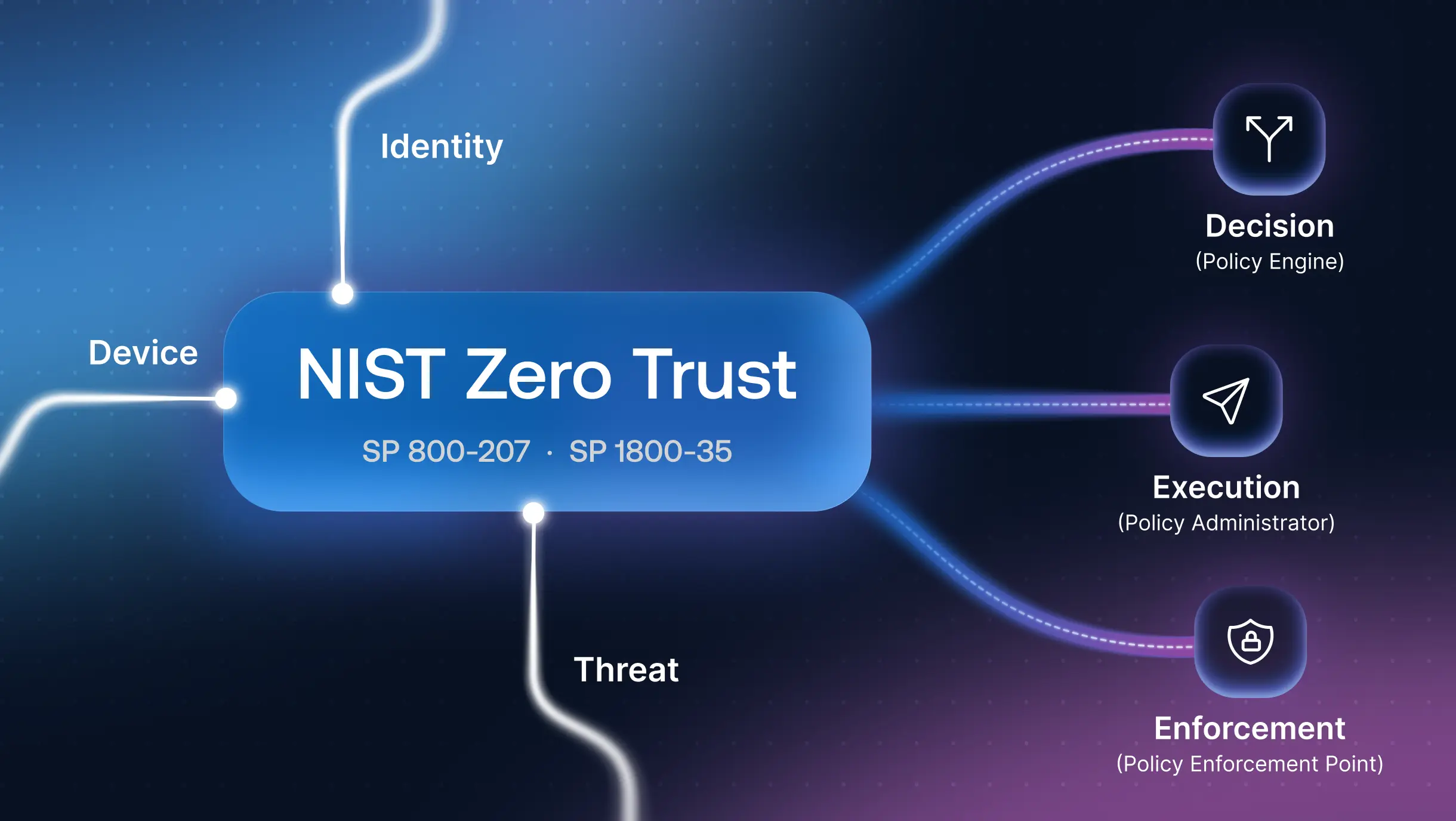
Acts as the decision layer, analysing identity, device health, and contextual signals in real time to determine whether access should be granted or denied.
Application segmentation
Isolates individual applications behind controlled boundaries, reducing unnecessary visibility and limiting lateral movement.
Secure connectors or gateways
Protect internal applications from direct internet exposure by brokering controlled connections.
Continuous monitoring and logging
Maintain visibility into active sessions and create audit trails that support compliance and investigation.
Integration with endpoint detection tools
Enhances threat awareness by incorporating endpoint signals into access decisions.
Encryption (TLS)
Secures data in transit between users and applications.
Together, these components create a coordinated access architecture that enforces identity-driven security across distributed environments.
Benefits of Zero Trust Network Access (ZTNA)
The strongest benefit of ZTNA is its structural advantage. It reduces exposure at the architectural level rather than relying on reactive controls.
By limiting users to specific authorized applications, ZTNA shrinks the visible surface area of the environment. Users no longer see entire network segments. Applications remain hidden unless policy allows access. This directly reduces opportunities for lateral movement.
Access decisions also become more precise. Identity, device health, and context work together to determine permission. That precision improves visibility into who accessed what and under what conditions, which strengthens auditing and compliance efforts. Unlike traditional VPN models that backhaul traffic through central gateways, ZTNA connects users directly to authorised applications. This improves performance and removes bottlenecks, particularly for distributed and hybrid teams. ZTNA also limits the blast radius of compromised credentials. If an attacker obtains valid login details, their reach remains restricted by policy. The architecture is designed for containment.
As organizations adopt cloud-first strategies, ZTNA aligns naturally with distributed applications and modern infrastructure. It protects private applications without exposing them directly to the internet. Ultimately, ZTNA shifts access from assumption to verification. That shift alone changes an organisation's security posture. But controlling access at the application level is only part of the broader transformation underway. As networks, users, and applications become more distributed, organisations are rethinking not just access control, but the entire way connectivity and security are delivered.
That is where ZTNA connects to a larger architectural movement.
Limitations of Zero Trust Network Access (ZTNA)
ZTNA strengthens access control, but it does not eliminate all forms of risk.
It determines who can enter an application and under what conditions. It does not replace endpoint protection, threat detection, or incident response systems. If a user gains authorized access and behaves maliciously within an application, additional security layers are required to detect and respond.
The effectiveness of ZTNA also depends heavily on identity hygiene. Weak authentication practices undermine the entire model. Poorly configured policies can introduce friction or create unintended access gaps. ZTNA must integrate into a broader security ecosystem. It improves how access is controlled, but it is not a standalone defence strategy. Recognizing these boundaries strengthens the overall architecture rather than weakening it.
Use Cases for Zero Trust Network Access (ZTNA)
ZTNA is most effective in environments where access patterns are distributed, temporary, or high-risk.
- Remote and hybrid workforce access
Employees can securely access specific applications without extending the internal network to home or public environments. This reduces exposure while supporting flexible work models. - Third-party vendors and contractors
External users receive tightly scoped, time-bound access to required systems instead of broad VPN credentials. This limits unnecessary visibility and reduces supply chain risk. - Privileged access control
Sensitive systems can be isolated behind strict identity-based policies, reducing the potential impact of compromised administrative accounts. - Legacy application protection
Older systems that cannot be fully modernized can remain protected behind controlled access layers without exposing the wider network. - Cloud and SaaS environments
As organizations adopt cloud-native and SaaS applications, ZTNA provides consistent access control across distributed platforms. - Branch and distributed office connectivity
Controlled application access can replace network-wide exposure, improving security across geographically dispersed sites. - Mergers and acquisitions
During integration phases, ZTNA enables controlled application-level access between organizations without prematurely merging entire network infrastructures.
Wherever access must be precise, adaptable, and identity-driven, ZTNA provides a controlled and scalable framework.
ZTNA in Shared Workstation Environments
Most discussions around ZTNA focus on remote access. Yet some of the most complex identity challenges exist inside physical facilities. Many organizations rely on shared workstations, mobile terminals, kiosks, handheld devices, and production-floor systems. Multiple users interact with the same endpoint throughout a shift. Access must be fast, but it must also be attributable.
Traditional password-based workflows create friction in these environments. Users log in and out repeatedly. Credentials are sometimes shared for convenience. Sessions are left open to avoid disruption. Over time, accountability weakens, and audit accuracy suffers.
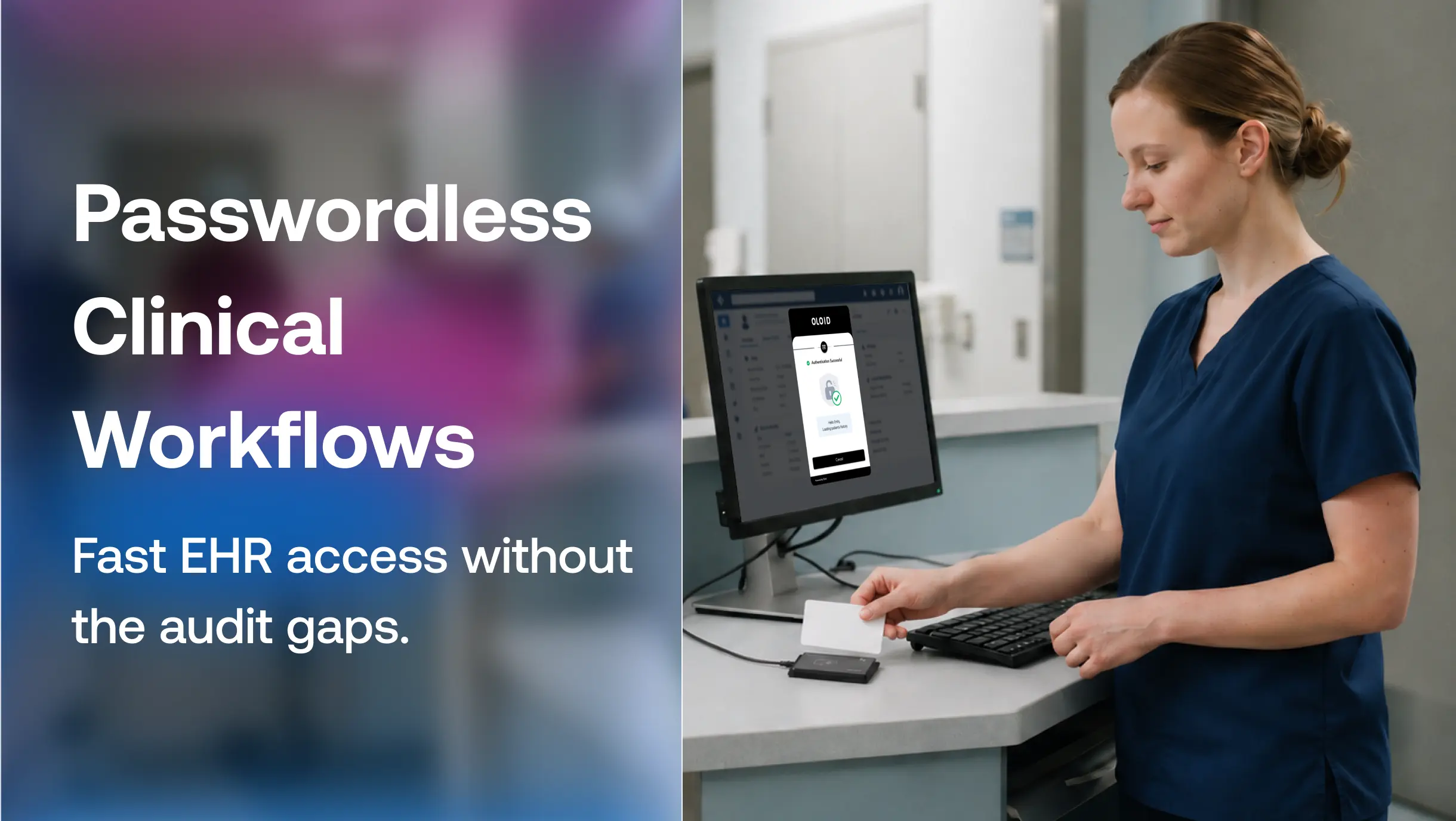
The core issue is simple: access is often tied to the device instead of the individual. Applying Zero Trust principles in shared environments means binding every session to a verified identity, regardless of which device is being used. Access must transfer securely as users move. Session ownership must be clear. Audit logs must reflect real user activity, not just device activity. This is where Zero Trust moves beyond network architecture and into operational workflow. Identity must follow the user, not remain attached to a machine. Solutions such as OLOID are designed specifically for this environment, ensuring continuous identity verification even as users move between shared endpoints.
[[cta-2]]
How OLOID Enables Zero Trust in Real Environments
OLOID operationalises Zero Trust in high-velocity, shared-device environments where identity must move with the user. It enables this through:
- Passwordless Multi-factor Authentication
Passwordless MFA Enforces strong identity verification using auth factors such as badges or proximity signals instead of shared passwords, reducing friction while maintaining high assurance. - Badge-based and proximity-based access
Allows users to authenticate quickly without interrupting workflow, while maintaining clear user attribution across devices. - Continuous identity verification
Ensures access remains tied to the individual as they move between shared endpoints, with secure session handoffs. - Device trust validation
Confirms endpoints meet policy standards before granting access to critical systems. - Strong audit trails
Provides accurate tracking of user activity, strengthening compliance and accountability.
With OLOID, Zero Trust becomes embedded in daily operations rather than layered on top of them.
The Future of ZTNA
Access control is steadily moving toward identity-first architecture. As environments become more distributed, static trust models become less relevant. Risk evaluation will grow more adaptive, using behavioural signals and automated scoring to adjust trust levels in real time. Passwordless authentication for zeo trust will increasingly replace static credentials as organisations seek stronger assurance with less friction.
ZTNA will extend beyond remote connectivity into every environment where access occurs, including shared devices and physical spaces. Identity will serve as the consistent control layer across digital systems and physical workflows. Network boundaries will continue to blur, infrastructure will evolve, devices will change, and identity will remain the anchor.
The future of ZTNA lies in making access decisions continuously, intelligently, and contextually, wherever users operate.
FAQs
1. How is Zero Trust Network Access different from traditional VPN remote access?
Zero Trust Network Access (ZTNA) limits access to specific applications instead of granting full network access like VPN. ZTNA improves network security by enforcing identity-based access and reducing unauthorized access risk.
2. How does ZTNA work within a zero-trust security model?
ZTNA verifies identity, checks device health, and evaluates context before granting application access. Trust is never assumed and is continuously reassessed during the session.
3. What are the benefits of zero-trust network access for modern organizations?
ZTNA reduces network exposure, limits lateral movement, improves compliance visibility, and enables secure remote access while maintaining granular application-level control.
4. How can organizations implement a zero-trust security strategy using ZTNA?
For organizations to implement a zero-trust security approach, access must shift from Organizations start by defining access policies, strengthening authentication, and segmenting applications. ZTNA then enforces secure, identity-based access without exposing the corporate network.
5. Is ZTNA enough on its own to secure a network?
No. ZTNA controls application access but must work alongside endpoint protection, monitoring, and broader security tools to provide complete protection.

Get the latest updates! Subscribe now!

