




What Is Zero Trust Architecture?
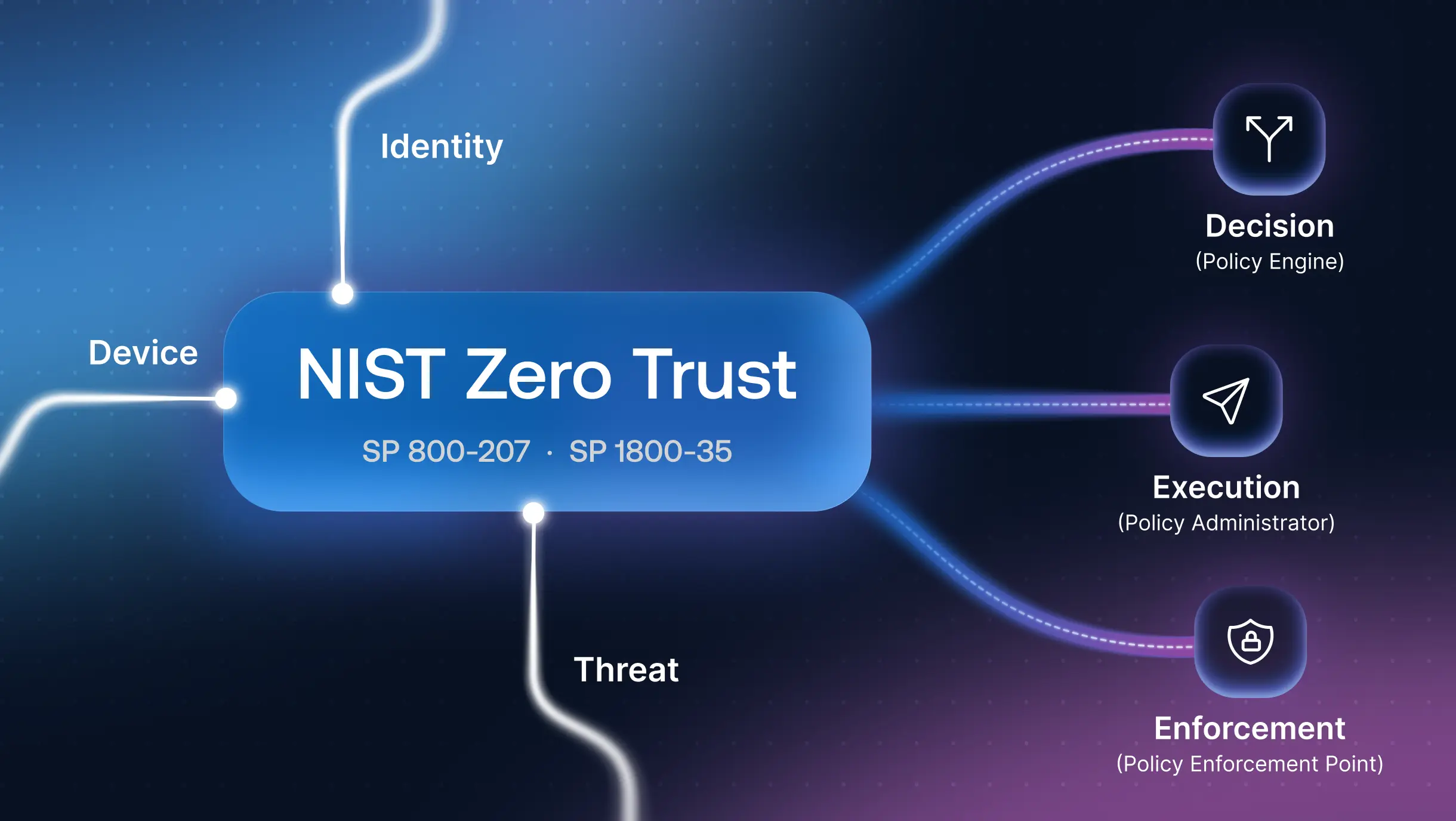
Zero Trust Architecture (ZTA) is a security model that eliminates implicit trust by verifying every user and device before granting access. It enforces least privilege access, microsegmentation, and continuous authentication to prevent breaches. ZTA improves security, compliance, and user experience across modern, hybrid IT environments.


Zero Trust Architecture or ZTA is a cybersecurity approach that ensures an organization's security by removing implicit trust and continuously verifying every digital interaction. It follows the principle of "never trust, always verify". It aims to protect modern environments and enable digital transformation by using robust authentication methods, network segmentation, preventing lateral movement, Layer 7 threat prevention, and simplifying granular access policies.
Zero Trust is the only way to secure the modern enterprise. - David Kennedy, CEO of TrustedSec
The need for Zero Trust arose due to the outdated assumption of traditional security models that everything inside an organization's network should be implicitly trusted. This approach allows users, including malicious insiders and threat actors, to move laterally and access or extract sensitive data due to the lack of granular security controls.
What are the principles of Zero Trust Architecture?
ZTA is based on several principles that are designed to improve security by limiting access to sensitive data. These principles include:
- Always Verify and Authenticate: In a Zero Trust Architecture, users and devices must be authenticated and authorized before they are granted access to resources. This means that every user must prove their identity, and every device must prove that it is authorized to access the network.
- Least Privilege Access: Access to resources should be limited to only what is necessary to perform the user's job function. This means that users should only have access to the resources that they need to do their job, and nothing more.
- Microsegmentation: Microsegmentation is dividing a network into smaller, more secure segments. This helps to limit the spread of malware and prevent lateral movement by attackers. By dividing the network into smaller segments, isolating any potential security breaches is easier.
- Assume Breach: Zero Trust Architecture assumes that all networks and devices are already compromised. This means that every device and user must be treated as if they are already compromised, and security measures should be put in place to limit the damage that can be done in the event of a breach.
- Identity and Access Management: Identity and Access Management (IAM) is an important part of Zero Trust Architecture. IAM helps to ensure that users only have access to the resources that they need and that their access is revoked when they no longer need it.
Implementing Zero Trust Architecture in your business
Implementing Zero Trust Architecture (ZTA) in your business can be a complex process, but ensuring that your business is secure from cyber threats is essential. Here are some steps to consider when implementing ZTA:
- Assess your current security posture: Evaluate your existing security infrastructure and identify gaps in your security controls.
- Identify critical assets: Determine what information and resources are essential to your business and must be protected.
- Develop a Zero Trust roadmap: Create a plan that outlines the steps you will take to implement Zero Trust, including the technologies you will need and the timeline for implementation.
- Adopt a risk-based approach: Prioritize the most significant risks to your business and implement Zero Trust controls that mitigate these risks.
- Implement multi-factor authentication: Require multiple forms of authentication to access critical systems and data.
- Implement micro-segmentation: Divide your network into smaller segments and apply different security controls based on the data sensitivity and resources within each segment.
Benefits of Zero Trust Architecture
- Increased Security: Zero Trust Architecture is designed to improve security by limiting access to sensitive data. By implementing ZTA, organizations can reduce the risk of data breaches and cyber-attacks.
- Improved Visibility: Zero Trust Architecture allows organizations to gain better visibility into their network activities and monitor access requests in real-time.
- Enhanced Compliance: Zero Trust Architecture provides a structured and proactive approach to security that aligns with industry regulations and compliance standards. This approach helps organizations meet compliance requirements more efficiently and effectively.
- Simplified Management: Zero Trust Architecture simplifies the management of security policies and access controls by consolidating them into a single security architecture. This approach enables security teams to manage and maintain access policies from a central location, reducing complexity and simplifying the management of security policies.
- Improved User Experience: Zero Trust Architecture enables users to access the resources they need from anywhere, at any time, while maintaining a high level of security. This approach provides a seamless user experience and eliminates the need for complex and cumbersome authentication procedures, such as multi-factor authentication.
Examples of Zero Trust Architecture (ZTA) in action
- Google: Google implemented a Zero Trust Architecture called BeyondCorp in 2011. The architecture assumes that all networks are hostile and verifies all access requests, regardless of the user's location or network. This approach has enabled Google to reduce its attack surface and improve security for its users and data.
- Forrester Research: Forrester Research implemented a Zero Trust Architecture called Zero Trust Network Access (ZTNA) in 2020. The architecture uses a range of security controls, including multi-factor authentication and dynamic authorization, to verify and secure access requests.
Latest Statistics in Zero Trust Architecture
- 73% of organizations are planning to invest in Zero Trust solutions in the next two years. (Source: Gartner)
- The global market for Zero Trust is expected to reach $13.7 billion by 2027. (Source: Grand View Research)
Conclusion
Zero Trust has become more formalized as a response to securing digital transformation and threats in the past years. Organizations with a multi-cloud, hybrid, multi-identity infrastructure deployment model use unmanaged devices, legacy systems, and SaaS apps, and those facing ransomware, insider threats, and supply chain attacks can benefit from Zero Trust immediately.Zero Trust can also address other considerations, such as SOC/analyst expertise challenges, user experience impact, industry or compliance requirements, and concerns about retaining cyber insurance due to ransomware. Zero Trust can be adjusted to meet specific needs and ensure a return on investment in security strategy.
FAQs
What is Zero Trust Architecture?
A cybersecurity approach that verifies every access request, minimizing implicit trust.
What are the benefits of ZTA?
Increased security, improved visibility, enhanced compliance, simplified management, and better user experience.
How can I implement ZTA?
Assess your security, identify critical assets, develop a roadmap, adopt a risk-based approach, and implement multi-factor authentication and micro-segmentation.
How will Zero Trust affect my user experience?
The goal of Zero Trust is to improve user experience by providing seamless and secure access to resources. With proper configuration, users should not experience any significant changes, and in some cases, they may even experience faster and more convenient access.
How can I get started with Zero Trust?
- Assess your current security posture: Identify your critical assets and vulnerabilities.
- Develop a Zero Trust roadmap: Define your goals and objectives for implementing Zero Trust.
- Choose the right solutions: Select technologies and vendors that meet your specific needs.
- Start small and scale gradually: Implement Zero Trust in a phased approach, prioritizing the most critical areas.
- Educate your users: Ensure your users understand Zero Trust principles and how to use the new systems and processes.

Get the latest updates! Subscribe now!

