



Authentication & Passwordless
Articles on how modern passwordless authentication is replacing passwords.

Featured
Passkey Enterprise Challenges: Why Frontline Environments Break the Model
Passkey enterprise challenges go deeper than legacy system integration and cross-platform fragmentation. The deployment gap most organizations do not plan for is workforce segmentation: standard passkey architecture, both device-bound and synced, was built for knowledge workers on managed devices, not for frontline workers rotating through shared terminals across shifts. This post covers where passkey deployment breaks structurally in shared-device environments, why compliance mandates accelerate pressure without solving the frontline problem, and what an authentication architecture that accounts for the full workforce actually looks like.

Multi-Factor Authentication Examples: Methods, Use Cases, and Best Practices
This guide covers the most common multi-factor authentication examples across the three-factor categories, comparing SMS OTPs, TOTP, push notifications, biometrics, and hardware security keys on security strength and operational fit. It maps MFA method selection to industry context including healthcare, manufacturing, financial services, and retail, and addresses where standard MFA breaks down on shared terminals when sessions are not tied to individual workers. The post closes with how passwordless authentication closes the individual attribution gap that conventional MFA leaves open in shift-based environments.
Salesforce Phishing-Resistant MFA 2026: Entra ID, AMR Signals, and How to Stay Compliant
Salesforce now enforces phishing-resistant MFA for privileged users across direct and SSO logins, and organizations on Microsoft Entra ID are running into a specific failure: users who completed MFA at Entra are being challenged again inside Salesforce because the token did not carry the right AMR signal. This blog covers what changed in 2026, how Salesforce evaluates AMR and ACR values, why the multipleauthn retirement blocked users mid-month, and how OLOID Face registered as an Entra External Authentication Method delivers the face AMR value Salesforce requires, with no hardware, no per-device enrollment, and no changes to your existing SSO configuration.

Microsoft Passkey Migration: Timeline, Deadlines, and Admin Steps for Shared-Device Environments
Microsoft is retiring SMS and voice MFA in Entra ID across two dates: September 1, 2026 (passkeys auto-enabled) and February 1, 2027 (hard cutoff, no opt-out). Users still on SMS or voice after February 1 hit a blocking sign-in prompt they cannot skip. Standard passkey rollouts do not cover frontline workers or shared-device environments, which require a separate credential strategy. This post covers the full timeline, the admin audit steps, and the deployment gap most migration guides leave unaddressed.
Session Hijacking: What It Is, How It Works, and How to Stop It
Session hijacking is a cyberattack that steals post-authentication session tokens to impersonate legitimate users without touching passwords or MFA credentials. Most security teams underestimate its reach: how it bypasses authentication controls entirely, how it spreads laterally through OAuth integrations, and where standard defenses structurally fail in shared-device and frontline environments. This guide covers what session hijacking is, how the attack works across all major methods, why MFA alone cannot stop it, and what detection and prevention controls actually matter for operational workplaces in healthcare, manufacturing, logistics, and retail.
From Passwords to Verified Identity: The Next Security Layer
Verified identity replaces secret-based authentication with cryptographic or biometric proof tied to a confirmed individual. This post covers why the credential model fails structurally, what verified identity architecture requires, where implementation stalls in operational environments, and how to build the business case for the transition.

How to Choose the Right 2FA Tools for Enterprise Security
Two-factor authentication tools add a second verification layer beyond passwords, but not all methods protect equally against how attacks work today. MFA fatigue, SMS interception, and adversary-in-the-middle phishing kits bypass the most commonly deployed 2FA methods. This guide covers how 2FA methods rank by phishing resistance, what NIST and compliance frameworks actually require, where standard tools fail in shared-device and frontline environments, and what to ask before selecting a provider.
Microsoft's 2027 MFA Deadline and the Passkey Gap for Frontline Workers
Microsoft is retiring SMS and voice MFA in Entra ID by February 1, 2027. SMS MFA was the only Microsoft-native authentication factor tied to the worker rather than the device. Standard passkeys, Windows Hello for Business, and FIDO2 security keys are all device-bound: they register to a specific terminal and don't follow a worker who moves between shared devices. For frontline workers on shared Android devices, iPads, Zebra handhelds, shop-floor kiosks, and shared PCs, removing SMS MFA leaves no person-bound credential in the standard Entra stack. Badge tap and face authentication solve this by traveling with the worker across any shared terminal, delivering phishing-resistant, individually attributed sessions without a personal phone, satisfying Microsoft's mandate within frontline operating constraints.
Types of Biometric Authentication Methods: A Decision Guide for Security and IT Teams
Biometric authentication methods verify identity using physical traits like fingerprints, iris patterns, and facial geometry, or behavioral patterns like keystroke rhythm and gait, replacing passwords with something that cannot be shared or phished. Most organizations understand the basics but underestimate the architectural decisions that determine whether a deployment actually works: on-device vs. centralized storage, FAR/FRR trade-offs, liveness detection requirements, and the gap between standard biometric tools and the shared-device environments common in healthcare, manufacturing, logistics, and retail. This guide covers how each biometric method works, how to choose the right one for your environment, what happens when biometric data is compromised, and how biometrics relate to passkeys and FIDO2 in a modern passwordless architecture.
.webp)
What is Proof Key for Code Exchange (PKCE)? A Practical Guide
Proof Key for Code Exchange (PKCE) is a security extension to OAuth 2.0 that binds an authorization request to the client that made it, so an intercepted authorization code cannot be exchanged for tokens by anyone else. Built for public clients like mobile and single-page apps that cannot safely store a client secret, PKCE now anchors OAuth 2.1 as a baseline for nearly every client. This guide explains what PKCE is, how it works step by step, and how it defends against code interception and injection. It also covers where PKCE fits across public and confidential clients, the best practices and pitfalls worth knowing, and why shared-device and frontline environments have the most to gain.
What is Secure Web Authentication? A Practical Guide for 2026
Secure web authentication verifies a user's identity and protects credentials and session data across every step of a web login, not just at the password prompt. This guide breaks down how encryption, session tokens, MFA, SSO, and passkeys work together, why passwords remain the top attack vector according to Verizon's 2025 DBIR, and where standard authentication assumptions fail on shared devices. It closes with a practical checklist for mapping authentication controls to compliance requirements in healthcare, manufacturing, logistics, and retail.
Zero Trust vs VPN: What's the Real Difference (and Which One Fits Your Environment)
Zero Trust vs VPN compares two approaches to securing access: VPN's one-time, broad-access tunnel versus Zero Trust's continuous, per-application verification. Most comparisons picture a single worker on a personal device, overlooking the shared workstations and shift-based logins common in healthcare, manufacturing, logistics, and retail. This guide covers what each model actually does, where each one holds up or falls short, how to decide between them, and what a phased migration from VPN to Zero Trust looks like in practice.

What is Credential Vaulting? A Practical Guide for Operational Workplaces
Credential vaulting is the practice of storing passwords, keys, and certificates in a centralized, encrypted system instead of leaving them exposed in scripts, spreadsheets, or shared notes. Most coverage of this topic assumes a one-user-per-credential world, built for IT admins and cloud infrastructure rather than shift-based, shared-device teams. This guide covers what credential vaulting actually means, how it works, where it overlaps with PAM and SSO, and why it functions differently in healthcare, manufacturing, logistics, and retail environments. It closes with where credential vaulting alone falls short, and where passwordless authentication picks up the gap for frontline operations.
SAML vs OAuth vs OpenID Connect: What's the Difference and Which Should You Use?
SAML, OAuth 2.0, and OpenID Connect are the three standards that govern how identity is verified and access is granted across enterprise environments, but most comparisons stop at definitions. This guide covers what each protocol actually does, what token it issues, and how they work together in a mature identity stack. It addresses the decision framework most articles skip: not just which protocol fits which architecture, but which fits the operational reality of your workforce. That includes the specific gap these protocols share in frontline and shared-device environments; healthcare wards, factory floors, warehouses, and retail counters, where the one-user-one-device assumption quietly breaks security. If you're evaluating protocol selection or auditing your IAM stack, this is the comparison built for that decision.
OIDC vs OAuth: How to Choose the Right Protocol
OIDC and OAuth are two of the most widely used identity protocols, and two of the most commonly confused. OAuth 2.0 governs authorization: what an application is allowed to access on a user's behalf. OpenID Connect adds the identity layer: it confirms who the user actually is, using a signed ID token built on top of the OAuth framework. Using one where the other is needed is not just an architectural mistake; it is a documented security risk that shows up in breach post-mortems. This guide covers how each protocol works, where they differ, how they are used together, and why the distinction matters most in environments where multiple workers share the same device.
.webp)
What is the Client to Authenticator Protocol (CTAP) and Why Does It Matter
The client-to-authenticator protocol (CTAP) is the FIDO Alliance specification that governs how a browser or operating system communicates with an external authenticator, such as a security key, badge, or phone, over USB, NFC, or Bluetooth. Most organizations adopting passwordless authentication understand WebAuthn and FIDO2 at a surface level but miss how CTAP lies beneath both and enables hardware-bound authentication. The gap widens in operational environments: shared workstations, shift-based terminals, and frontline devices where standard authentication assumptions, one worker, one device, do not hold.
What is OAuth? A Complete Guide to Open Authorization
OAuth (Open Authorization) is an open standard protocol that lets applications access user data without ever handling a password. Most teams understand the surface-level concept but miss the implementation nuances that matter in practice: the right grant type, token lifecycle management, the deprecation of the implicit flow, and what changes with OAuth 2.1. This guide covers what OAuth is, how it works, which grant type fits each scenario, how it compares to OIDC, SAML, and SSO, and where token-based authorization becomes especially critical in shared-device and frontline environments.

What is Proximity Authentication?
Proximity authentication verifies identity through physical presence, not passwords or PINs, using technologies like BLE, NFC, and Wi-Fi to detect how close a paired device is to a host system. When the user approaches, the session opens automatically. When they walk away, it locks. This blog covers how proximity authentication works, which communication protocols power it, how it compares to badge tap and biometrics, and where it delivers the strongest security and operational value. It also maps proximity authentication to HIPAA, CMMC, and PCI DSS compliance requirements and outlines what to consider before deployment, including token loss, signal interference, and fallback planning.
Badge Tap Access: How It Works and Why It Matters for Operational Security
Badge tap access is a contactless authentication method that uses RFID or NFC technology in an employee's ID badge to grant access to workstations and applications without passwords. Most organizations adopt it for speed, but the stronger case is security and compliance. This guide covers how badge tap access works, the specific problems it solves in shared-device environments, and how it compares to passwords and hardware security keys. It also covers what a strong deployment requires to deliver compliance-grade access control. The content is grounded in frontline environments like healthcare, manufacturing, logistics, and retail, where standard authentication assumptions consistently break down.
What Is OpenID Connect (OIDC)? How It Works, Flows, and When to Use It
OpenID Connect (OIDC) is the identity authentication protocol that adds a verified user layer on top of OAuth 2.0's authorization framework. This guide covers how OIDC works, what each token type does, which authentication flow fits which application, and the security gaps most implementations overlook. It also addresses how OIDC applies in shared-device and frontline environments where standard session assumptions break down.

Passwordless SSO: A Practical Implementation Guide for Enterprise Teams
Passwordless SSO is an authentication model that eliminates passwords across every application in a connected session, replacing them with biometrics, passkeys, or hardware tokens tied to a verified identity. Most enterprise deployments solve this well for office workers on personal devices, but hit a wall in healthcare, manufacturing, logistics, and retail. This guide covers how passwordless SSO works, how it compares to traditional SSO and passwordless MFA, what to evaluate before committing, and where standard rollouts leave frontline environments exposed.

What is Privileged Access Management (PAM)? A Complete Guide
Privileged access management is the security discipline that controls, monitors, and governs elevated access to an organization's most critical systems, data, and infrastructure. Most organizations underestimate PAM’s scope in practice: the volume of privileged accounts, the gap between policy and enforcement, and the specific failure points that emerge in shared-device and frontline environments. This guide covers what privileged access management is, how privileged credentials are exploited in real attacks, what a modern PAM program includes, and where traditional PAM architecture falls short for operational workplaces in healthcare, manufacturing, logistics, and retail.
What is a YubiKey and How Does It Work? The Complete Guide
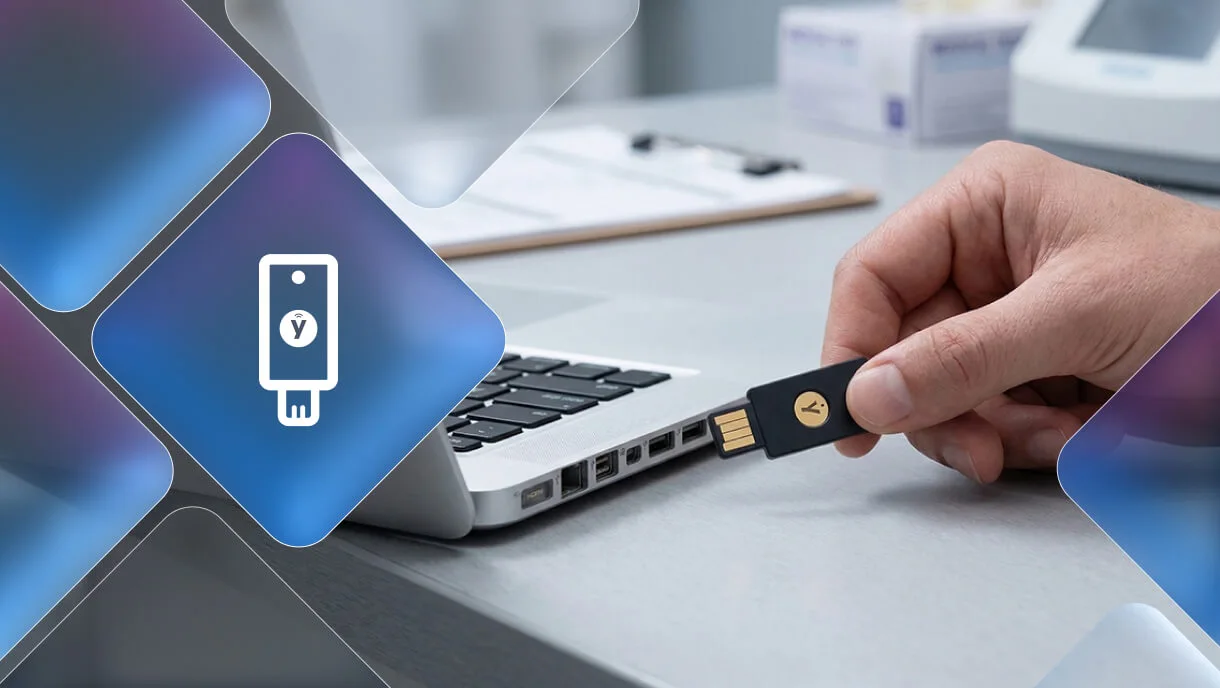
YubiKey is a hardware security key that uses cryptographic authentication instead of passwords. The blog highlights how traditional methods like passwords, SMS, and authenticator apps fail against modern threats like phishing and credential theft. The guide breaks down how a YubiKey works, including its secure chip, authentication flow, and supported protocols like FIDO2 and OTP. It compares YubiKey with other authentication methods to show why it offers stronger, phishing-resistant security. It also covers real-world use cases, enterprise deployment, and its limitations in frontline and shared device environments.
SAML vs OIDC: What Actually Matters Beyond the Protocols
SAML and OIDC are both widely used authentication protocols for enabling single sign-on (SSO), but they differ significantly in architecture, usability, and modern applicability. SAML is XML-based and commonly used in enterprise and legacy systems, while OIDC is built on OAuth 2.0 and designed for modern web and mobile applications. OIDC offers simpler integrations, better performance, and improved developer experience, making it the preferred choice for new applications. However, SAML remains relevant in enterprise environments with established identity infrastructure.
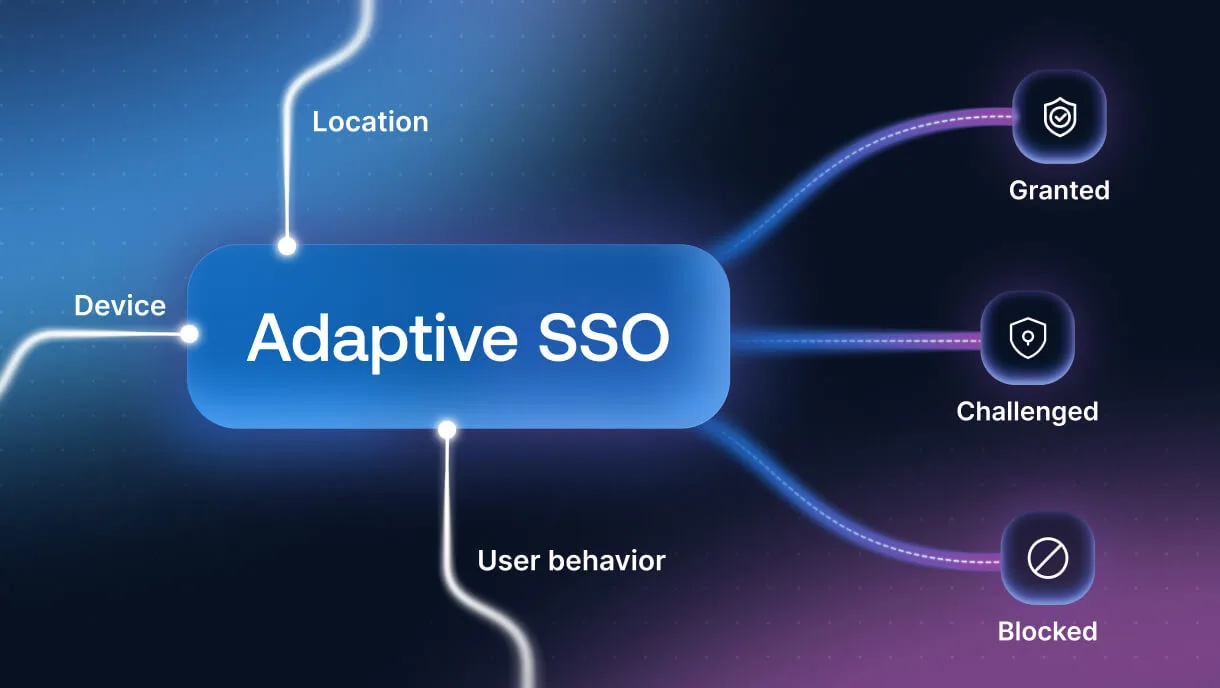
Adaptive SSO: Benefits, Limitations, and Where It Falls Short
Adaptive SSO enhances traditional single sign-on by introducing contextual and risk-based decision-making into authentication workflows. Instead of relying on a one-time login, it evaluates factors such as device, location, and user behavior to determine whether access should be granted, challenged, or blocked. This approach improves access control while reducing unnecessary authentication friction. However, adaptive SSO still depends on assumptions about device trust and session continuity, which may not hold in environments with shared systems or dynamic user behavior.

Adaptive MFA Explained: How It Works and Why It Fails in Shared Environments
Adaptive multi-factor authentication adjusts authentication requirements based on risk, context, and user behavior to ensure stronger authentication without adding unnecessary friction for users. Instead of relying on static rules, it evaluates each authentication attempt in real-time and dynamically applies additional authentication steps only when needed. This approach helps verify a user’s identity more accurately while maintaining security and convenience across environments. As identity becomes more fluid, adaptive MFA enhances how organizations balance security requirements and user experience.
Passkeys vs Passwords: What’s the Difference and Why It Matters
Passkeys vs Passwords explores how authentication is evolving from traditional password-based systems to modern, passwordless approaches. While passwords rely on shared secrets and user behavior, passkeys use public key cryptography and device-based authentication to verify identity securely. This shift reduces risks like phishing, credential theft, and password reuse, while improving login experience. As adoption grows, organizations are evaluating how passkeys fit into zero trust architectures and shared-device environments.
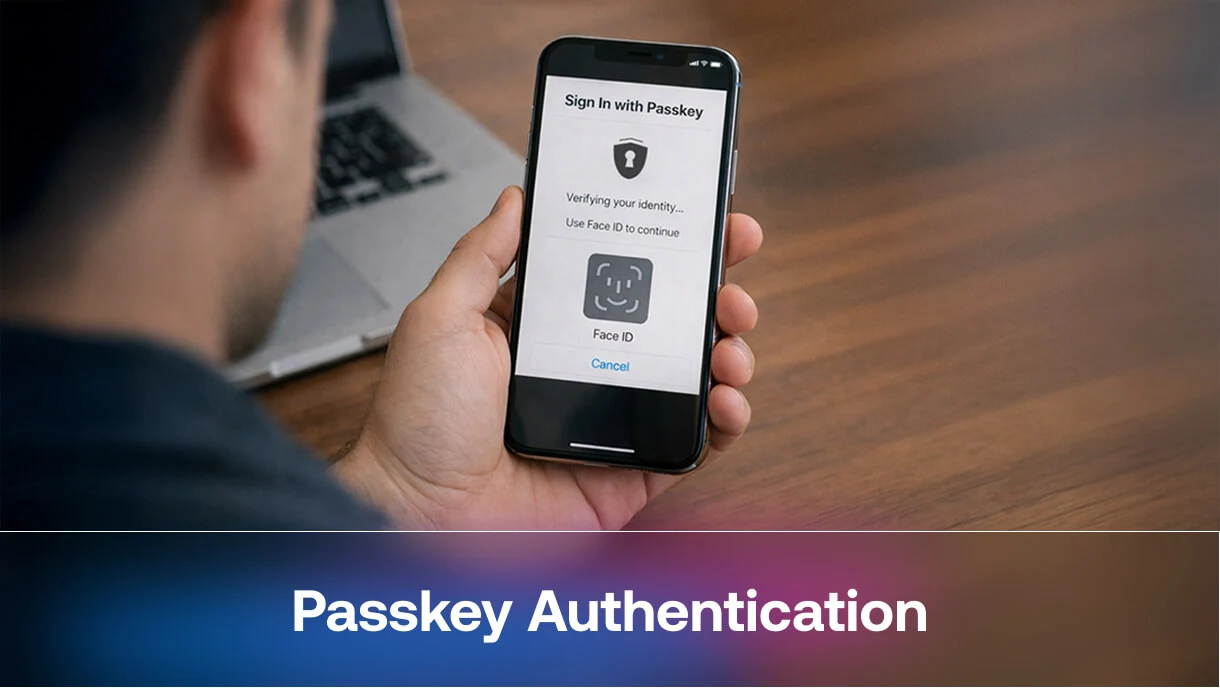
What is Passkey Authentication? How Passkeys Work and Why They Matter
Passkey Authentication is a passwordless authentication method that replaces traditional passwords with cryptographic credentials stored on trusted devices. Instead of relying on memorized passwords, passkeys use public-key cryptography and device verification, often through biometrics such as fingerprints or facial recognition. Because the private key never leaves the user’s device, passkeys reduce the risks of phishing, credential theft, and password reuse attacks.
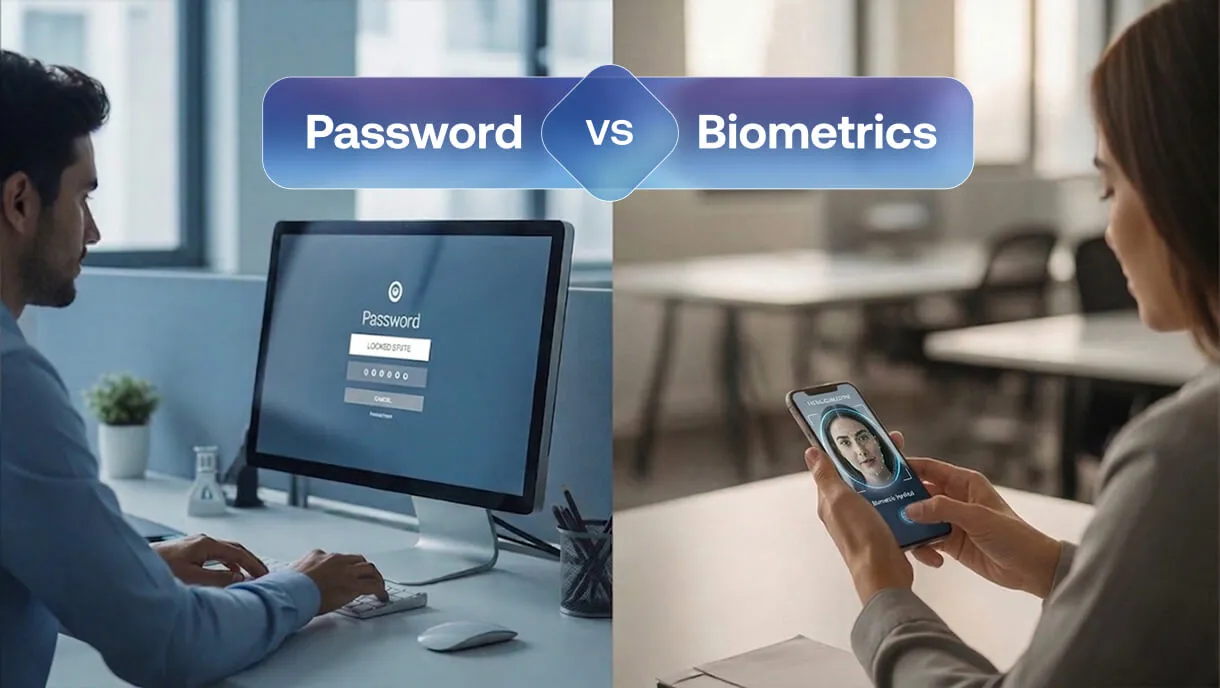
Password vs Biometrics: Which Authentication Method is More Secure?
Passwords rely on knowledge-based authentication, while biometrics verify identity using unique physical traits such as fingerprints or facial recognition. Although biometrics offer stronger resistance to phishing and credential theft, passwords remain widely used due to legacy system compatibility and ease of deployment. Modern enterprises increasingly combine biometrics with passwordless authentication and device trust to strengthen zero-trust security, particularly in shared device and frontline environments where traditional authentication models fall short.
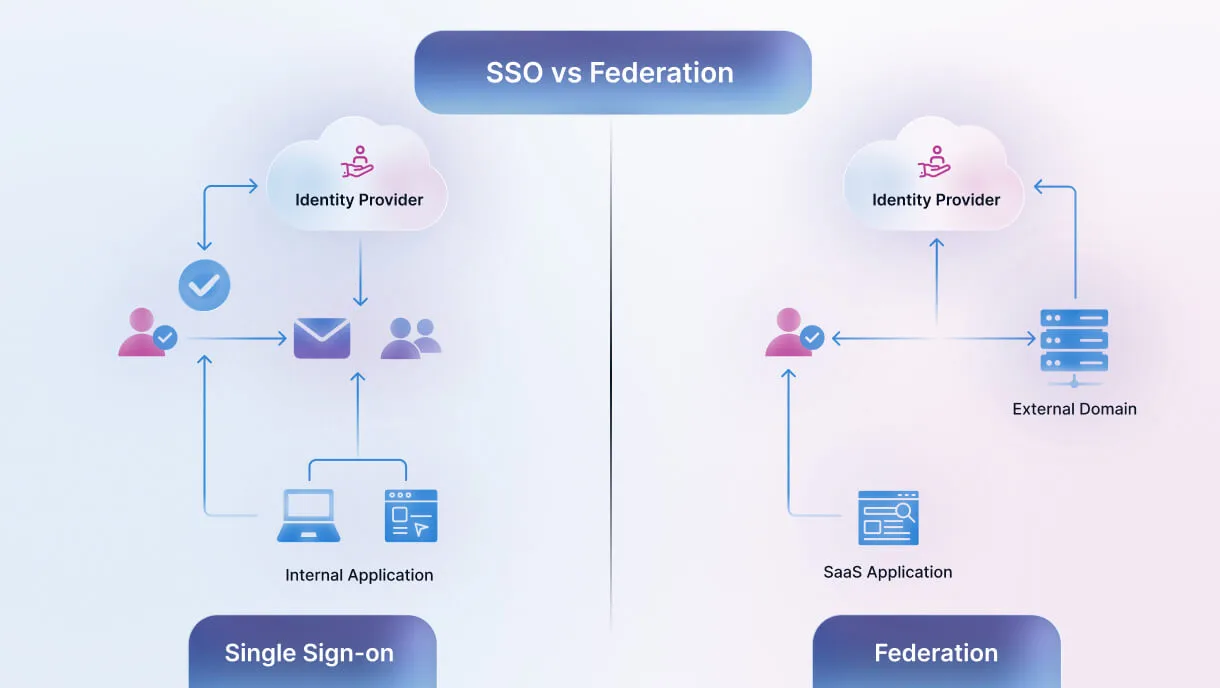
Single Sign-On (SSO) vs. Federation: A Complete Guide
SSO and Federated Identity Management are foundational to modern identity and access management. SSO simplifies access within a single organization, while federation enables secure authentication across domains using standards such as SAML and OpenID Connect. However, shared-device and frontline environments introduce identity risks that traditional models were not designed to address. Extending identity enforcement to operational endpoints strengthens Zero Trust security without disrupting workflow.
SAML vs SSO: Key Differences and How Enterprises Implement Single Sign-On
This article clarifies the distinction between SAML and SSO in modern enterprise identity architecture, explaining how SSO defines the authentication strategy while SAML enables secure identity federation between identity providers and applications. Rather than treating them as competing technologies, it shows how they work together in hybrid environments and where SAML-based SSO remains most effective. It also explores where newer protocols fit and how enterprises design multi-protocol identity frameworks.

Making every day-in-the-life of frontline workers frictionless & secure!
Get the latest updates! Subscribe now!
