




What is Privileged Access Management (PAM)? A Complete Guide


Key Takeaways
- Privileged access management controls, monitors, and secures elevated access rights for both human users and non-human accounts like service credentials and API keys
- Nearly 100% of advanced cyberattacks rely on compromised privileged credentials at some point in the attack chain
- PAM is a subset of IAM focused on high-risk, high-impact accounts that can modify systems, override controls, and access sensitive data
- The four core PAM capabilities are credential vaulting, session management and recording, least privilege enforcement, and behavioral threat detection
- Standard PAM architecture assumes one user per device, creating measurable security and compliance gaps in shared-device and frontline environments
- A phased implementation approach, starting with discovery and inventory, produces better outcomes than trying to deploy all PAM capabilities at once
- PAM and compliance are directly linked: HIPAA, PCI DSS, SOC 2, and NIST 800-53 all require privileged access controls as part of their audit evidence requirements
Somewhere in your organization right now, there is probably an account that should not exist anymore. A vendor who finished a project six months ago. A former employee whose domain access was never fully removed. A service account that was set up for a one-time integration and then forgotten. Each one of those accounts is a door. And in most organizations, nobody knows exactly how many doors there are.
This is what makes privileged access management one of the most consequential disciplines in enterprise security. According to the Verizon 2025 Data Breach Investigations Report, stolen credentials drove 53% of all data breaches last year. The attackers were not always technically sophisticated. They were patient, and they knew that unmanaged access is the path of least resistance into any organization, from cloud infrastructure to the shared workstations on a hospital floor or a manufacturing line.
What is Privileged Access Management (PAM)?
[[content-box]]
This guide breaks down what privileged access management covers, how attacks actually unfold through privileged credentials, and what a practical implementation looks like.
What Counts as Privileged Access?
Privilege refers to any access that goes beyond what a standard user needs for day-to-day work. A regular account might allow someone to read files or send emails. A privileged account can change configurations, add or remove users, access encrypted data, or override security controls entirely.
Human Privileged Accounts
- Superuser or root accounts grant IT administrators near-unlimited control over a system, including commands, settings, and file permissions
- Domain administrator accounts manage all users and devices across a Windows network
- SSH keys provide direct root access to Unix/Linux systems, often over remote connections
- Emergency accounts (also called break-glass accounts) allow bypassing normal security controls during a crisis
- Privileged business users work in finance, HR, or operations, but have access to sensitive systems
Machine and Non-Human Accounts
Not all privileged access belongs to people. Service accounts let applications interact with operating systems. API keys allow software to communicate with external platforms. DevOps secrets, tokens, and credentials used in automated workflows carry significant access with no human oversight by default.
Privileged accounts of all types typically outnumber employees by a ratio of three to four to one. In shared-device environments like hospital wards or distribution centers, a single workstation may be accessed by dozens of workers across shifts, each carrying some level of access that needs governance.
Why Privileged Access Management Matters: The Real Risk
How Attackers Exploit Privileged Credentials
Attackers rarely brute-force their way past firewalls. The common path looks like this: a phishing email compromises a standard credential. The attacker logs in quietly, blends into normal traffic, and moves laterally across the network. They search for misconfigured service accounts, unrotated SSH keys, or credentials shared between users. Once they reach a privileged account, the breach escalates from a nuisance to a catastrophe.
Real-world examples make this concrete. The Bangladesh Bank breach, the U.S. Office of Personnel Management hack, and the Uber breach all shared one factor: attackers reached privileged credentials and used them to extract data without detection.
The Insider Threat Dimension
The risk is not always external. An IBM Institute for Business Value study found that 41% of employees acquired, modified, or created technology without their IT or security team's knowledge. A contractor with access never revoked after a project ends, or workers sharing login credentials on a shared workstation between shifts, represent real exposure without any malicious intent.
PAM, IAM, PIM, PSM: Clearing Up the Terminology
The acronyms in this space overlap, and vendors often use them interchangeably:
The key distinction is that IAM covers everyone. Privileged access management covers the accounts that can cause serious damage if compromised.
Core Capabilities of a Privileged Access Management Solution
Credential Vaulting and Password Management
Credentials are stored in a secure, encrypted vault. Passwords rotate automatically on a set schedule or after each use, so no human ever needs to see or memorize a privileged password. This eliminates password sharing, static credentials, and the manual rotation processes that introduce errors.
Privileged Session Management and Recording
Every privileged session is monitored and recorded. Security teams can watch live sessions, receive alerts for suspicious behavior, and replay recordings for forensic investigation or compliance audits. In environments where multiple users share a single administrative account, this session-level visibility becomes the primary control.
Least Privilege Enforcement and Just-in-Time Access
Least privilege means users receive only the access they need for a specific task, for exactly the time they need it. Just-in-time (JIT) access takes this further: access is provisioned on request, approved in real time, and automatically revoked when the task completes. This removes the persistently elevated permissions that attackers seek during lateral movement.
Threat Detection and Behavioral Analytics
PAM tools analyze session behavior and flag anomalies, such as a user accessing systems outside their normal pattern, bulk data downloads at unusual hours, or commands that deviate from baseline behavior. These signals surface threats before they become breaches.
Privileged Access Management for Modern Environments
Cloud, Kubernetes, and Database Access
Legacy PAM tools were built for on-premises IT. Modern infrastructure is distributed. Cloud instances, containerized workloads, managed databases, and Kubernetes clusters all require privileged access management. Without coverage in these environments, gaps open that attackers exploit. The same applies to operational technology environments, where PAM for OT systems carries the same credential risks as traditional IT but with far less tooling coverage.
Vendor and Third-Party Access
Third-party vendors and contractors often need temporary privileged access to internal systems. Without controls, that access tends to outlast its usefulness. Vendor PAM applies credential vaulting, session monitoring, and JIT principles to external users without requiring them to hold a full internal identity.
Shared-Device and Frontline Worker Environments
Healthcare, manufacturing, logistics, and retail present a challenge that traditional privileged access management architectures were not designed for. Workers share terminals and workstations across shifts. Persistent individual logins are impractical. Yet the access happening on those shared devices, from patient records to production controls, can be highly sensitive.
This is where identity-aware access controls built for operational realities make the difference. OLOID builds authentication and access management specifically for frontline environments, enabling fast, secure, passwordless access on shared workstations without creating credential sprawl or access gaps between shifts. Privileged access management in an operational workplace has to account for how people actually work on the floor, not assume everyone sits at a dedicated desk.
Machine Identities and AI Agents at Scale
As organizations deploy AI agents, automation workflows, and software integrations, non-human identities multiply. These machine identities carry privileges but often receive far less oversight than human accounts. Privileged access management must govern the full lifecycle of machine credentials, from creation and rotation through auditing and retirement.
Why PAM Falls Short in Shared Workstation and Frontline Environments
Most PAM architectures were built around corporate IT assumptions: one employee, one workstation, one persistent identity. But operational environments like hospitals, warehouses, manufacturing floors, and retail stores rarely function that way.
In frontline environments, shared workstations are the norm. A single terminal in an ICU might be used by twelve different nurses across three shifts. On a production floor, operators clock in and out of the same device throughout the day. In a distribution center, a shared login is often the only practical option when workers need fast access and have no time to navigate lengthy authentication flows between tasks.
Traditional PAM tools were not built for this reality. Here is where the gaps show up:
Credential sharing becomes the default workaround
When authentication is friction-heavy, workers share passwords. It is not a policy failure; it is a practical response to a system that was not designed for how they actually work. But shared credentials mean no individual accountability, no audit trail that means anything, and a single compromised password that exposes an entire shift's worth of access.
Sessions stay open between users
Without fast, reliable individual authentication, workers often leave sessions active when they step away. The next person at the terminal inherits whatever access the previous user had. In a healthcare setting, that might mean a nurse accessing a patient record under a colleague's identity. In a regulated environment, that is both a compliance failure and a security gap.
Least privilege becomes impossible to enforce
PAM's core principle gives users only the access they need, only when they need it; it requires knowing who is actually at the device. In a shared workstation environment without strong individual identity verification, that knowledge disappears. Access controls either become too broad to be meaningful or too restrictive to be usable.
Audit trails break down
Regulators and security teams rely on session logs to understand who did what and when. When five workers share a login, those logs tell you the account was active, not which person was behind it. Under HIPAA, PCI DSS, and similar frameworks, that is not an audit trail. It is a liability.
[[cta]]
Bridging the Gap: Identity-First Access for Frontline Environments
The gap described above is not a PAM product failure. It is a design assumption that never accounted for how frontline work actually operates. Closing it requires rethinking authentication at the point of access.
OLOID is identity-first PAM for shared workstations, built for the environments traditional PAM was never designed to serve. It enables fast, passwordless privileged access at the workstation level using biometrics, badges, or mobile credentials, so each worker establishes their own verified identity before accessing any system, even on a shared terminal.
What makes that possible in practice:
- Individual session accountability on shared devices, without slowing down shift transitions
- Automatic session termination when a worker steps away, so the next user starts clean
- Least privilege enforcement tied to a verified individual identity, not a shared account
- Audit logs that show exactly who accessed what and when, at the person level, not the device level
For healthcare organizations managing HIPAA compliance, manufacturers navigating ISO 27001 requirements, or logistics operators handling sensitive inventory data, this closes a real and measurable gap that standard PAM deployments leave open.
Seeing PAM gaps on your shared workstations? OLOID delivers individual-level authentication on shared terminals so every session is verified, every audit trail is clean, and every shift transition stays secure.
Key Challenges Organizations Face with PAM
- Credential sprawl: Privileged accounts accumulate across systems over the years without any central inventory
- Privilege creep: Users accumulate permissions over time as roles evolve, without anyone removing old access
- Manual credential rotation: Many teams still rotate privileged passwords manually, introducing errors and inconsistency
- Lack of session visibility: Without centralized monitoring, privileged activity happens invisibly, making forensic investigation and compliance audits painful
How to Implement PAM: A Practical Roadmap
Most privileged access management programs fail not because the technology is wrong, but because the rollout tries to do everything at once. A phased approach works better.
Step 1: Discover and inventory all privileged accounts
Start with a full audit of all privileged accounts, human and machine, active and dormant, across every system. Most organizations find significantly more than they expected.
Step 2: Classify and prioritize by risk
Domain administrators and root accounts on production systems carry more risk than a service account used only in development. Prioritize based on the sensitivity of what each account can access.
Step 3: Vault credentials and enforce least privilege
Move privileged credentials into a secure vault. Remove standing persistent access and apply least privilege policies scoped to specific tasks, systems, and time windows.
Step 4: Enable session monitoring and audit trails
Activate session recording and behavioral monitoring across all privileged activity. This creates both a security control and a compliance record that satisfies audit requirements under HIPAA, SOC 2, PCI DSS, and similar frameworks.
Step 5: Integrate with governance workflows
Access requests, approvals, certifications, and deprovisioning should follow automated workflows rather than email chains and manual tracking.
Conclusion
Privileged access is, by definition, powerful, and that power cuts both ways. The same credentials that let an IT administrator configure systems in minutes can let an attacker dismantle them in the same window. The same shared workstation that keeps a frontline team productive can become an access liability if nobody has thought through what happens between shifts.
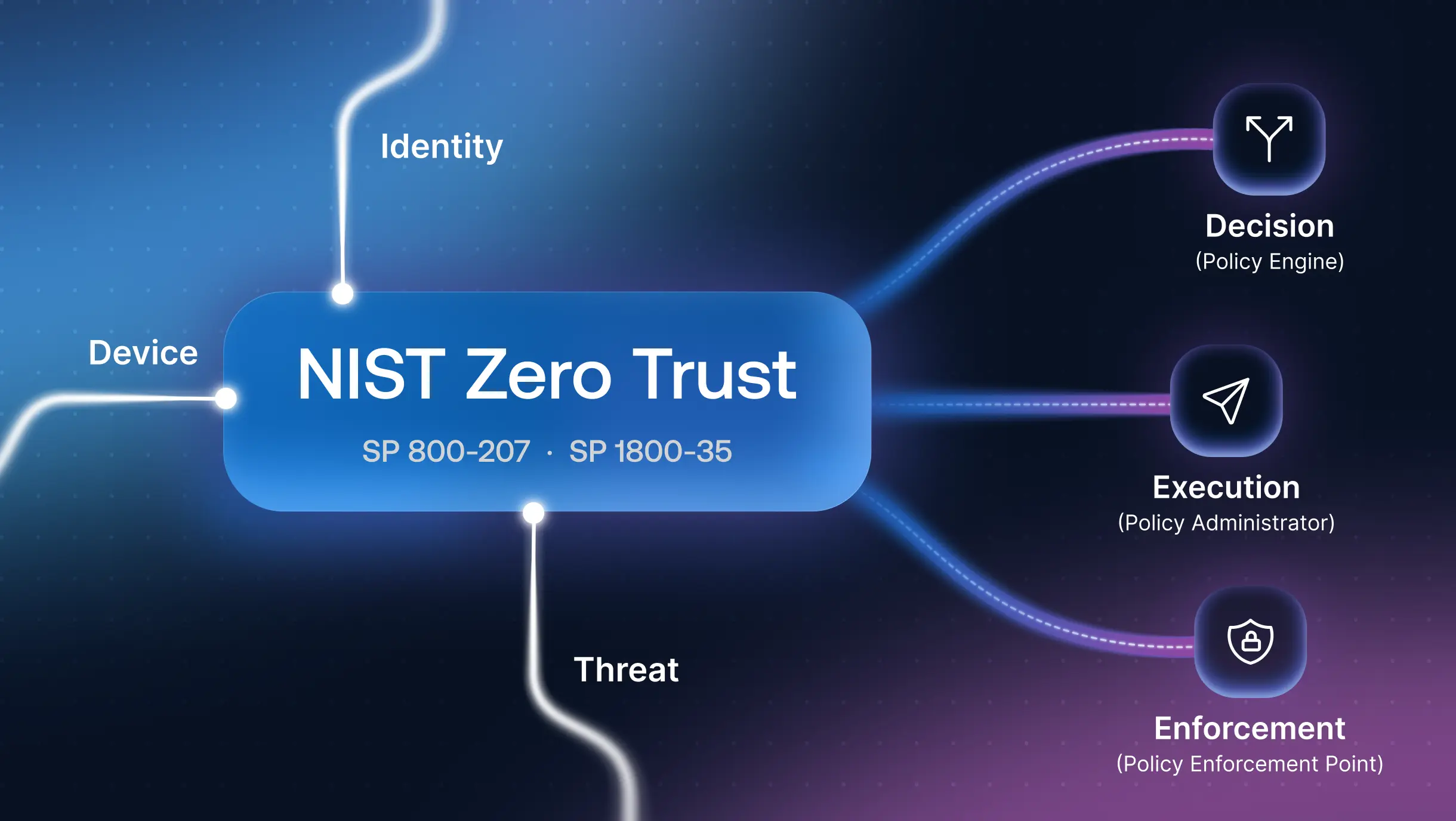
Privileged access management gives organizations the visibility, control, and governance to make sure that power only goes where it belongs. For organizations building toward zero trust, privileged access management is not optional; it is the identity control layer that zero trust depends on. The organizations that get it right treat privileged access management as a program rather than a product, and they keep asking the same questions: who has access, to what, and do they still need it? A privileged account without verified identity attribution is not governance. It is exposure.
FAQs
1. What is privileged access management, and why does it matter?
Privileged access management is a cybersecurity framework that controls and monitors elevated access to an organization's critical systems, data, and infrastructure. Without it, privileged accounts become the easiest path for attackers to move laterally, escalate access, and exfiltrate data without triggering standard security alerts.
2. What is the difference between PAM and IAM?
IAM governs access for all users across an organization. PAM is a specialized subset of IAM focused specifically on accounts with elevated permissions that can modify systems, override controls, or access sensitive data. Think of IAM as the broad access layer and PAM as the high-stakes layer within it.
3. Is PAM part of zero trust?
Yes. PAM is one of the foundational pillars of a zero-trust architecture. Zero trust operates on the principle of never trust, always verify, and privileged accounts are exactly where that verification matters most. Without PAM enforcing least privilege and session controls, zero trust has a significant gap at the identity layer.
4. Does privileged access management work in shared-device environments like healthcare or manufacturing?
Standard PAM tools were not designed for shared-device environments. They assume one user per device, which breaks down on shift-based floors where multiple workers share a single terminal. Environments like these need identity-aware authentication at the workstation level so each session is tied to a verified individual, not a shared login.
5. Can PAM prevent ransomware?
PAM significantly reduces ransomware risk by limiting the lateral movement attackers rely on after initial compromise. Most ransomware deployments depend on reaching a privileged account to spread across systems and encrypt data at scale. Credential vaulting, JIT access, and session monitoring all interrupt that chain before the damage scales.

Get the latest updates! Subscribe now!

