




Passwordless SSO: A Practical Implementation Guide for Enterprise Teams


Key Takeaways
- Passwordless SSO eliminates the password, not just the friction, removing the credential layer that attackers exploit most.
- Traditional SSO centralizes access around a password, making it the highest-value phishing target in your environment.
- Passwordless MFA and passwordless SSO are not the same thing. SSO means one authentication event covers every connected application.
- Device loss replaces credential theft as the primary risk, making fallback and recovery flow design non-negotiable before deployment.
- Standard passwordless SSO deployments leave frontline and shared-device environments exposed. Personal device enrollment does not work on a shared terminal.
Every IT leader has seen this pattern. A well-funded enterprise deploys SSO, reduces login friction across dozens of applications, and considers the authentication problem solved. Then the breach report arrives: stolen credentials. The SSO setup that was supposed to be the security layer became the biggest target, because the password protecting it was phished in under 60 seconds.
This is not hypothetical. The 2024 Verizon Data Breach Investigations Report found that compromised credentials were the initial access vector in 38% of all confirmed breaches, more than double the rate for phishing and exploitation combined. A CNBC survey of 200 CISOs found 92% of organizations had implemented or were actively planning to implement passwordless authentication, up from 70% the prior year.
What is Passwordless SSO?
[[content-box]]
This guide covers what enterprise teams need to know before, during, and after deployment: how passwordless SSO compares to traditional SSO, how to evaluate it for your environment, what can go wrong, and how to roll it out without disruption.
Passwordless SSO vs. Traditional SSO
Traditional SSO centralizes authentication around a single credential set. Users log in once with a username and password, receive a session token, and move freely across connected applications. The convenience is real, but the problem is that centralizing access around a password also centralizes the attack surface. One compromised password can potentially grant attackers broad access across every federated application tied to the SSO session.
Passwordless SSO removes that entry point entirely. Authentication uses a cryptographic method tied to a specific device: a fingerprint, face scan, or FIDO2 hardware key. The private key is designed to remain protected within the user’s trusted device ecosystem and is never exposed to the relying application. There is no credential to phish, intercept, or brute-force.
One distinction that matters before evaluation: Passwordless MFA and passwordless SSO are not interchangeable. Passwordless MFA removes passwords from a multi-step flow but may still require separate authentication at each application. Passwordless SSO combines passwordless authentication with a single session that propagates across all connected apps. One strong authentication event covers everything downstream.
| Aspect | Traditional SSO | Passwordless SSO |
|---|---|---|
| Authentication method | Username and password | Biometric, passkey, or hardware token |
| Primary vulnerability | Phishing, credential stuffing, and password reuse | Lost or stolen enrolled device |
| User experience | One password-based login per session | One biometric or tap per session |
| IT overhead | High: resets, lockouts, helpdesk volume | Low: no passwords to manage or reset |
| Phishing resistance | Low | High: private keys are device-bound |
| Compliance readiness | Partial | Stronger alignment with NIST, HIPAA, and SOC 2 |
How Passwordless SSO Works
The Identity Provider's Role
The identity provider (IdP) is the central trust authority. When a user attempts to access an application, the app redirects the request to the IdP. The IdP performs passwordless verification and, if successful, issues a session token that authenticates the user across every connected application without additional prompts.
Protocols That Power It: SAML, OAuth, WebAuthn, and FIDO2
- SAML: SAML exchanges authentication data as XML and remains the standard for enterprise web applications and legacy systems.
- OAuth 2.0 and OpenID Connect: They handle authorization and identity for modern cloud-native applications.
- WebAuthn: WebAuthn enables browsers and native apps to authenticate using biometrics or security keys, with no password involved.
- FIDO2: FIDO2 is the overarching standard WebAuthn sits within, using public key cryptography to create device-bound, phishing-resistant credentials.
Public Key Cryptography
During enrollment, the system generates a key pair: a private key stored on the user's device and a public key registered with the IdP. At login, the IdP sends a cryptographic challenge. The device signs it using the private key. The IdP verifies the signature against the registered public key and grants access if the match confirms.
The private key never transmits. No reusable shared secret is stored server-side in the way passwords traditionally are.
How Session Tokens Maintain Access Across Apps
After the initial authentication, the IdP issues a session token, typically a JSON Web Token (JWT) or secure cookie. Each connected application validates this token directly with the IdP rather than prompting re-authentication. The token carries an expiry window, and IT teams can revoke it centrally, giving real-time control over active sessions without touching individual applications.
Why Organizations are Moving Beyond Password-Based SSO
Passwords have always been the weakest link in enterprise security, but five converging pressures are making the move away from them unavoidable.
Phishing resistance: Password-based SSO offers none. A convincing login page is all an attacker needs to harvest credentials and inherit full session access. FIDO2-based passwordless authentication breaks this entirely because the private key is bound to the device and the exact origin URL, so a spoofed page simply gets no response.
Credential stuffing: Billions of username and password combinations from past breaches circulate freely. Automated tools test them against enterprise login pages at scale. Passwordless removes the credential from the equation, so there is nothing to stuff.
Compliance pressure: HIPAA, SOC 2 Type II, PCI DSS 4.0, and NIST SP 800-63 all require strong authentication controls and complete audit trails. Password-based SSO satisfies these partially at best. Passwordless SSO satisfies them by design, with every session tied to a verified identity and a logged authentication event.
Zero Trust alignment: Zero Trust requires verifying every access request against user identity and device health, regardless of network location. Password-based SSO trusts the session after the first login. Passwordless SSO with device trust and short-lived tokens enforces verification from the first authentication event forward, which is what Zero Trust actually requires.
Where Passwordless SSO Delivers the Most Value
Knowledge Worker Environments
For office-based teams on personal devices, passwordless SSO reduces login friction across SaaS tools, internal platforms, and cloud applications. The immediate gains are fewer password resets, faster access, and a smaller attack surface. According to Gartner, 40% of all helpdesk calls relate to password issues, with Forrester estimating each reset costs $70 in direct labor.
Shared-Device and Frontline Environments
In healthcare, manufacturing, logistics, and retail, workers frequently share devices across shifts. A single workstation in a clinical ward may serve a dozen nurses in one day. A production floor terminal cycles through multiple operators across three shifts. Traditional SSO with shared passwords creates two simultaneous problems: the security risk of credentials passed informally between colleagues, and lockouts affecting the next worker in line.
Passwordless SSO handles this differently. Each worker authenticates with their own enrolled biometric or token, establishes a personal session, and that session closes cleanly when they step away. Every access event is tied to an individual identity and gets logged. Platforms designed specifically for this operational model, like OLOID’s passwordless SSO, extend this further with proximity-based and badge-based authentication built for shared-device environments where mobile enrollment is not always practical.
Compliance Alignment
- HIPAA requires audit trails for who accessed protected health information and when. A session tied to a verified biometric identity satisfies this directly.
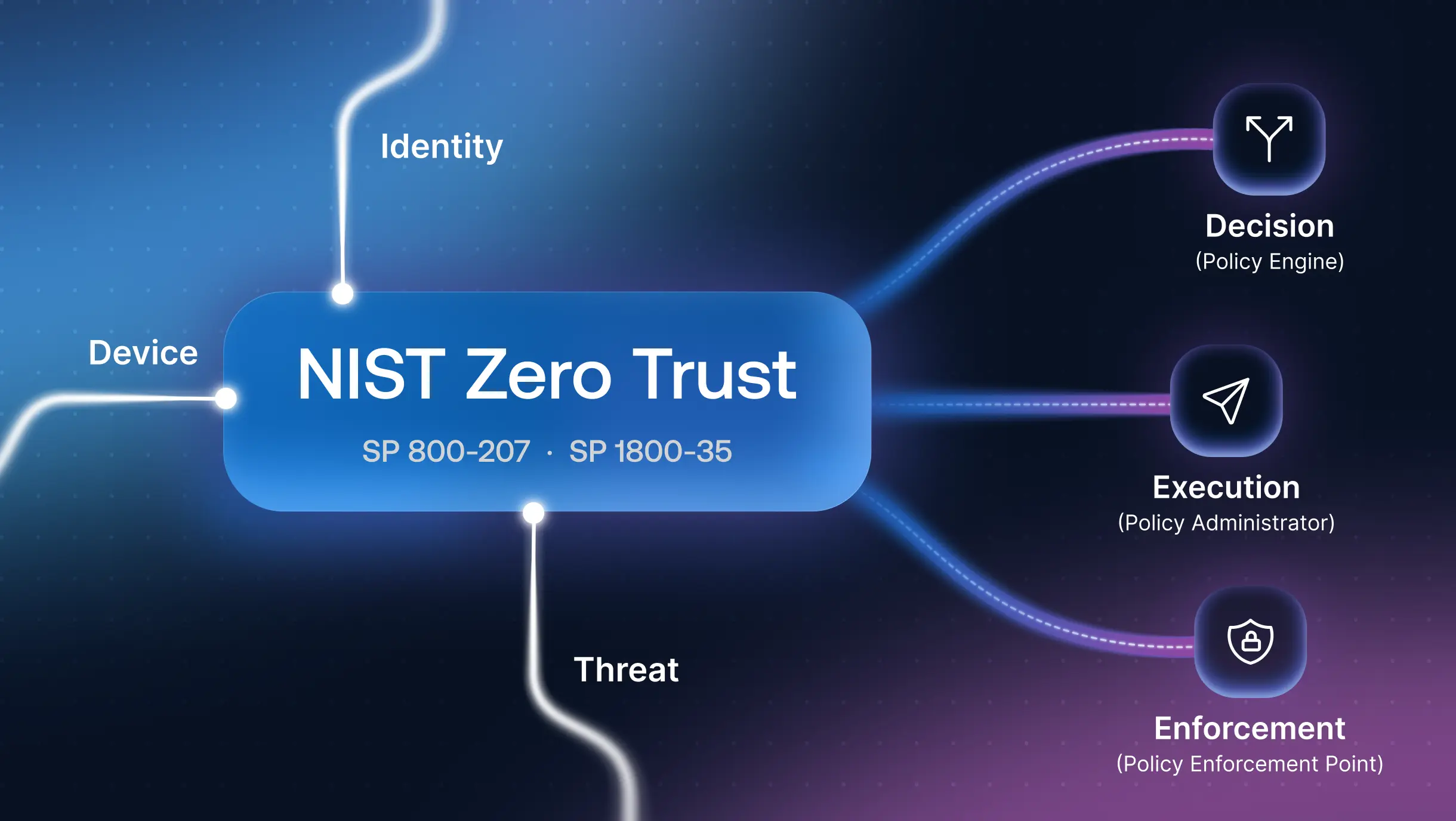
- NIST Zero Trust (SP 800-207) requires continuous verification rather than assumed trust. Passwordless SSO with session token expiry and centralized revocation aligns with this model.
- SOC 2 Type II requires strong authentication controls and a complete, auditable access trail. Passwordless SSO provides both by design.
What to Evaluate Before You Commit
Legacy system compatibility
Not every application supports FIDO2 or WebAuthn natively. Older systems may need middleware or SAML bridges. Map your application estate against protocol support before choosing a vendor. Discovering compatibility gaps mid-deployment is expensive.
Where your IdP ends and your passwordless vendor begins
Using your IdP to authenticate into itself creates a circular dependency that attackers can exploit. A separate passwordless layer that verifies the user and passes a confirmed identity to the IdP breaks that dependency. Assign clear ownership across passkey enrollment, device management, and fallback flows before deployment starts.
Fallback and recovery flow design
Device-bound passkeys shift risk from credential theft to device loss. A lost phone or forgotten hardware token is a real operational scenario, especially for frontline workers. Every deployment needs clear answers to: what is the fallback method, who approves it, and how quickly can a worker regain access without creating a social engineering vulnerability at the helpdesk.
SSO as a single point of failure
If the IdP goes down, access to every connected application goes with it. Mitigation requires IdP redundancy, offline access modes for critical applications, and an incident response plan that accounts for IdP availability. For operational environments, this planning is not optional.
Common Passwordless SSO Deployment Failures
Most passwordless SSO deployments do not fail because the technology does not work. They fail because of decisions made before the first device is enrolled.
Relying only on biometrics with no fallback
Readers fail on wet hands and factory floors. Every deployment needs a defined backup: hardware token, admin override, or backup PIN on a secondary trusted device.
Poor IdP redundancy
If the IdP goes down, access to every connected application goes with it. Build in failover, offline access modes for critical systems, and an explicit incident response plan before go-live.
No offline authentication strategy
Warehouses, production floors, and clinical environments often have intermittent connectivity. A flow that requires a live IdP connection for every authentication event will fail exactly where it is most needed.
Weak session timeout policies
On shared devices, a session left open after a worker steps away is an access control failure. Set short idle windows for shared terminals and enforce immediate revocation on logout, not token expiry.
Incomplete logout handling
Clicking "sign out" of one application should terminate the entire SSO session. An incomplete logout on shared terminals means the next worker inherits the previous session.
Assuming every worker has a smartphone
In manufacturing, logistics, and retail, large portions of the workforce do not carry personal devices during shifts. Mobile-first enrollment creates an immediate exclusion problem for frontline teams.
Ignoring shared terminals
Consumer passkey models bind credentials to a personal device. On shared terminals, you need per-user session attribution on login and clean session clearing on logout, not device-level trust that persists between shifts.
Weak enrollment governance
If enrollment requires no identity verification, the entire authentication model is only as strong as the enrollment process. Require verified identity, admin approval for high-privilege roles, and immediate revocation on offboarding.
How to Roll Out Passwordless SSO Efficiently
Use a phased deployment approach
Start with one department or location. Identify integration gaps, fallback failures, and edge cases at a small scale before expanding. RSA's own internal passwordless deployment, documented by the FIDO Alliance, found the technology performed as expected, but organizational complexity around policy decisions and change management required more time than anticipated.
Design device enrollment for operational realities
Define the enrollment workflow before launch: who initiates it, how workers without personal devices enroll, and how departing employees are deprovisioned. For shared-device environments, enrollment needs to be fast enough to avoid creating a queue at shift start.
Build biometric fallbacks from day one
Fingerprint readers fail on factory floors. Face recognition struggles with masks in clinical settings. Any deployment relying solely on biometrics without a tested fallback will generate helpdesk volume when conditions are imperfect. Test fallback paths, document them, and train frontline supervisors on them.
Treat change management as a core workstream
Employees with decades of password habits need to understand the change and feel its benefits quickly. Organizations that frame passwordless SSO as a benefit to workers, with fewer lockouts, faster access, and no more password resets, consistently see stronger adoption than those that lead with security mandates.
The Missing Layer in Every Passwordless SSO Deployment
Most passwordless SSO deployments solve the credential problem for office workers on personal devices. The architecture is sound, the protocols work, and the phishing risk drops. But in the environments where authentication failures are most costly, hospital floors, factory lines, logistics hubs, and retail back offices, the standard deployment model hits a wall.
Shared devices, no personal phones for enrollment, and workers rotating across the same terminal every few hours. A biometric enrolled on one device that is never available at the next workstation. These are not edge cases; They are daily realities for the largest segment of the global workforce.
This is the operational identity gap many frontline organizations still struggle to solve. Platforms such as OLOID are designed specifically for these shared-device and shift-based authentication environments. It delivers passwordless SSO for frontline and shared-device environments using proximity-based authentication, badge tap, and biometrics that work at the workstation level, not the personal device level. Every worker gets their own verified session on any shared terminal. Every session closes when they walk away. Every access event is logged to an individual, not a device.
If your passwordless SSO rollout covers your office teams but leaves your frontline workers on shared passwords and open sessions, the credential risk you set out to eliminate is still there. It just moved.
FAQs
1. Is SSO the same as passwordless SSO?
No. Traditional SSO still requires a password at login. Passwordless SSO replaces that with a biometric, passkey, or hardware token. The session token works the same way. The authentication method at the start is what changes.
2. What is the difference between passwordless SSO and passwordless MFA?
Passwordless MFA removes the password but may still require separate authentication at each app. Passwordless SSO combines the passwordless method with a single session covering all connected applications. One authentication event, everything downstream covered.
3. Is passwordless SSO actually more secure than traditional SSO?
Yes. Phishing, credential stuffing, and password reuse attacks need a password to work. Remove the password, and those attack vectors lose their effectiveness. Risk shifts to device loss, which is manageable with proper recovery design.
4. How long does a passwordless SSO implementation take?
Eight to twelve weeks from pilot to full rollout. The main variables are legacy system compatibility, device enrollment logistics, and change management scope. Frontline and shared-device environments need additional operational testing time.
5. What happens when a user loses their enrolled device?
Recovery should be designed before deployment, not after. Standard options include admin-initiated temporary access, backup hardware tokens for high-risk roles, and helpdesk verification workflows that are equally phishing-resistant as the primary method.

Get the latest updates! Subscribe now!

