



The OLOID Blog
Insights on identity, access, and security for the modern frontline workforce.
Featured
Salesforce Phishing-Resistant MFA 2026: Entra ID, AMR Signals, and How to Stay Compliant
Salesforce now enforces phishing-resistant MFA for privileged users across direct and SSO logins, and organizations on Microsoft Entra ID are running into a specific failure: users who completed MFA at Entra are being challenged again inside Salesforce because the token did not carry the right AMR signal. This blog covers what changed in 2026, how Salesforce evaluates AMR and ACR values, why the multipleauthn retirement blocked users mid-month, and how OLOID Face registered as an Entra External Authentication Method delivers the face AMR value Salesforce requires, with no hardware, no per-device enrollment, and no changes to your existing SSO configuration.

.webp)
What is the Client to Authenticator Protocol (CTAP) and Why Does It Matter
The client-to-authenticator protocol (CTAP) is the FIDO Alliance specification that governs how a browser or operating system communicates with an external authenticator, such as a security key, badge, or phone, over USB, NFC, or Bluetooth. Most organizations adopting passwordless authentication understand WebAuthn and FIDO2 at a surface level but miss how CTAP lies beneath both and enables hardware-bound authentication. The gap widens in operational environments: shared workstations, shift-based terminals, and frontline devices where standard authentication assumptions, one worker, one device, do not hold.

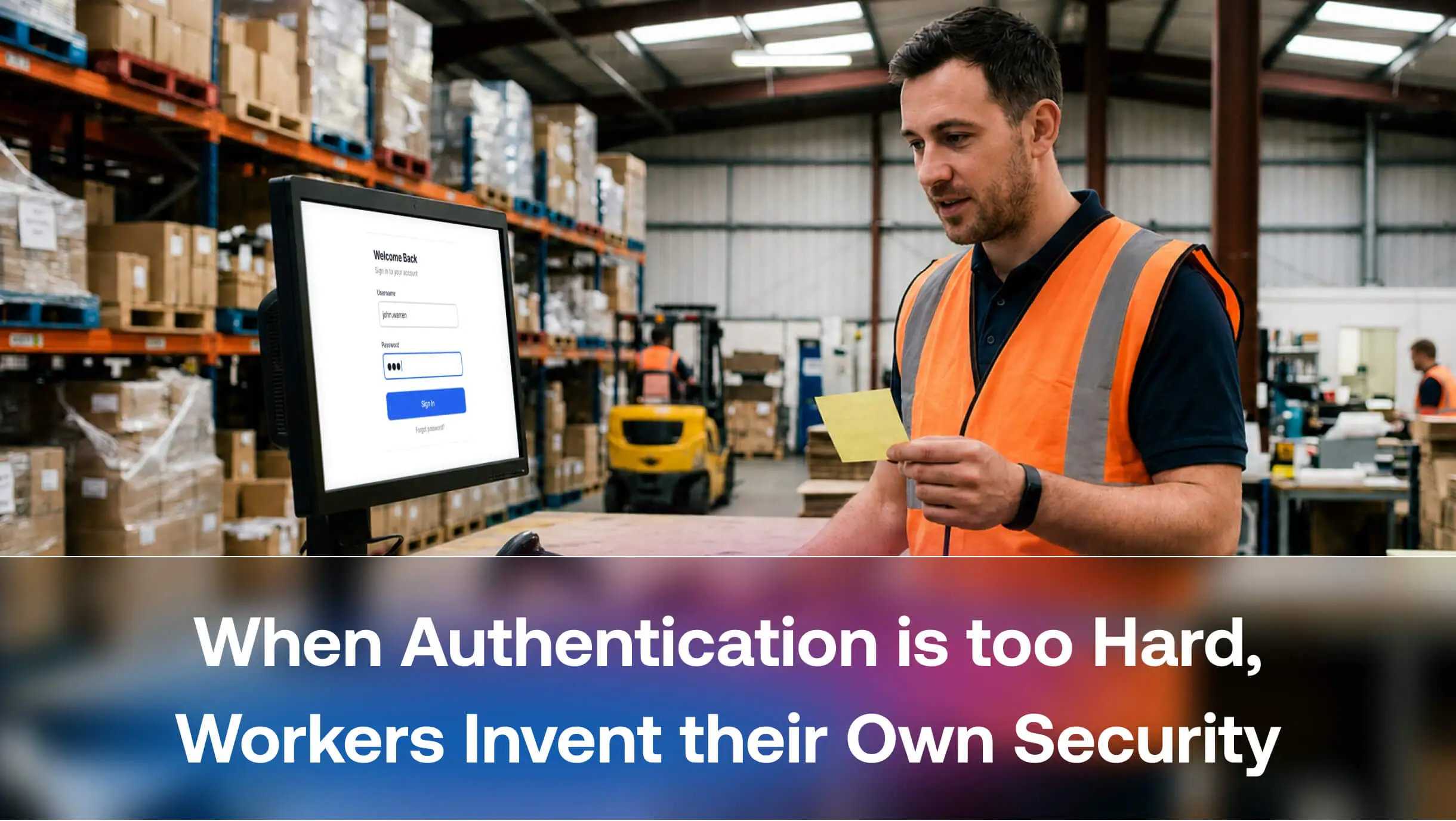
The Workaround Problem: When Authentication is too Hard, Workers Invent their Own Security
Frontline workers don't bypass authentication because they're careless. They do it because the system makes compliance slower than the job allows. Authentication designed for desk workers fails in shared-device, high-speed environments, and no amount of training changes that. The real cost isn't just breach exposure; it's the operational drag that security teams never measure and operations teams quietly absorb. Fixing this means designing authentication that is fast and secure by default, built around the frontline environment rather than retrofitted onto it.

Why Frontline Identity Is an Operations Problem, Not Just IT
Most enterprise identity programs were built for desk workers and have never been properly redesigned for the frontline. The result is an authentication infrastructure that creates measurable operational drag across every shift, in every industry where workers share devices, move between stations, and hand off access under time pressure. Closing that gap is not a security project. It is an operations priority, and OLOID is the infrastructure built to address it.

What is OAuth? A Complete Guide to Open Authorization
OAuth (Open Authorization) is an open standard protocol that lets applications access user data without ever handling a password. Most teams understand the surface-level concept but miss the implementation nuances that matter in practice: the right grant type, token lifecycle management, the deprecation of the implicit flow, and what changes with OAuth 2.1. This guide covers what OAuth is, how it works, which grant type fits each scenario, how it compares to OIDC, SAML, and SSO, and where token-based authorization becomes especially critical in shared-device and frontline environments.

What is Proximity Authentication?
Proximity authentication verifies identity through physical presence, not passwords or PINs, using technologies like BLE, NFC, and Wi-Fi to detect how close a paired device is to a host system. When the user approaches, the session opens automatically. When they walk away, it locks. This blog covers how proximity authentication works, which communication protocols power it, how it compares to badge tap and biometrics, and where it delivers the strongest security and operational value. It also maps proximity authentication to HIPAA, CMMC, and PCI DSS compliance requirements and outlines what to consider before deployment, including token loss, signal interference, and fallback planning.
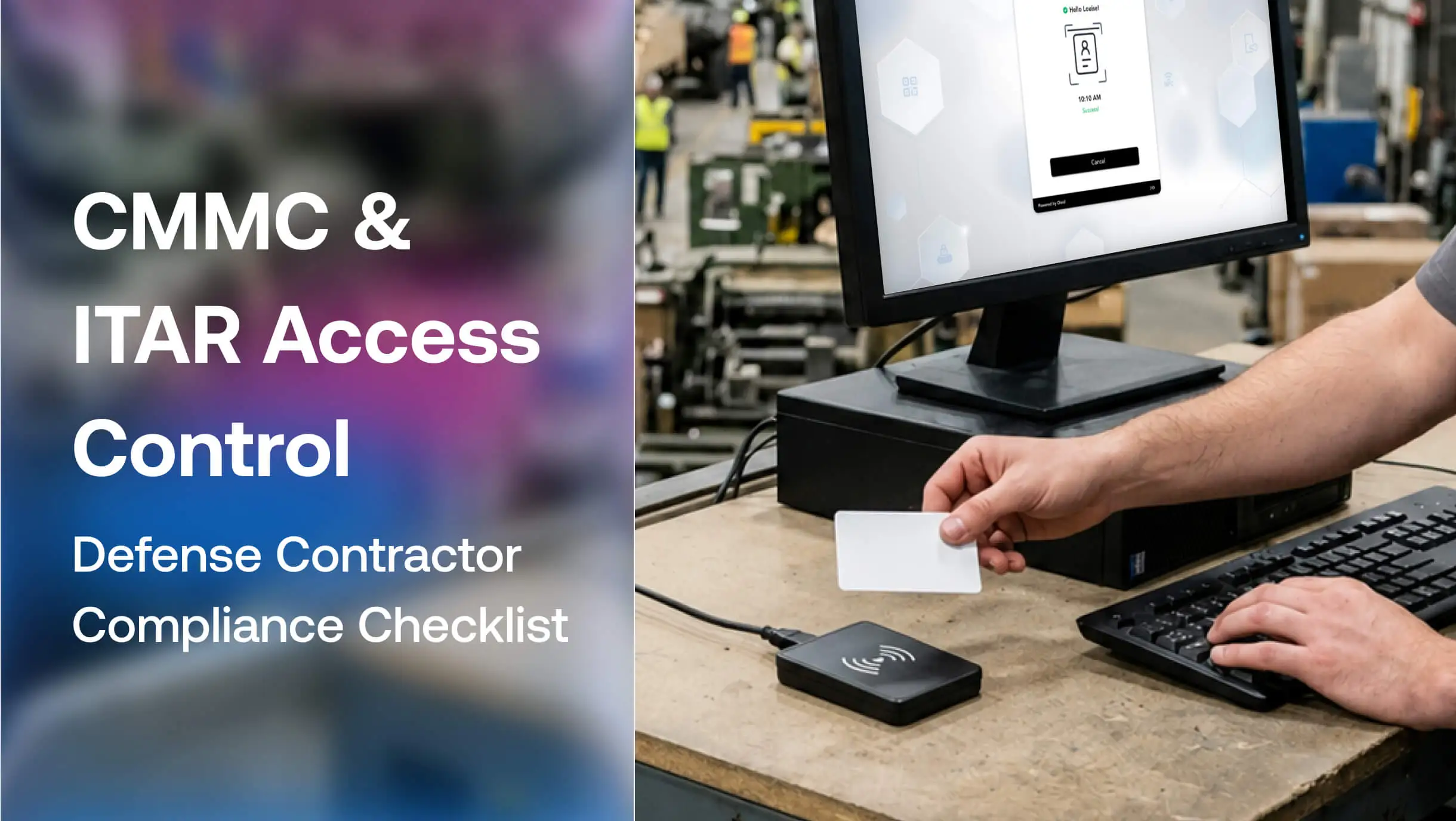
CMMC ITAR Access Control Checklist 2026: A Practical Guide
The CMMC ITAR access control checklist maps the 22 AC domain requirements from CMMC 2.0 and ITAR's identity-based access obligations into a single actionable framework for defense contractors. Most organizations in the Defense Industrial Base underestimate where their access controls break down in practice, particularly on shared production floor terminals, in mixed-nationality workforces, and during high-turnover offboarding cycles. This guide covers what CMMC and ITAR each require for access control, where the two frameworks overlap and where they diverge, what the November 2026 Phase 2 enforcement deadline means for AC domain readiness, and what compliant identity and access management looks like in defense manufacturing and operational environments.
PCI DSS Access Control Checklist 2026: A Practical Guide
The PCI DSS access control checklist governs who can access cardholder data environments, how they authenticate, and how every session gets logged and attributed to an individual. Most organizations underestimate where their access control program breaks down in practice, particularly around shared POS terminals, standing access after termination, and audit trails that collapse when credentials are shared. This guide covers all 12 PCI DSS requirements, explains what PCI DSS 4.0.1 changed for access control, and shows exactly where operational environments in retail, logistics, and manufacturing create persistent compliance gaps that standard checklists never address.
Badge Tap Access: How It Works and Why It Matters for Operational Security
Badge tap access is a contactless authentication method that uses RFID or NFC technology in an employee's ID badge to grant access to workstations and applications without passwords. Most organizations adopt it for speed, but the stronger case is security and compliance. This guide covers how badge tap access works, the specific problems it solves in shared-device environments, and how it compares to passwords and hardware security keys. It also covers what a strong deployment requires to deliver compliance-grade access control. The content is grounded in frontline environments like healthcare, manufacturing, logistics, and retail, where standard authentication assumptions consistently break down.
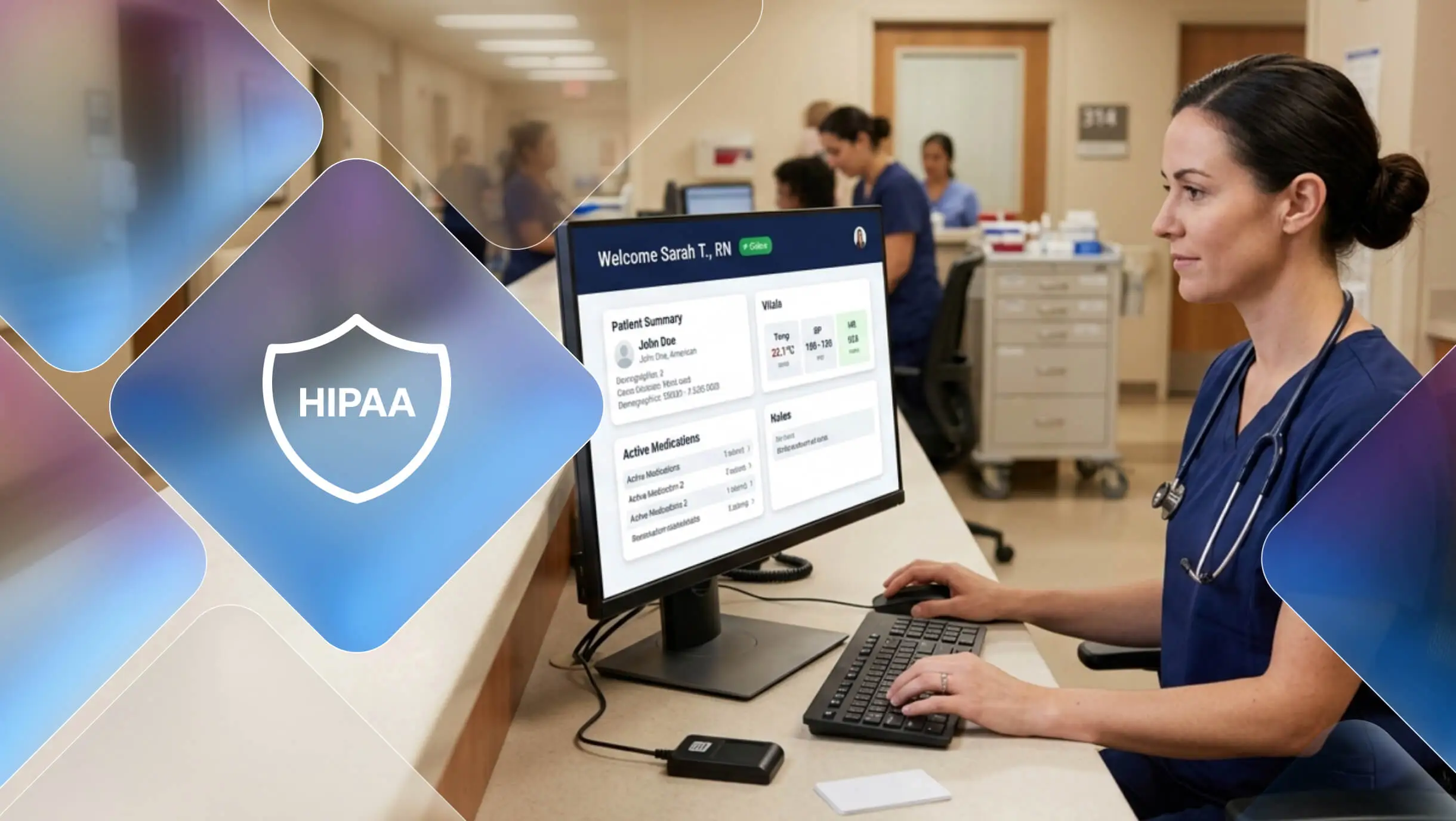
HIPAA Access Control Checklist: A Practical Guide for 2026
The HIPAA access control checklist covers the technical, administrative, and physical safeguards that govern who can access electronic protected health information, under what conditions, and with full audit trail accountability. Most organizations underestimate where their access control program breaks down in practice, particularly around shared devices, over-privileged accounts, and access that outlasts employment or role changes. This guide covers what HIPAA's Security Rule requires for access controls, what real OCR enforcement cases reveal about the most common compliance gaps, and what compliant identity and access management looks like in clinical and frontline environments.
How to Prevent Account Takeover: A Security Team's Guide to Detection and Response
Account takeover fraud is the fastest-growing component of identity fraud, costing businesses $16 billion in 2024 alone. Most organizations already have MFA and WAF rules deployed, but still face incidents because attackers have evolved beyond what those controls were built to stop. This guide covers how account takeover fraud happens today, how to detect it before damage escalates, where existing prevention stacks break down in shared-device and frontline environments, and what a structured response looks like when an attack gets through.
What Is OpenID Connect (OIDC)? How It Works, Flows, and When to Use It
OpenID Connect (OIDC) is the identity authentication protocol that adds a verified user layer on top of OAuth 2.0's authorization framework. This guide covers how OIDC works, what each token type does, which authentication flow fits which application, and the security gaps most implementations overlook. It also addresses how OIDC applies in shared-device and frontline environments where standard session assumptions break down.

Passwordless SSO: A Practical Implementation Guide for Enterprise Teams
Passwordless SSO is an authentication model that eliminates passwords across every application in a connected session, replacing them with biometrics, passkeys, or hardware tokens tied to a verified identity. Most enterprise deployments solve this well for office workers on personal devices, but hit a wall in healthcare, manufacturing, logistics, and retail. This guide covers how passwordless SSO works, how it compares to traditional SSO and passwordless MFA, what to evaluate before committing, and where standard rollouts leave frontline environments exposed.

What is Privileged Access Management (PAM)? A Complete Guide
Privileged access management is the security discipline that controls, monitors, and governs elevated access to an organization's most critical systems, data, and infrastructure. Most organizations underestimate PAM’s scope in practice: the volume of privileged accounts, the gap between policy and enforcement, and the specific failure points that emerge in shared-device and frontline environments. This guide covers what privileged access management is, how privileged credentials are exploited in real attacks, what a modern PAM program includes, and where traditional PAM architecture falls short for operational workplaces in healthcare, manufacturing, logistics, and retail.

What is Endpoint Security? A Complete Guide for IT and Security Teams
Endpoint security has moved well past antivirus. With 90% of successful cyberattacks originating at endpoint devices, every laptop, shared workstation, server, and IoT sensor on your network is a potential entry point. This guide breaks down what endpoint security is, how EPP, EDR, and XDR work together, and why Zero Trust and compliance requirements make device-level protection non-negotiable. It also addresses the specific risks that shared-device and frontline environments introduce, where standard endpoint tooling consistently falls short.

What is IDaaS (Identity as a Service)? A Complete Guide
IDaaS has become the default model for enterprise identity and access management, but most content covers it from a knowledge-worker perspective. This guide explains what IDaaS is, how the authentication flow works, what core capabilities to expect, and where standard platforms fall short, particularly in frontline and shared-device environments. It also covers how IDaaS underpins Zero Trust, how to evaluate vendors, and what separates basic from enterprise-grade solutions.
What is SOC 2 Compliance? A Complete Guide for Growing Tech Companies
SOC 2 compliance is the most critical trust signal a technology or cloud service organization can demonstrate to enterprise buyers and security-conscious investors. Most organizations stall between intent and audit readiness, failing to account for realistic timelines, evidence requirements, and shared-device access gaps. This guide covers what SOC 2 compliance means, how the five Trust Service Criteria translate into auditable controls, what auditors actually collect as evidence, and how frontline environments create audit risk that standard IT tooling does not address.

Why Shared Devices Break Traditional IAM (And What Comes Next)
Every IAM system sold in the last two decades was built on a quiet assumption: one person, one device. On the frontline, that assumption has never been true.


In a Code Blue, Nobody Stops to Authenticate
Your hospital spent millions on zero-trust architecture. Your nurses are sharing passwords. Both of these facts are entirely rational, and that's the problem.
Care Without Friction: How Verified Trust is Modernizing Clinical Identity
OLOID and Ping Identity's Verified Trust for Clinical Workforce replaces legacy identity infrastructure with a cloud-native framework built for modern care. Verified onboarding cuts enrollment from days to minutes, with portable credentials that travel across facilities. Passwordless Tap-and-Login delivers seamless access to shared workstations and EHRs, with stepped-up assurance only when needed. Self-service recovery closes a leading healthcare attack vector.
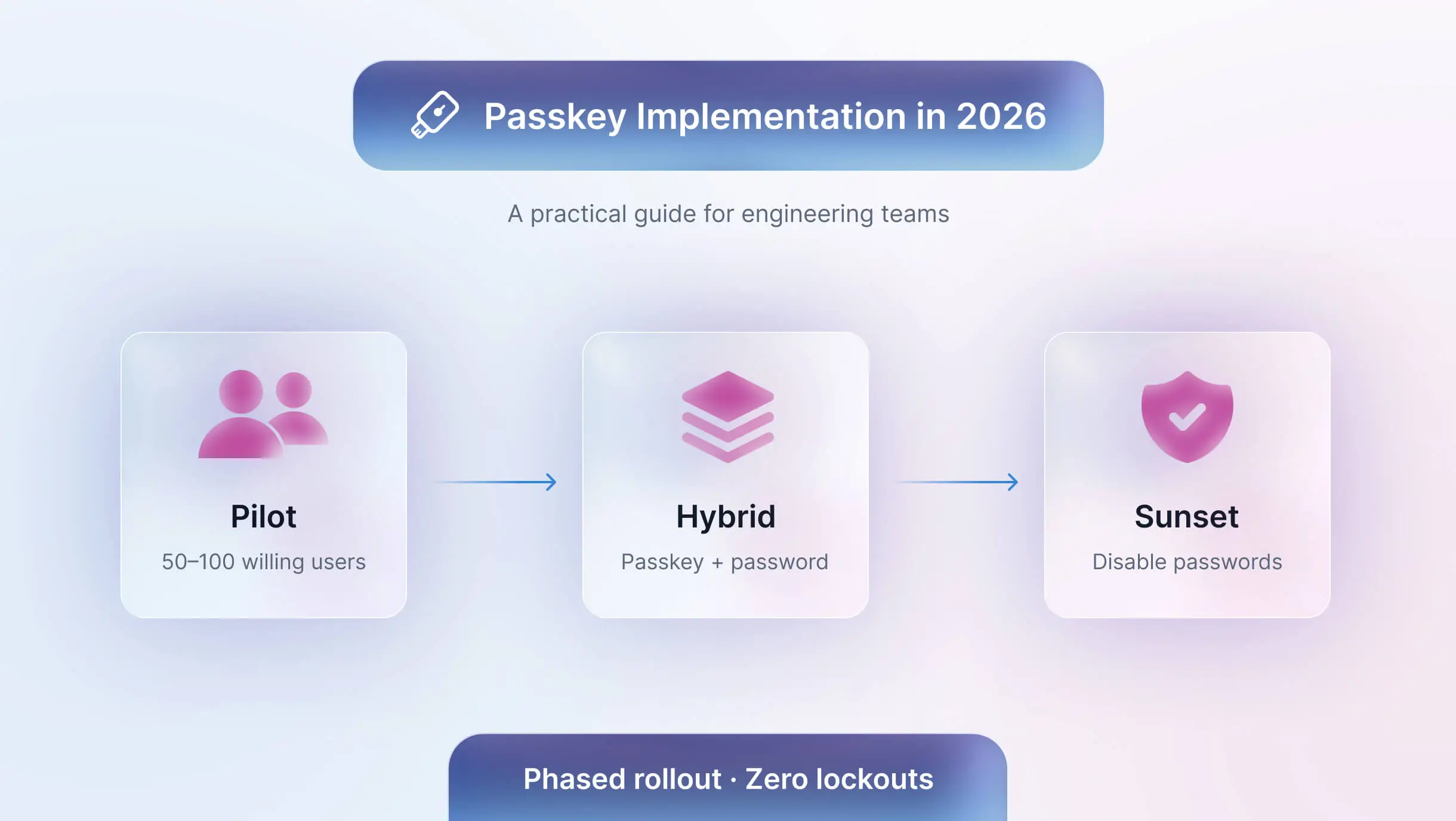
Passkey Implementation: A Practical Guide for Engineering Teams in 2026
Most engineering teams know passkeys work. The harder question is how to ship them in production without stalling on the details that actually matter. This guide walks through how passkeys compare to your existing auth stack, the build vs. buy decision, and how to design an account recovery flow that does not reintroduce risk. It also covers a phased rollout approach and why standard passkey assumptions break down in shared device and frontline environments.
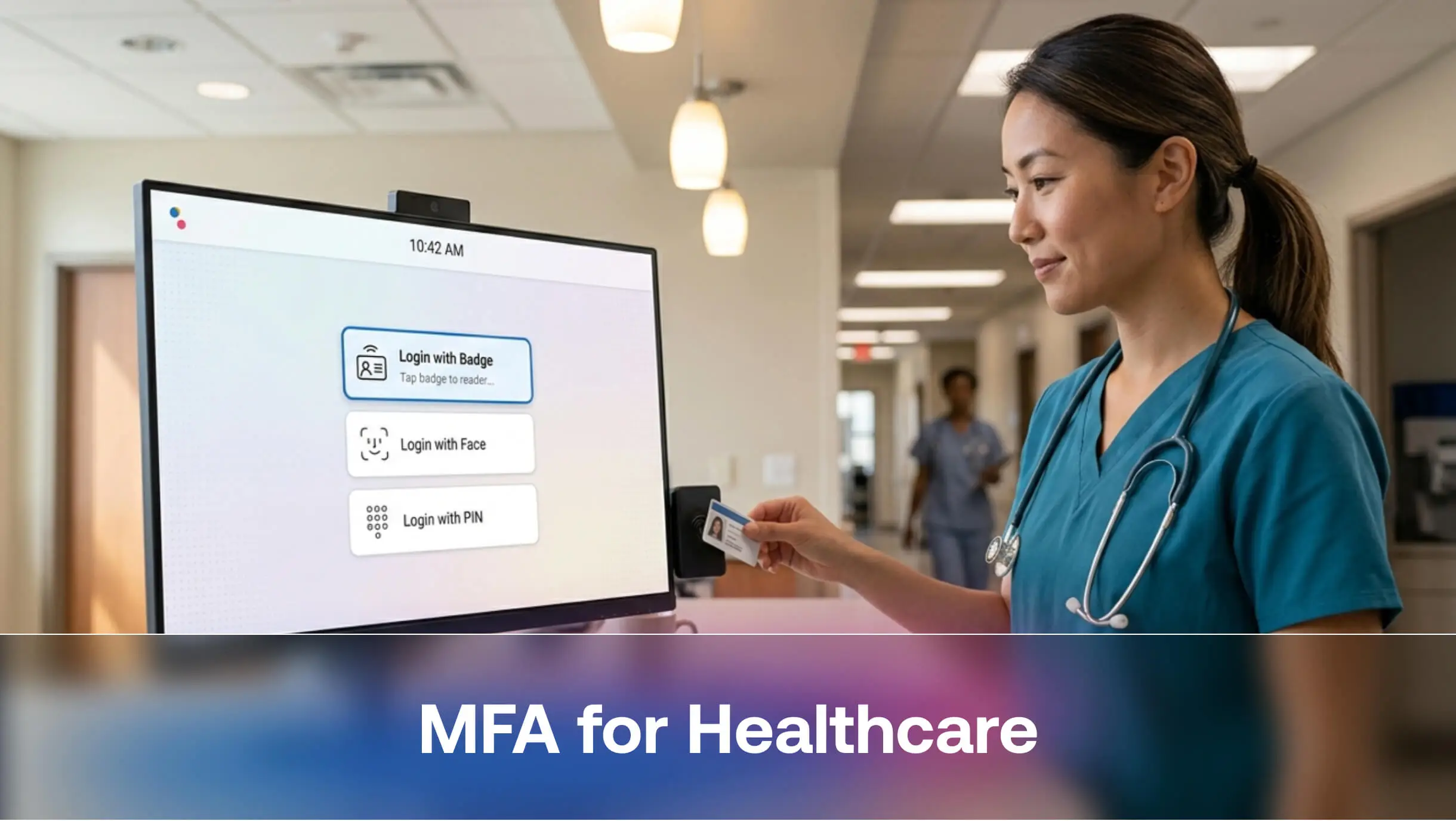
MFA for Healthcare: Implementation Guide for IT and Security Leaders
MFA for healthcare is the most impactful single control an organization can deploy to stop credential-based attacks, satisfy regulatory expectations, and protect patient data. Yet most healthcare organizations still carry significant coverage gaps on EHR platforms, shared workstations, and vendor connections, precisely where breach probability is highest. This guide covers the threat landscape, how to choose the right MFA method for each clinical environment, how to implement without disrupting frontline workflows, what HIPAA actually requires, and a phased rollout framework built around the realities of healthcare, including the shared-device environments where standard enterprise MFA tools consistently fall short.
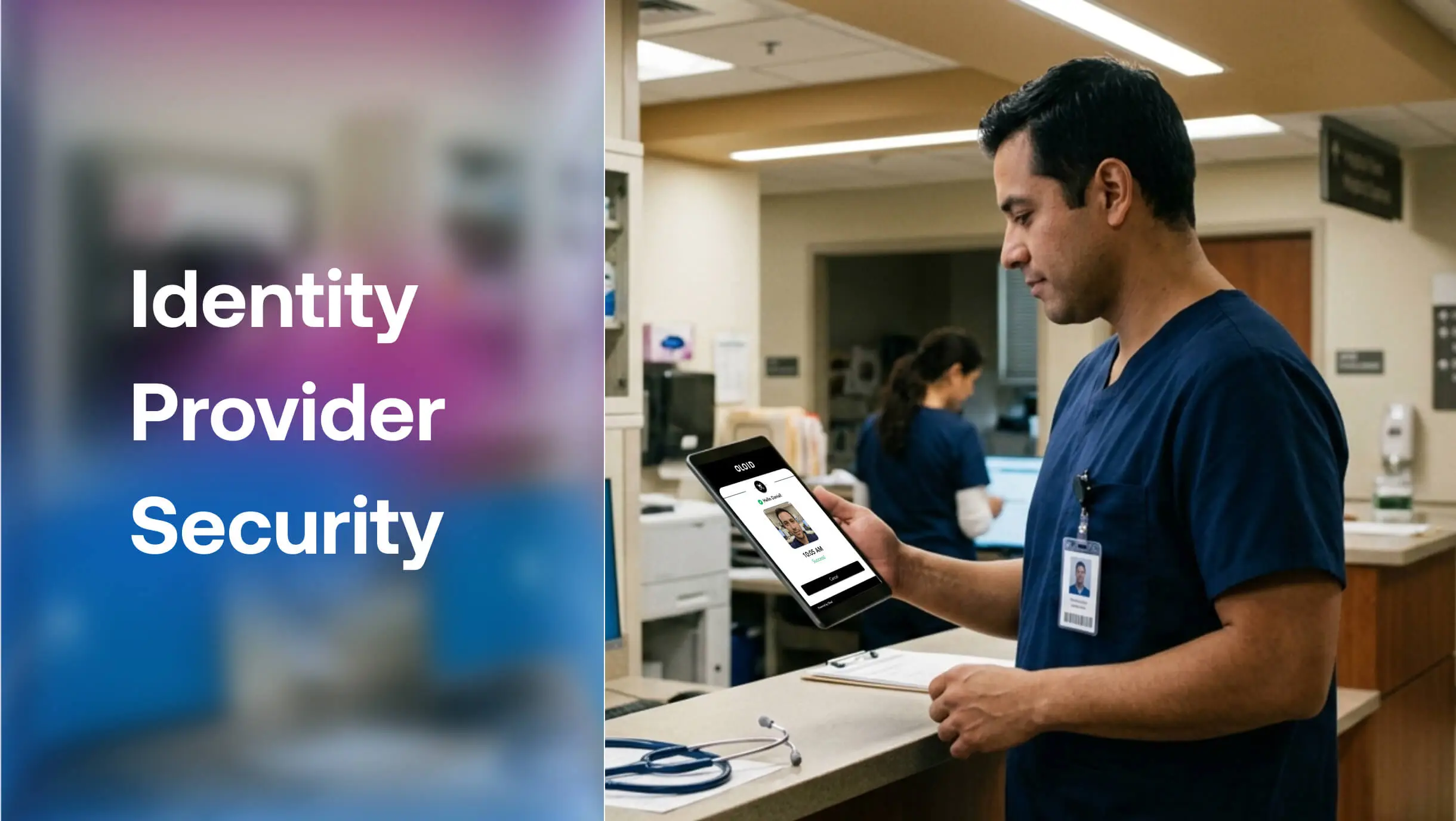
How to Evaluate, Strengthen, and Future-Proof Your Identity Provider Security
Identity provider security governs every authentication decision an organization makes: who gets in, what they can access, and whether the system granting that access can itself be trusted. When IdP security is strong, credentials stay centralized, access is auditable, and attackers have no easy path in. When it is weak or poorly configured, a single compromised IdP hands attackers authenticated access to every connected application at once. This guide covers how identity providers work, what securing them actually requires, where most deployments leave gaps, and why environments with frontline workers and shared workstations demand a different approach to IdP security altogether.
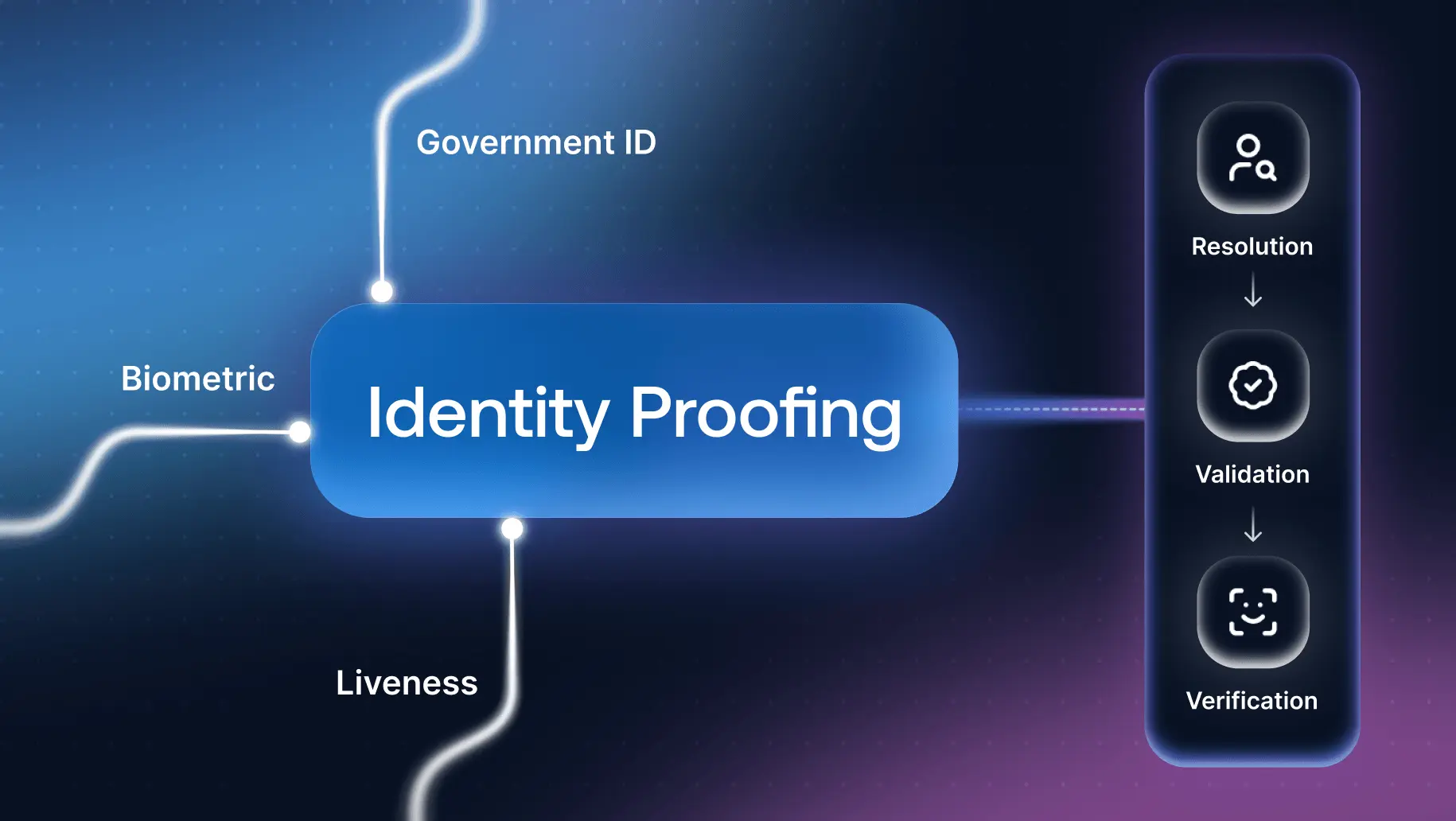
What is Identity Proofing? A Complete Guide
Identity proofing governs the foundational question every access decision rests on: Is this person actually who they claim to be? When proofing runs well, only verified individuals get credentials, onboarding is secure, and account recovery cannot be exploited. When it runs poorly, synthetic identities slip through, help desk attacks succeed, and unauthorized access goes undetected for months. This guide covers the NIST proofing process, key verification methods, compliance obligations, and what identity proofing looks like when traditional verification flows break down.
What is User Provisioning and Deprovisioning?
Provisioning and deprovisioning govern the full identity lifecycle, from the moment a user gets access to the moment that access is removed. When these processes run well, the right people get in, and former employees get out, automatically and immediately. When they run poorly, orphaned accounts, privilege creep, and credential exposure fill the gap. This guide covers the JML framework, SCIM automation, compliance obligations across GDPR, HIPAA, and SOX, and the metrics that tell you whether your program is actually working.
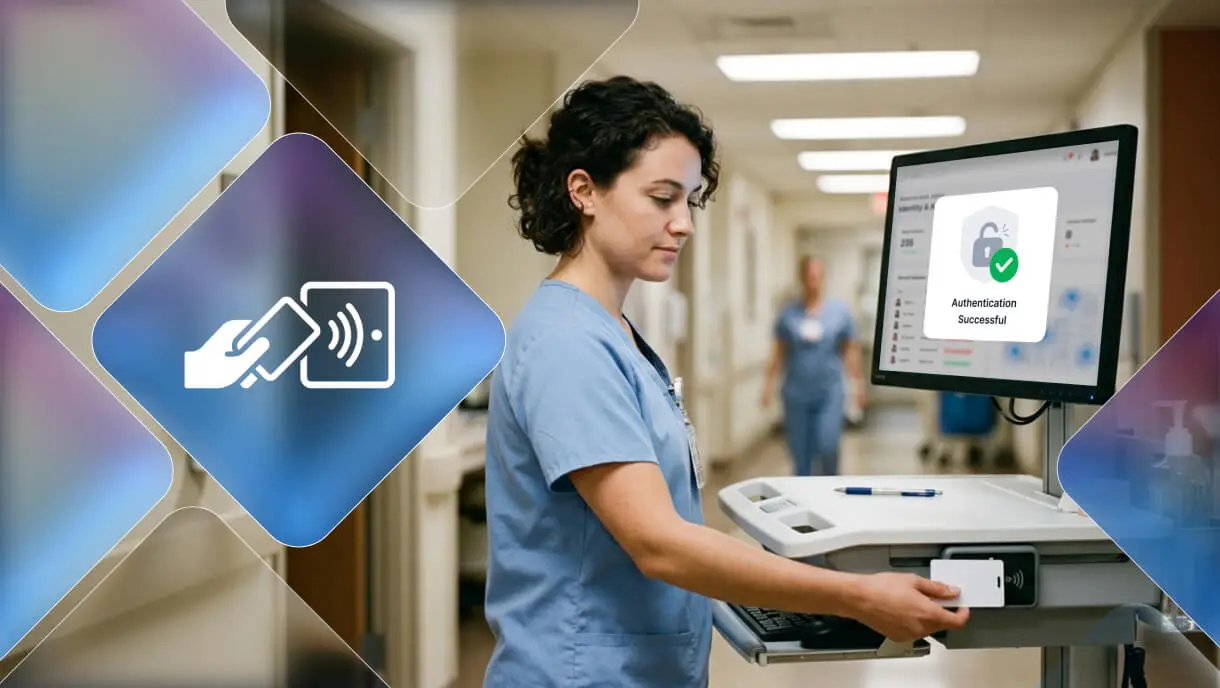
RFID in Healthcare: The Complete Guide
RFID in healthcare is a radio wave-based identification system that automatically tracks medical equipment, patients, medications, and personnel in real time without manual scanning or line-of-sight requirements. Beyond asset tracking, RFID controls physical access to restricted areas and authenticates frontline workers at shared workstations, replacing passwords with a single badge tap. While RFID delivers measurable gains in patient safety, staff efficiency, and regulatory compliance, successful deployment requires EMR integration, environmental testing, staff training, and a strong identity access layer governing every interaction.

What Is LDAP? How It Works and When to Use It
LDAP is the open, vendor-neutral protocol that enterprises have relied on for over 30 years to store user credentials, authenticate identities, and authorize access to resources. It organizes directory data in a hierarchical tree structure and supports two authentication methods: simple authentication and SASL. While LDAP remains foundational for legacy applications, Linux servers, and on-prem infrastructure, its plain-text default transmission and on-prem design create real security and scalability challenges.
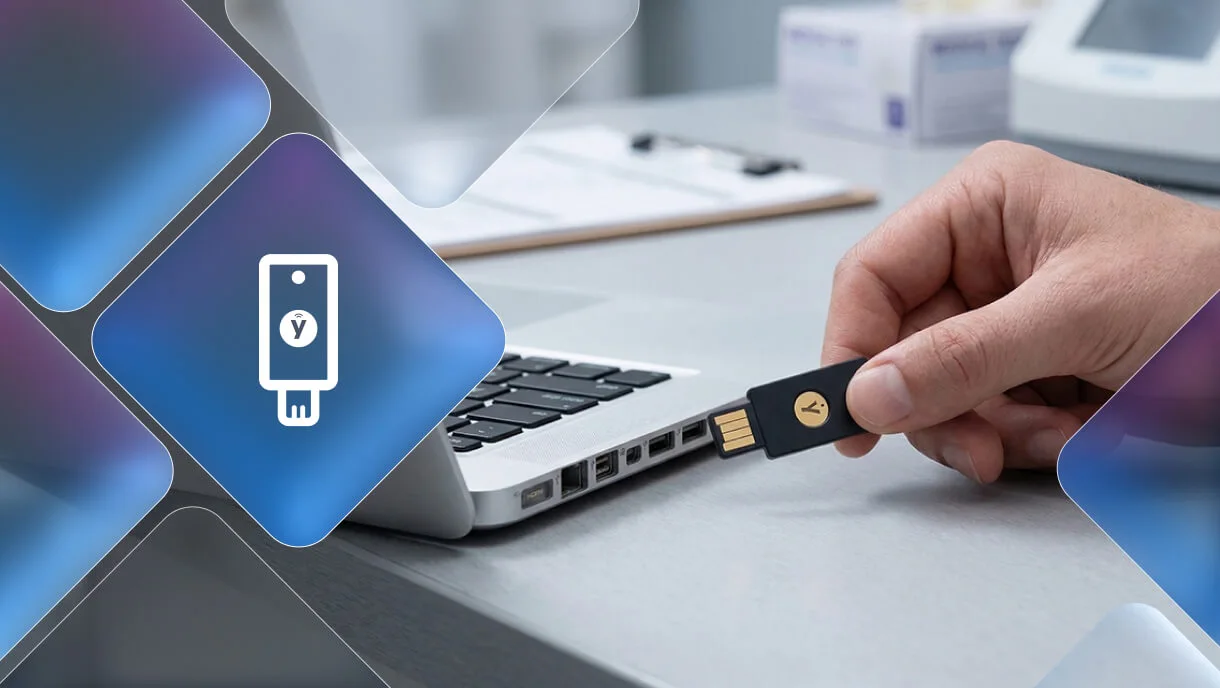
What is a YubiKey and How Does It Work? The Complete Guide
YubiKey is a hardware security key that uses cryptographic authentication instead of passwords. The blog highlights how traditional methods like passwords, SMS, and authenticator apps fail against modern threats like phishing and credential theft. The guide breaks down how a YubiKey works, including its secure chip, authentication flow, and supported protocols like FIDO2 and OTP. It compares YubiKey with other authentication methods to show why it offers stronger, phishing-resistant security. It also covers real-world use cases, enterprise deployment, and its limitations in frontline and shared device environments.
RBAC vs ABAC vs PBAC: The Complete Guide to Access Control
RBAC, ABAC, and PBAC are the three primary access control models organizations use to govern who can access what. RBAC is simple and role-driven. ABAC is dynamic and context-aware. PBAC centralizes access logic into organization-wide policies. Most mature organizations layer all three rather than relying on one model alone. Choosing the wrong model, or inheriting one without evaluating it, creates security gaps that compound silently over time. In environments where shared devices and rotating workforces are the norm, the stakes of that decision are even higher.
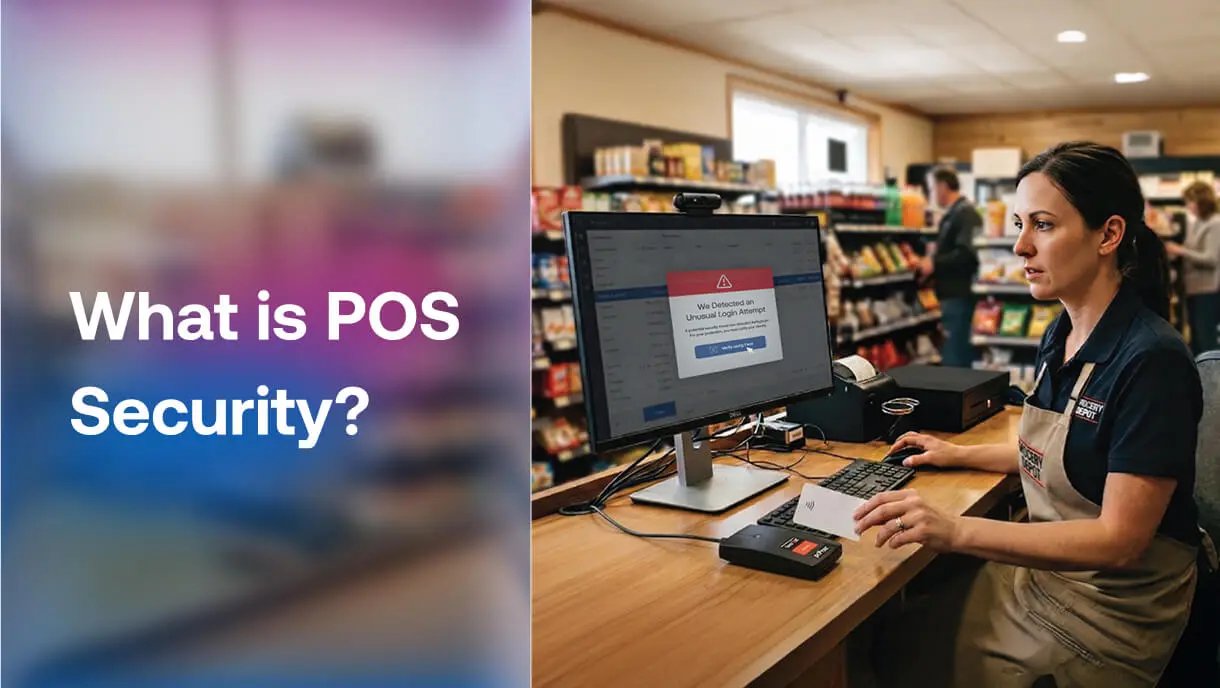
What is POS Security? The Complete Guide for Businesses
POS security protects payment systems from data breaches, malware, and fraud across devices, networks, and users. POS systems are prime targets because they handle sensitive data like card details and transaction histories in real time. Most attacks exploit weak authentication, unpatched systems, or compromised third-party access. Effective security requires layered controls such as encryption, MFA, network segmentation, and strict access control. While PCI DSS sets the baseline, true protection comes from going beyond compliance with stronger access management and continuous monitoring.
.webp)
Policy-Based Access Control (PBAC): How It Works and Why It Matters
Policy-based access control is a dynamic authorization model that governs access through centrally defined policies combining user roles, resource attributes, actions, and environmental context. Unlike RBAC, which assigns permissions at the role level, PBAC evaluates every access request in real time against the full context of who is asking, what they want, and under what conditions. While PBAC delivers significant gains in security, auditability, and compliance alignment, it requires disciplined policy governance and careful testing before rollout.

Making every day-in-the-life of frontline workers frictionless & secure!
Get the latest updates! Subscribe now!
