




The Future of Passwords: What Comes Next in Digital Authentication?
Passwords have protected digital accounts for decades, but cannot effectively defend against modern cyber threats. Organizations increasingly adopt passwordless authentication using passkeys, biometrics, and device-based credentials. This guide explores why passwords are becoming obsolete and what technologies replace them. You'll discover authentication trends, implementation challenges, and predictions for how digital identity will evolve.

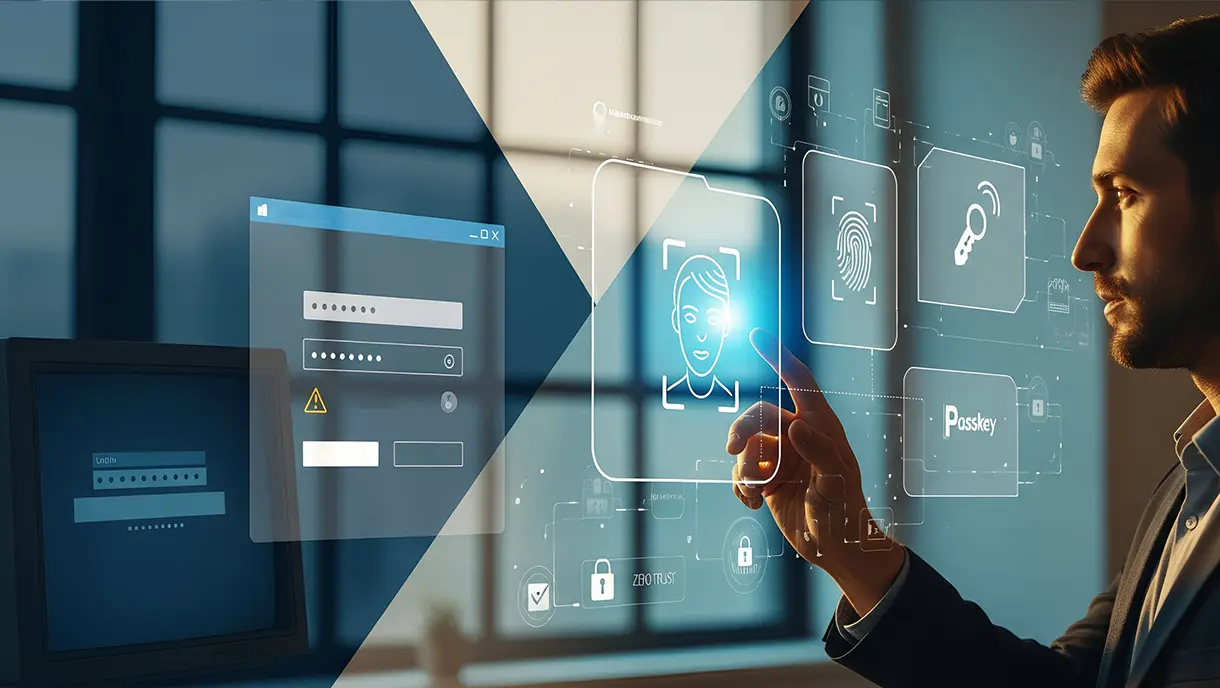
For more than five decades, passwords have been the default gateway to digital systems. Today, they are one of the biggest liabilities in enterprise security. Designed for a simpler era, passwords struggle to withstand modern threats, scale across devices, or support today’s distributed workforce.
As attacks become more sophisticated and users juggle dozens of logins, passwords fail in predictable ways-reuse, phishing, credential theft, and constant resets. The result is mounting security risk, rising operational costs, and a growing urgency to move beyond password-based authentication.
The future of authentication is moving toward a world where access is fast, frictionless, and far more secure than manually entering a string of characters. Technologies like biometrics, passkeys, passwordless authentication, and AI-based identity checks are reshaping how enterprises protect their systems and users.
This transformation is not just a trend but a necessary step to reduce credential-based risks, improve workforce productivity, and support modern zero-trust security models. In this blog, we explore why passwords are becoming obsolete, the technologies that will replace them, and what the next decade of authentication looks like for enterprises.
Why Traditional Passwords Are Becoming Obsolete
Multiple converging factors drive the authentication industry away from password-based security. These challenges affect organizations across all sectors and sizes.
1. Passwords Are Easy to Breach and Frequently Compromised
Attackers obtain passwords through numerous proven techniques that security controls cannot entirely prevent. Data breaches expose billions of credentials that criminals trade openly. Phishing campaigns trick users into revealing passwords despite training efforts. Credential stuffing attacks succeed because users reuse passwords across multiple sites.
2. Users Practice Poor Password Hygiene
People create weak passwords that attackers easily guess using common patterns and dictionary words. Password reuse across accounts can lead to cascading failures when a single breach compromises multiple services. Users write passwords on sticky notes or save them in insecure locations. Fatigue from managing numerous credentials leads to dangerous shortcuts undermining security policies.
3. High Operational Costs for Resetting and Managing Passwords
Password reset requests generate enormous helpdesk workloads, costing organizations thousands per employee annually. IT teams spend significant time managing password policies, expiration rules, and complexity requirements.
Password synchronization across multiple systems requires ongoing maintenance and troubleshooting. Organizations invest in password managers and self-service portals, adding complexity and costs.
4. Password Fatigue Reduces Productivity and User Experience
Employees waste time typing complex passwords and completing frequent resets. Authentication friction interrupts workflows, reducing overall productivity. Password expiration policies force users to create new credentials frequently. Forgotten passwords lock users out during critical business moments, creating frustration.
5. Passwords Cannot Defend Against Modern Threats
Sophisticated attackers bypass password protections through social engineering and technical exploits. Multi-factor authentication helps, but attackers develop bypasses for common implementations. Passwords lack contextual awareness of authentication circumstances. Zero Trust security frameworks require stronger identity assurance than passwords provide.
Traditional passwords have become a liability rather than a safeguard due to their security weaknesses, operational costs, and compliance limitations. As organizations move away from outdated credential models, the next question is what technologies are stepping in to replace passwords.
[[cta]]
What Is Replacing Passwords? Emerging Authentication Technologies
Multiple technologies are competing to replace passwords with stronger, more convenient alternatives, such as passwordless authentication. These approaches share common goals of eliminating shared secrets while improving security.
1. Passkeys and FIDO2-Based Authentication
Passkeys represent the newest passwordless standard backed by Apple, Google, Microsoft, and major technology companies. They use public-key cryptography, where private keys remain on user devices and never transmit across networks.
Key Benefits of Passkeys
- Phishing-resistant MFA by design through cryptographic domain binding, preventing fake site success.
- Syncs across user devices to provide seamless authentication experiences everywhere.
- No passwords to remember, type, or reset, significantly reducing user friction.
- Industry-standard FIDO2 protocols ensure compatibility across platforms and applications.
- Private keys never leave the devices, eliminating the risk of credential theft.
- Built-in support from major browsers and operating systems enables rapid adoption.
2. Biometric Authentication (Face, Fingerprint, Iris)
Biometric authentication uses unique physical characteristics that users cannot forget or easily share. Modern devices include fingerprint sensors and facial recognition cameras, enabling instant authentication.
Key Benefits of Biometric Authentication
- Instant authentication in under 1 second dramatically improves the user experience.
- Inherent factors cannot be stolen, guessed, or shared like passwords.
- Liveness detection prevents spoofing attacks using photos or videos.
- Local processing in secure hardware protects the privacy of biometric data.
- Works seamlessly for workforce access across laptops, mobile devices, and facilities.
- Eliminates the need to memorize or type passwords, reducing authentication friction completely.
3. Device-Based Authentication and Trusted Hardware
Trusted platform modules and secure enclaves store cryptographic keys in tamper-resistant hardware. Authentication keys cannot be extracted even if devices become compromised.
Key Benefits of Device-Based Authentication
- Hardware-bound credentials prevent theft since keys cannot leave secure elements.
- Physical security keys provide the strongest assurance of authentication for privileged accounts.
- Cryptographic operations occur in isolated secure environments, preventing compromise.
- Works effectively for both human users and machine-to-machine authentication scenarios.
- Device-based authentication adds a security layer beyond credential verification.
- Eliminates the need for shared secrets transmitted across networks, reducing interception risk.
4. Magic Links and One-Tap Authentication Experiences
Magic links deliver time-limited authentication URLs via email or messaging applications. Users click links to authenticate without manually entering credentials.
Key Benefits of Magic Links
- The simplest passwordless authentication experience, requiring only email or app access.
- Eliminates password typing and memorization.
- Time-limited links provide security through automatic expiration.
- Works across all devices without requiring special hardware or software.
- Reduces authentication friction, particularly for customer-facing applications.
- Lower implementation complexity compared to cryptographic authentication methods.
5. Continuous and Invisible Authentication
Behavioral biometrics analyzes typing patterns, mouse movements, and device interaction styles. Systems verify identity continuously throughout sessions rather than only at login.
Key Benefits of Continuous Authentication
- Invisible and continuous authentication removes conscious security interactions from user workflows.
- Detects account takeover attempts through behavioral pattern analysis.
- Aligns perfectly with Zero Trust principles, requiring continuous identity validation.
- AI-powered anomaly detection identifies suspicious activities in real time.
- Provides ongoing security throughout the sessions, not just at initial login.
- Balances strong security with frictionless user experiences ideally.
Emerging authentication technologies are redefining how identity is verified by removing reliance on passwords altogether. As these methods mature, their real value becomes clear in the tangible security, usability, and compliance benefits they deliver.
Benefits of a Passwordless Future
Eliminating passwords delivers measurable improvements across security, operations, and user experience. These advantages justify passwordless authentication investments.
1. Stronger Security With Phishing-Resistant Authentication
Passwordless authentication methods are resistant to phishing because credentials never travel over networks. Cryptographic authentication binds to specific domains, preventing a fake site from succeeding. Biometric data processes are locally eliminating interception risks. Organizations see dramatic reductions in breaches after eliminating passwords.
2. Faster, Frictionless User Login Experience
Users authenticate in under one second through fingerprints or facial recognition. Passwordless flows eliminate typing delays and the frustration of forgotten credentials. Seamless authentication improves employee satisfaction and customer experiences. Fast authentication enables productivity improvements across entire workforces.
For frontline industries like manufacturing, retail, and healthcare, fast login is essential to maintain operational efficiency. Such industries benefit from a passwordless authentication platform purpose-designed for frontline industries to speed up login and remove authentication friction.
3. Reduced IT Costs and Helpdesk Burden
Password reset elimination removes major categories of support tickets. IT teams redirect resources from helpdesk activities to strategic initiatives. Automated passwordless enrollment reduces onboarding overhead. Organizations realize significant cost savings within months of deployment.
4. Improved Productivity and Fewer Login Interruptions
Employees spend less time on authentication and password management. Reduced friction means faster access to the resources and applications you need. Passwordless authentication eliminates lockouts from forgotten credentials. Continuous authentication provides persistent access without repeated prompts.
5. Better Compliance and Stronger Identity Assurance
Passwordless authentication meets regulatory requirements for strong authentication factors. Cryptographic methods provide higher assurance of identity than password-based approaches. Detailed authentication logs demonstrate compliance with industry frameworks. Organizations simplify audits through documented passwordless implementations.
A passwordless future delivers stronger security, better compliance, and a smoother user experience across enterprise environments. However, moving away from passwords also introduces practical challenges that organizations must plan for.
[[cta-2]]
Challenges in Moving Beyond Passwords
Organizations encounter predictable obstacles during passwordless transitions requiring careful planning. Understanding these challenges enables proactive mitigation strategies.
1. Integration with Legacy Systems
Older applications lack support for modern authentication protocols required by passwordless methods. Custom integrations or authentication proxies bridge compatibility gaps. Organizations prioritize application modernization for systems protecting sensitive data.
Ways to overcome this challenge:
- Deploy identity proxies or authentication gateways that translate between passwordless protocols and legacy systems.
- Create application modernization roadmaps prioritizing critical systems for passwordless migration first.
- Use hybrid authentication to enable passwordless access for modern apps while maintaining passwords temporarily.
- Isolate legacy systems using additional network controls when passwordless integration is not possible.
2. User Adoption and Behavioral Change
Employees accustomed to passwords may initially resist new authentication approaches. Clear communication about benefits helps build user support and enthusiasm. Comprehensive training demonstrates how passwordless authentication simplifies daily workflows.
Ways to overcome this challenge:
- Communicate security benefits and productivity improvements through multiple channels before deployment.
- Provide hands-on training sessions demonstrating passwordless authentication, simplicity, and speed.
- Deploy pilot programs with enthusiastic early adopters to generate positive word of mouth.
- Gather continuous feedback, identify pain points, and refine processes iteratively.
3. Privacy Concerns Around Biometric Data
Users worry about the storage of biometric information and its potential misuse. Organizations must explain that the biometrics process is local without cloud transmission. Compliance with privacy regulations requires careful handling of biometric data.
Ways to overcome this challenge:
- Implement transparent policies that explain that biometric data processing occurs locally on devices.
- Choose solutions with privacy-preserving architectures that never transmit raw biometric data.
- Provide alternative passwordless options, such as passkeys, for users who are uncomfortable with biometrics.
- Comply with GDPR, CCPA, and other privacy regulations by implementing appropriate consent mechanisms.
While moving beyond passwords comes with integration, adoption, and operational challenges, these hurdles are solvable with the right strategy and tools. Advances in AI and behavioral biometrics are now helping organizations overcome many of these limitations. Let’s understand how.
The Role of AI and Behavioral Biometrics in Future Authentication
Artificial intelligence transforms authentication from static verification to continuous adaptive security. These technologies represent the cutting edge.
1. AI Enables Continuous, Real-Time Authentication
Machine learning models analyze authentication patterns and identify anomalies requiring investigation. AI validates identity continuously throughout sessions rather than only at login. Risk scores adjust dynamically in response to behavioral changes and contextual signals. Continuous validation aligns perfectly with Zero Trust architecture principles.
2. Behavioral Biometrics Reduce Reliance on Static Credentials
Typing rhythms, mouse movements, and device interaction patterns uniquely identify individuals. Behavioral patterns prove difficult for attackers to replicate, even with stolen credentials. Systems establish behavioral baselines during normal use and automatically detect deviations. This invisible verification strengthens security without adding user friction.
3. Advanced Fraud Detection Through Anomaly Analysis
AI models detect account-takeover attempts by identifying unusual access patterns. Geographic impossibilities and device switches trigger immediate security responses. Machine learning improves the accuracy of fraud detection while reducing false positives. Automated responses prevent unauthorized access before damage occurs.
4. Enhanced User Experience Through Invisible Verification
Background authentication removes conscious security interactions from user workflows. Systems verify identity continuously without interrupting productive activities. Users appreciate seamless access while organizations gain stronger security. Invisible authentication represents an ideal balance between security and usability.
5. Stronger Protection Against Account Takeovers (ATO)
Attackers with valid credentials face detection through behavioral analysis. AI identifies subtle differences between legitimate users and impostors. Real-time intervention prevents account compromise even after credential theft. This layered protection exceeds the capabilities of any static authentication method.
By adding intelligence and context to identity verification, AI and behavioral biometrics are redefining how trust is established in real time. This evolution makes it essential for enterprises to start planning their move toward a passwordless future.
How Enterprises Can Prepare for a Passwordless Future
Organizations should take proactive steps to position themselves for inevitable authentication transitions. Strategic preparation eases passwordless adoption when ready while protecting existing infrastructure investments.
1. Start with Comprehensive Assessment and Planning
Audit current authentication methods and identify password dependencies across all applications and systems. Evaluate which applications support modern authentication protocols like SAML, OAuth, or FIDO2 versus those requiring passwords. Build business cases demonstrating the benefits of passwordless through quantifiable breach reduction and operational cost savings.
2. Select the Right Technology Foundation
Choose identity platforms supporting multiple passwordless methods, including biometrics, passkeys, and device-based authentication. Ensure selected solutions integrate seamlessly with existing infrastructure, directories, and application portfolios. Verify vendor roadmaps align with emerging standards such as FIDO2 and WebAuthn.
3. Implement Phased Rollout Strategies
Plan gradual deployments, starting with pilot groups that represent diverse use cases and technical capabilities. Test passwordless authentication across different devices, networks, and user scenarios. Gather feedback continuously and refine processes before expanding to broader populations.
4. Prepare Users for the Transition
Develop comprehensive training programs that clearly explain the benefits and usage of passwordless authentication. Create documentation, video tutorials, and hands-on workshops that demonstrate the simplicity of authentication. Address privacy concerns proactively, particularly regarding the handling and storage of biometric data.
5. Establish Governance Frameworks
Define security policies that address device trust requirements and passwordless access enrollment procedures. Set clear standards for device security posture before allowing passwordless authentication. Create backup authentication methods for scenarios like lost devices or biometric failures, ensuring business continuity.
6. Monitor and Optimize Continuously
Track authentication metrics, including success rates, user satisfaction scores, and security incident reductions. Analyze helpdesk tickets to identify pain points requiring process refinement. Adjust policies and deployment strategies based on real-world usage patterns and feedback.
[[cta-3]]
Move to a Passwordless Future with OLOID
Passwords are no longer fit for modern security needs. They are easy to compromise, hard to manage at scale, and increasingly misaligned with compliance requirements and zero trust principles.
The future of authentication is moving toward models that eliminate passwords entirely and replace them with stronger, identity-driven controls. OLOID’s frontline passwordless authentication solution helps enterprises make this transition by removing static credentials and enabling secure access through biometrics, mobile identity, and device-bound authentication. Instead of trusting what users know, OLOID verifies who they are, significantly reducing the risk of credential-based attacks while improving speed and usability.
Designed for frontline and high-volume workforce environments, OLOID supports secure access across shared devices, kiosks, and terminals without the complexity of password management. By aligning authentication with zero trust principles and modern compliance expectations, OLOID helps organizations reduce their attack surface, simplify audits, and strengthen identity security across the enterprise.
Request a demo to see how OLOID can help eliminate passwords and strengthen access across your workforce.
FAQs on the Future of Passwords
1. Will passwords disappear entirely in the future?
Passwords will largely disappear for consumer and enterprise authentication within the next decade. Major technology platforms already support passwordless methods, with adoption accelerating rapidly.
However, some legacy systems may retain passwords temporarily until modernization completes. Organizations should plan for passwordless futures while acknowledging transitional periods.
2. Are passwordless methods truly more secure than strong passwords?
Passwordless authentication provides significantly stronger security than even properly managed complex passwords. Cryptographic methods eliminate the vulnerabilities to credential theft that passwords inherently possess.
Phishing attacks fail against passwordless authentication through domain binding. Biometric verification ensures actual users authenticate rather than impostors with stolen credentials. Security improvements justify passwordless adoption regardless of password strength.
3. What do organizations need to implement before going passwordless?
Organizations need identity platforms that support modern authentication protocols such as FIDO2 and WebAuthn. Device management capabilities ensure endpoints meet security requirements before passwordless access.
User education programs prepare employees for changes to authentication methods. Application inventory identifies which systems support passwordless authentication versus those that require legacy authentication. Phased rollout plans enable gradual transitions without disrupting operations.
4. Can passwordless authentication work for both employees and customers?
Passwordless authentication works effectively in both workforce and customer scenarios when the appropriate method is selected. Employees use device-based authentication or biometrics on company-managed endpoints.
Customers authenticate through passkeys synced across personal devices or magic links. Organizations deploy different passwordless approaches matching each population's needs and device ownership. Unified platforms manage diverse passwordless methods through centralized policies and administration.

.webp)

Get the latest updates! Subscribe now!

