




Biometric Spoofing Explained: Risks, Real Attacks and Prevention
Biometric spoofing uses fake fingerprints, facial replicas, or synthetic voice recordings to deceive authentication systems. Attackers exploit weaknesses in biometric sensors and verification algorithms to bypass security without legitimate credentials. This guide explains spoofing techniques, real-world attack examples, and comprehensive defense strategies. Learn about liveness detection technologies, multi-factor authentication approaches, and best practices for preventing biometric authentication compromise across enterprise environments.

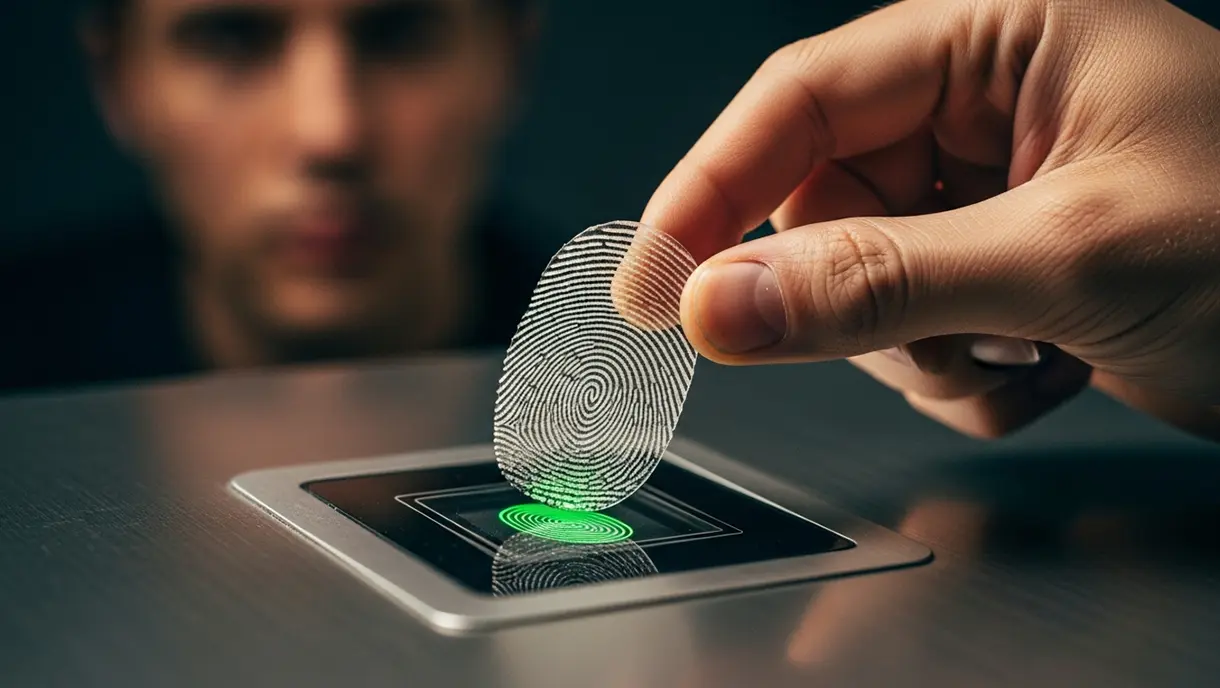
Biometric authentication has become a popular way to secure access to devices, applications, and workplaces. Fingerprints, facial recognition, and voice authentication are often seen as more secure and convenient than traditional passwords. But as adoption grows, so do the attack techniques designed to bypass these systems.
Biometric spoofing is one of the most serious risks facing biometric authentication today. Attackers can trick biometric systems using fake fingerprints, photos, videos, masks, or recorded voices to gain unauthorized access. Unlike passwords, biometric data cannot be easily changed once compromised, making spoofing attacks especially dangerous for organizations that rely heavily on biometrics.
Understanding how biometric spoofing works is critical for security and business leaders evaluating biometric-based access controls. This blog breaks down what biometric spoofing is, the different types of spoofing attacks, real-world examples, and why biometrics alone may not be enough. It also explores practical ways to detect and prevent biometric spoofing, helping organizations design more secure and resilient authentication strategies.
What Is Biometric Spoofing?
Biometric spoofing is a type of authentication attack where an attacker deceives a biometric system by presenting a fake or manipulated biometric trait. Instead of using stolen passwords or credentials, the attacker imitates a legitimate user’s biological characteristics, such as fingerprints, facial features, voice patterns, or iris data, to gain unauthorized access.
In a biometric spoofing attack, the system fails to distinguish between a real, live human trait and an artificial replica. This can involve anything from a molded fingerprint and a high-resolution facial image to a recorded or AI-generated voice sample. When the biometric sensor or recognition software accepts this fake input as genuine, the attacker is authenticated as the real user.
Biometric spoofing is particularly dangerous because biometric identifiers are permanent. If a fingerprint, face template, or voice pattern is compromised, it cannot be reset or replaced like a password. This creates long-term security risks, especially for organizations that rely on biometrics as a primary or standalone authentication method.
How Biometric Spoofing Works
Biometric spoofing involves a step-by-step process that starts with obtaining biometric data and ends with tricking the authentication system. By understanding how these attacks work, organizations can put stronger defenses in place to block unauthorized access.
1. Collection of Biometric Data
Attackers obtain biometric samples from various sources, including high-resolution photographs, recorded videos, or lifted fingerprints from surfaces. Social media profiles provide abundant facial images for replication purposes.
Public appearances, press conferences, and video content supply voice samples for cloning. Physical access to objects handling leaves exploitable fingerprint residues enabling capture.
2. Creation of a Spoofed Biometric Artifact
Adversaries use collected biometric data to create physical or digital replicas mimicking legitimate characteristics. Fingerprint molds are created using gelatin, silicone, or latex materials from lifted prints.
Three-dimensional facial masks are produced using photographs through photogrammetry and 3D printing. Voice synthesis software generates realistic speech patterns from audio samples.
3. Presentation of the Spoof to the Biometric System
Attackers present fabricated biometric artifacts to authentication sensors during verification attempts. Physical replicas are positioned in front of fingerprint readers or displayed to facial recognition cameras.
Recorded or synthesized voice samples play through microphones during voice verification. Presentation timing and positioning optimize sensor capture, mimicking legitimate authentication attempts.
4. Exploiting Weak Sensor or Detection Mechanisms
Spoofing succeeds when biometric systems lack adequate liveness detection or anti-spoofing capabilities. Basic sensors cannot distinguish between living tissue and artificial materials without specialized detection.
Simple camera-based systems accept photographs or video replays without depth verification. Unprotected voice systems replay recorded audio without analyzing acoustic characteristics, indicating artificial sources.
5. System Mistakenly Verifies the Fake Biometric
Vulnerable biometric systems match spoofed characteristics against enrolled templates, granting unauthorized access. Verification algorithms focus on pattern matching rather than validating the authenticity of the presentation.
Successful spoofing grants attackers complete authentication privileges indistinguishable from those of legitimate users. Systems lacking proper safeguards cannot distinguish between genuine and fabricated biometric samples.
6. Advanced Spoofing Uses AI to Increase Success Rates
Machine learning algorithms analyze biometric system responses, thereby optimizing the creation of spoof samples to achieve higher success rates. Generative adversarial networks generate increasingly realistic synthetic biometric data that is difficult for systems to detect.
Adaptive attacks learn from failed attempts, refining presentation techniques. Artificial intelligence democratizes sophisticated spoofing previously requiring specialized expertise.
[[cta]]
Types of Biometric Spoofing Attacks
Attackers employ diverse spoofing techniques targeting different biometric modalities. Understanding the variety of attacks helps organizations implement appropriate countermeasures for each deployed biometric type.
1. Fingerprint Spoofing
Attackers create artificial fingerprints using gelatin, silicone, or other conductive materials to mimic ridge patterns. Lifted fingerprints from glass surfaces or digital images can be used to make molds. Basic fingerprint sensors without liveness detection cannot distinguish artificial materials from living skin. Organizations must deploy capacitive or ultrasonic sensors with temperature and conductivity verification.
2. Facial Recognition Spoofing
Photographs, videos, or three-dimensional masks bypass facial recognition systems lacking depth perception. High-resolution printed photos fool basic camera systems. Sophisticated attacks use realistic masks created through 3D printing technology. Deepfake videos generate synthetic faces indistinguishable from legitimate users, enabling remote spoofing attacks.
3. Voice Spoofing (Voice Cloning & Replay)
Audio recordings replay captured voice samples to voice verification systems. Voice synthesis software creates realistic speech from limited audio samples. Deepfake audio technology clones voices with remarkable accuracy from short recordings. Attackers leverage publicly available voice samples from videos, podcasts, or phone calls.
4. Iris and Retina Spoofing
High-resolution iris photographs printed on contact lenses bypass iris recognition systems. Attackers present printed patterns to scanners lacking depth and pulse detection. Retina spoofing requires more sophisticated techniques but remains theoretically possible. Advanced iris systems incorporate multiple validation checks, preventing simple photograph attacks.
5. Behavioral Biometrics Spoofing
Keystroke dynamics, mouse movements, and gait patterns can be replicated through observation and practice. Attackers analyze behavioral patterns mimicking typing rhythms or walking characteristics. Machine learning models predict behavioral biometric patterns from limited observation data. However, behavioral biometrics prove more difficult to spoof than physiological characteristics.
6. Multimodal Biometric Spoofing
Sophisticated attackers simultaneously spoof multiple biometric factors in coordinated attacks. Combined facial and voice spoofing enables bypassing systems requiring both modalities. Multimodal attacks require significantly more resources but defeat layered biometric security. Organizations that use multimodal biometrics achieve substantial security improvements over single-factor systems.
Real-World Examples of Biometric Spoofing
Documented spoofing incidents demonstrate the practical feasibility of attacks across various biometric implementations. These examples highlight the importance of proper anti-spoofing measures.
1. Smartphone Fingerprint Scanner Bypasses (Multiple Incidents)
Security researchers repeatedly demonstrated fingerprint spoofing on popular smartphones using household materials. Gelatin fingerprints bypassed iPhone Touch ID and Android fingerprint sensors.
Researchers created working spoofs from photographs of fingerprints on glass surfaces. These demonstrations proved the vulnerability of consumer-grade fingerprint sensors without liveness detection.
2. Facial Recognition Fooled by 3D Masks
Vietnamese security firm Bkav bypassed iPhone Face ID using 3D-printed masks costing approximately $150. Researchers combined 3D printing with 2D images to fool facial recognition algorithms.
Similar demonstrations showed weakness in facial recognition systems across multiple platforms. These incidents revealed limitations in smartphone facial authentication with respect to depth perception.
3. Deepfake Voice Used in Corporate Fraud
Criminals used AI-generated voice deepfakes impersonating executives in business email compromise attacks. Attackers successfully impersonated the CEO's voice, authorizing fraudulent wire transfers totaling more than $240,000.
Voice cloning required only brief audio samples from public sources. This incident demonstrated deepfake voice technology maturity, enabling sophisticated fraud.
4. Presentation Attacks on Iris Scanners
Researchers printed high-resolution iris patterns onto contact lenses, successfully spoofing commercial iris recognition systems. Attacks used photographs of legitimate users' irises from close range.
Basic iris systems without proper liveness detection proved vulnerable. Modern systems incorporate multiple verification layers that detect attempts to present artificial content.
5. Behavioral Biometrics Manipulation in Security Studies
Academic research demonstrated behavioral biometric spoofing through observation and practice. Participants successfully mimicked keystroke dynamics and mouse movement patterns after training.
Studies have shown that behavioral characteristics, while helpful, remain vulnerable to determined attackers. Organizations should combine behavioral biometrics with other authentication factors.
6. Face Unlock Systems Bypassed with Photos
Numerous Android devices using basic facial recognition were bypassed using printed photographs. Users could unlock devices by presenting photos to front-facing cameras. These simple attacks highlighted the inadequacy of liveness detection in early facial recognition implementations. Modern systems require three-dimensional depth sensing to prevent photo attacks.
[[cta-2]]
Why Biometric Spoofing Is Dangerous
Unlike conventional authentication threats, biometric spoofing introduces distinct security vulnerabilities. By understanding these issues, businesses can better prioritize effective anti-spoofing protections.
1. Biometric Data Cannot Be Changed Once Stolen
Compromised biometric characteristics remain permanent, unlike passwords that can be reset after breaches. Users possess a finite set of biometric features, limiting options after compromise.
Fingerprint, facial, or iris data cannot be modified through password change procedures. A permanent compromise permanently eliminates the future use of affected biometric modalities for that individual.
2. Deepfake Technology Makes Spoofs More Convincing
Artificial intelligence enables the creation of increasingly realistic synthetic biometric data difficult for humans to detect. Generative adversarial networks produce synthetic faces, voices, and fingerprints that fool verification systems.
Deepfake technology accessibility reduces expertise barriers for sophisticated spoofing attacks. Rapid AI advancement continuously improves spoof quality, outpacing defensive measures.
3. Overreliance on Biometrics Creates a Single Point of Failure
Organizations that deploy biometrics as the sole authentication factor create a vulnerability when spoofing succeeds. Single-factor biometric authentication provides no backup verification when the primary method fails.
Overconfidence in biometric security leads to inadequate monitoring and to the adoption of alternative controls. Organizations should maintain a defense-in-depth approach rather than relying solely on biometrics.
4. Low-Cost Tools Can Bypass Low-Quality Sensors
Basic spoofing attacks require minimal investment and can be carried out using household materials and publicly available software. Gelatin fingerprints cost pennies to produce yet bypass numerous commercial sensors. Printed photographs fool facial recognition systems lacking depth perception. Low attack costs enable widespread exploitation of vulnerable biometric implementations.
5. Spoofing Can Lead to High-Impact Unauthorized Access
Successful biometric spoofing grants attackers complete authentication privileges equivalent to legitimate users. Compromised biometric access enables data theft, financial fraud, and system compromise.
High-value targets, such as executive accounts or privileged systems, offer substantial motivation for attackers. Impact severity justifies investment in robust anti-spoofing measures.
6. Attackers Can Capture Biometric Data Without Physical Contact
Biometric characteristics can be harvested remotely without the victim's awareness or cooperation. High-resolution cameras capture facial images from a distance. Social media provides abundant biometric samples for replication.
Voice recordings from phone calls or videos supply synthesis material. Remote collection enables attacking individuals who have never been directly encountered.
7. Spoofing Undermines Trust in Biometric Authentication
Successful spoofing demonstrations erode user confidence in biometric security. Public awareness of vulnerabilities reduces acceptance of biometric authentication. Trust erosion slows biometric adoption despite legitimate security benefits when properly implemented. Organizations must communicate anti-spoofing measures to rebuild confidence through transparent security practices.
How to Detect and Prevent Biometric Spoofing
Comprehensive anti-spoofing strategies combine multiple defensive layers protecting biometric authentication systems. These measures significantly reduce spoofing success rates when properly implemented.
1. Use Robust Liveness Detection
Deploy active liveness detection that requires user actions, such as blinking, smiling, or specific movements, during verification. Passive liveness detection analyzes texture, temperature, and pulse characteristics to distinguish living tissue from artifacts.
Multispectral imaging captures subsurface blood-flow patterns that are impossible to replicate artificially. Modern liveness detection provides the most vigorous defense against presentation attacks.
2. Combine Biometrics with Multi-Factor Authentication (MFA)
Implement biometrics as one factor in multi-factor authentication frameworks that require additional verification. Pair biometric verification with possession factors, such as security tokens or mobile devices.
Combine biometric and knowledge factors to create layered authentication. MFA defeats spoofing because attackers cannot bypass multiple independent verification methods simultaneously.
3. Deploy AI-Powered Anti-Spoofing Algorithms
Utilize machine learning models trained on extensive spoofing attack datasets to detect presentation anomalies. Neural networks analyze subtle characteristics distinguishing real biometrics from artificial replicas.
Continuous learning adapts detection capabilities as new spoofing techniques emerge. AI-powered defense provides dynamic protection against evolving attack methods.
4. Use High-Quality, Secure Biometric Sensors
Invest in commercial-grade biometric hardware that incorporates anti-spoofing capabilities into the sensor design. Ultrasonic fingerprint readers detect subsurface characteristics impossible to replicate on artificial surfaces. Infrared cameras capture heat patterns that verify the presence of life. Quality sensors provide a foundation for adequate biometric security.
5. Monitor Behavioral Biometrics for Secondary Verification
Track typing patterns, mouse movements, and navigation behaviors to provide continuous authentication beyond initial biometric verification. Behavioral anomalies trigger additional verification requirements or access restrictions.
Secondary behavioral monitoring detects post-authentication compromises. Continuous validation extends security throughout sessions rather than only at login.
6. Secure Biometric Templates with Strong Encryption
Protect stored biometric templates with encryption to prevent template theft and enable spoofing. Implement secure enclaves and hardware security modules for template storage. Never store raw biometric images, only processed templates. Proper template protection limits the attacker's ability to create effective spoofs from stolen data.
7. Perform Regular Spoofing Tests and Security Audits
Conduct periodic penetration testing specifically targeting biometric systems with spoofing attacks. Evaluate the effectiveness of anti-spoofing measures against current attack techniques. Update defensive capabilities based on audit findings and emerging threats. Regular testing validates security posture, maintaining protection against evolving spoofing methods.
Future of Biometric Spoofing and Defense
The biometric security landscape continues evolving as both attack and defense capabilities advance. Understanding future trends helps organizations prepare for emerging challenges.
1. AI-Driven Spoofing Will Become More Convincing
Generative AI enables the creation of synthetic biometric data indistinguishable from legitimate samples. Deepfake technology democratizes sophisticated spoofing previously requiring specialized expertise.
Adversarial machine learning optimizes spoofs specifically targeting detection algorithms. Organizations must continuously update their anti-spoofing capabilities to keep pace with AI advancements.
2. Advanced Liveness Detection Will Become Standard
Future biometric systems will incorporate sophisticated liveness detection as a baseline security requirement. Multi-spectral imaging and pulse detection become standard rather than premium features. Regulatory frameworks will mandate anti-spoofing capabilities for commercial biometric deployments. Market pressure drives liveness detection to become expected rather than optional.
3. Multimodal Biometrics Will Replace Single-Factor Methods
Organizations increasingly adopt multimodal biometric systems combining multiple characteristics. Simultaneous facial and voice verification provides layered protection against spoofing.
Behavioral biometrics supplements physiological characteristics, creating comprehensive user profiles. Multimodal approaches significantly increase attack difficulty, requiring sophisticated coordinated spoofing.
4. Behavioral Biometrics Will Play a Bigger Role
Continuous behavioral authentication monitors ongoing user activities throughout sessions. Typing patterns, mouse dynamics, and interaction behaviors provide secondary verification. Behavioral characteristics prove more difficult to spoof than static physiological features. Organizations embrace behavioral biometrics, complementing traditional modalities.
5. Privacy-Focused and Encrypted Biometric Processing Will Rise
Privacy regulations drive adoption of on-device biometric processing without cloud transmission. Homomorphic encryption enables biometric verification without exposing raw templates. Privacy-preserving techniques address user concerns while maintaining security benefits. Regulatory compliance requirements shape future biometric implementation approaches.
Prevent Biometric Spoofing With OLOID’s Intelligent Biometric Solution
OLOID provides comprehensive biometric authentication with industry-leading anti-spoofing capabilities, protecting organizations against presentation attacks. The platform implements advanced liveness detection across fingerprint, facial recognition, and behavioral biometric modalities. Multi-spectral imaging and pulse detection verify the living presence, preventing the acceptance of artificial replicas. Machine learning algorithms continuously analyze authentication attempts, identifying sophisticated spoofing techniques.
OLOID integrates biometric authentication within broader multi-factor authentication frameworks, providing layered security. The solution combines biometric verification with device trust, location awareness, and risk-based policies. Behavioral biometrics provide continuous authentication throughout sessions and detect post-authentication compromises. Organizations achieve defense-in-depth through multiple independent verification layers.
The platform emphasizes privacy-preserving biometric processing with on-device verification and encrypted template storage. Biometric data is ever transmitted to cloud services, maintaining user privacy and regulatory compliance. Secure enclaves protect biometric templates from extraction or theft.
Comprehensive audit logging provides visibility into authentication patterns and attempted spoofing attacks. Book a demo to see how OLOID prevents biometric spoofing.
FAQs on Biometric Spoofing
1. Can biometric spoofing work on all types of biometric systems?
No, biometric spoofing cannot work on all systems. Some biometric technologies are more vulnerable than others, and modern sensors use anti-spoofing features that make attacks much harder.
Advanced systems such as ultrasonic fingerprint sensors, 3D facial recognition, and liveness detection are significantly more resistant to spoofing than older or lower-quality biometric devices.
2. Is biometric data safer than passwords when it comes to hacking?
Biometric data is generally safer because it cannot be guessed or brute forced like passwords.
However, if biometric templates are not stored securely, they can still be stolen and misused. Passwords can be changed, but biometric traits cannot, so protecting them is critical.
3. Are deepfakes increasing the success rate of biometric spoofing attacks?
Yes, deepfakes have increased the risk of spoofing for specific biometric modalities, especially facial recognition systems that rely on 2D images.
High-quality deepfake videos can sometimes bypass weak or outdated systems, which is why many companies now use liveness detection and 3D scanning to resist such attacks.
4. How do companies validate whether their biometric systems can resist spoofing?
Companies test spoof resistance through controlled evaluation processes that mimic real-world attacks. Common methods include:-
- Using fake fingerprints, masks, or photos to test spoofing resistance.
- Conducting penetration testing and red team exercises.
- Using third-party biometric labs for certification.
- Following standards such as ISO/IEC 30107 for presentation attack detection.
- Testing with various materials, lighting conditions, and devices.




Get the latest updates! Subscribe now!

