




About
Mona Sata is a B2B content and narrative specialist with experience in cloud-native and security technology. She translates complex concepts into clear messaging that helps technical teams communicate with authority and earn buyer trust.
Usually writes about
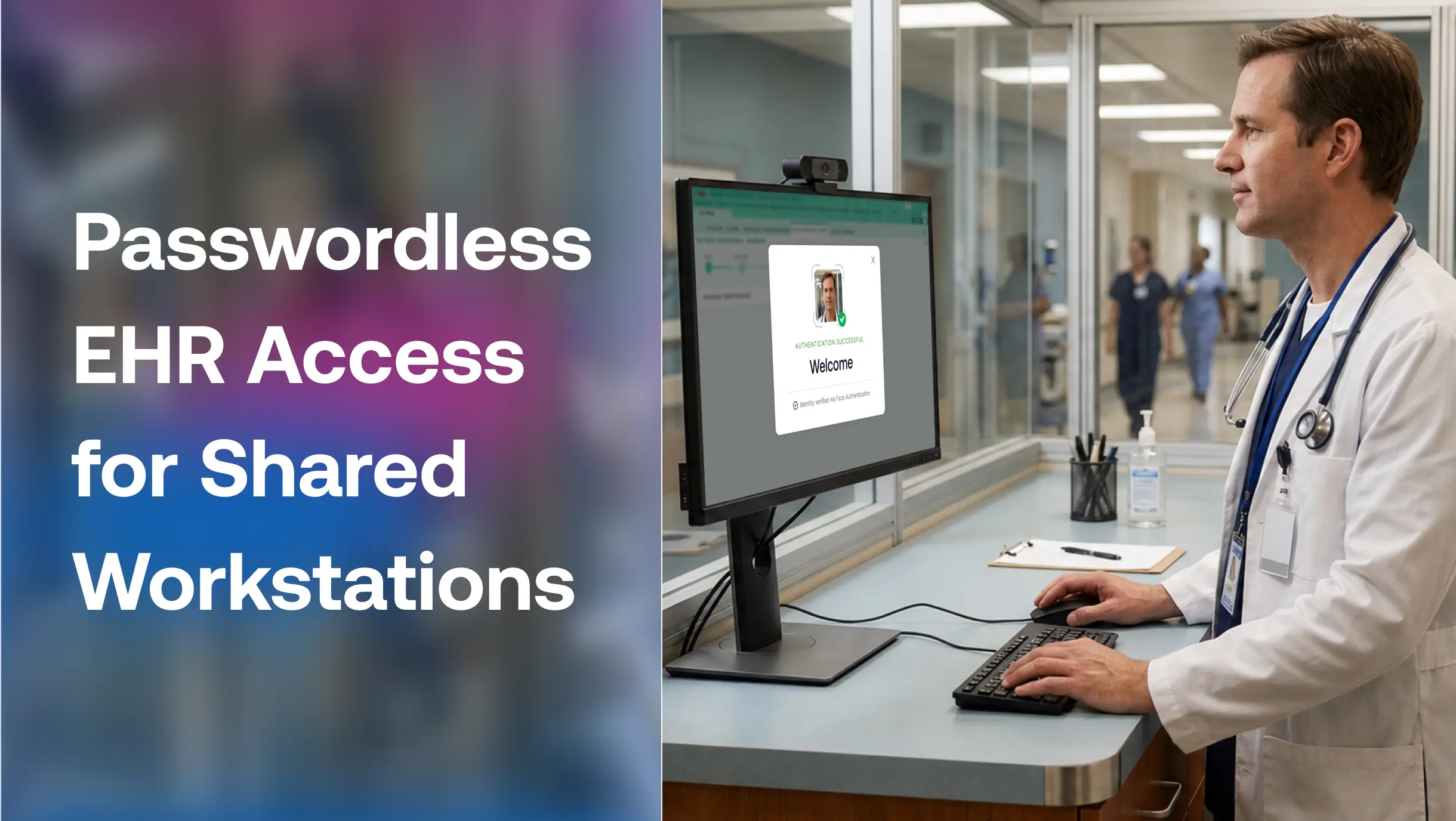
Passwordless EHR Access for Shared Workstations: How It Works and Why Passwords Fail
Electronic health records security on shared workstations fails at a structural level: the one-user-per-device assumption behind passwords and standard MFA does not hold in shift-based clinical environments. Generic logins, open sessions, and credential sharing are not policy failures; they are the predictable output of an access model that was never built for multi-user endpoints. This guide covers why traditional login approaches break on shared terminals, how passwordless authentication methods compare for clinical use, and how organizations can implement passwordless EHR access in a way that satisfies HIPAA audit controls, speeds up clinician workflows, and ties every session to a verified individual.
Identification vs Authentication: Key Differences Explained
Identification and authentication are two sequential steps that decide who gets into a system. Identification is the claim of identity, and authentication is the proof behind it. This guide explains what each term means, how the two differ, how they work with authorization, and where they behave differently on shared devices. It covers the types of identification, the three authentication factor categories, a real login flow, and the failure points shared logins create in healthcare, manufacturing, logistics, and retail. Getting identification vs authentication right is the foundation of secure, low-friction access.
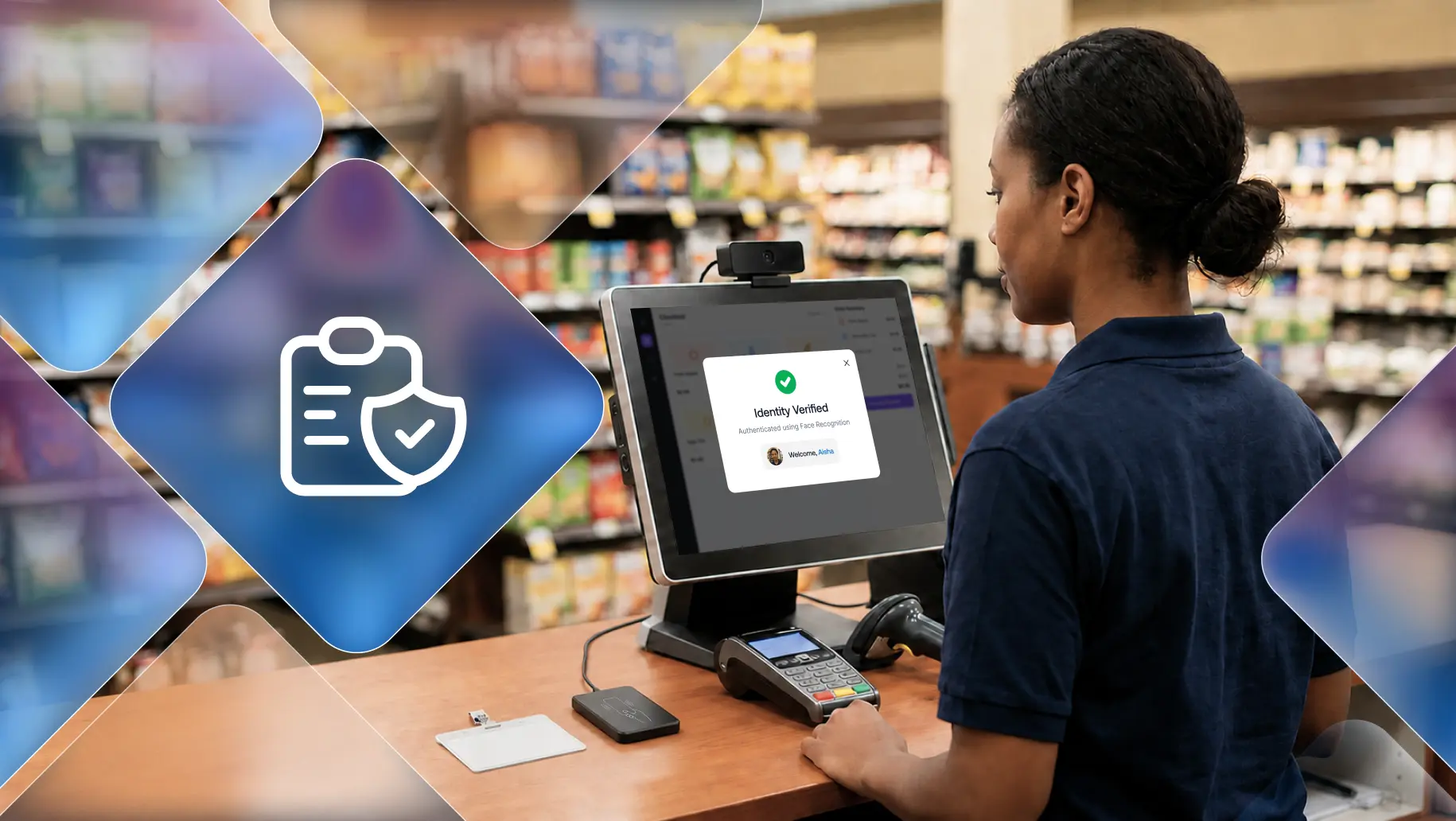
PCI DSS Compliance on Shared Devices: How to Close the Gaps That Fail Audits
PCI DSS is the global security standard that governs how organizations protect payment card data, created by the five major card brands and enforced through contracts with processors and acquiring banks. Most organizations pass their annual audit but fail to remain compliant, with shared logins, control decay, and scope sprawl driving most gaps. This guide covers who must comply, the four compliance levels, the 12 requirements, and what changed in v4.0, including the MFA mandate now covering every user in the cardholder data environment. It also breaks down why compliance breaks fastest on shared frontline devices and how to sustain it year-round.
.webp)
What is Proof Key for Code Exchange (PKCE)? A Practical Guide
Proof Key for Code Exchange (PKCE) is a security extension to OAuth 2.0 that binds an authorization request to the client that made it, so an intercepted authorization code cannot be exchanged for tokens by anyone else. Built for public clients like mobile and single-page apps that cannot safely store a client secret, PKCE now anchors OAuth 2.1 as a baseline for nearly every client. This guide explains what PKCE is, how it works step by step, and how it defends against code interception and injection. It also covers where PKCE fits across public and confidential clients, the best practices and pitfalls worth knowing, and why shared-device and frontline environments have the most to gain.
What is Secure Web Authentication? A Practical Guide for 2026
Secure web authentication verifies a user's identity and protects credentials and session data across every step of a web login, not just at the password prompt. This guide breaks down how encryption, session tokens, MFA, SSO, and passkeys work together, why passwords remain the top attack vector according to Verizon's 2025 DBIR, and where standard authentication assumptions fail on shared devices. It closes with a practical checklist for mapping authentication controls to compliance requirements in healthcare, manufacturing, logistics, and retail.
Zero Trust vs VPN: What's the Real Difference (and Which One Fits Your Environment)
Zero Trust vs VPN compares two approaches to securing access: VPN's one-time, broad-access tunnel versus Zero Trust's continuous, per-application verification. Most comparisons picture a single worker on a personal device, overlooking the shared workstations and shift-based logins common in healthcare, manufacturing, logistics, and retail. This guide covers what each model actually does, where each one holds up or falls short, how to decide between them, and what a phased migration from VPN to Zero Trust looks like in practice.

Making every day-in-the-life of frontline workers frictionless & secure!
Get the latest updates! Subscribe now!
