




About
Mona Sata is a B2B content and narrative specialist with experience in cloud-native and security technology. She translates complex concepts into clear messaging that helps technical teams communicate with authority and earn buyer trust.
Usually writes about
Microsoft's 2027 MFA Deadline and the Passkey Gap for Frontline Workers
Microsoft is retiring SMS and voice MFA in Entra ID by February 1, 2027. SMS MFA was the only Microsoft-native authentication factor tied to the worker rather than the device. Standard passkeys, Windows Hello for Business, and FIDO2 security keys are all device-bound: they register to a specific terminal and don't follow a worker who moves between shared devices. For frontline workers on shared Android devices, iPads, Zebra handhelds, shop-floor kiosks, and shared PCs, removing SMS MFA leaves no person-bound credential in the standard Entra stack. Badge tap and face authentication solve this by traveling with the worker across any shared terminal, delivering phishing-resistant, individually attributed sessions without a personal phone, satisfying Microsoft's mandate within frontline operating constraints.
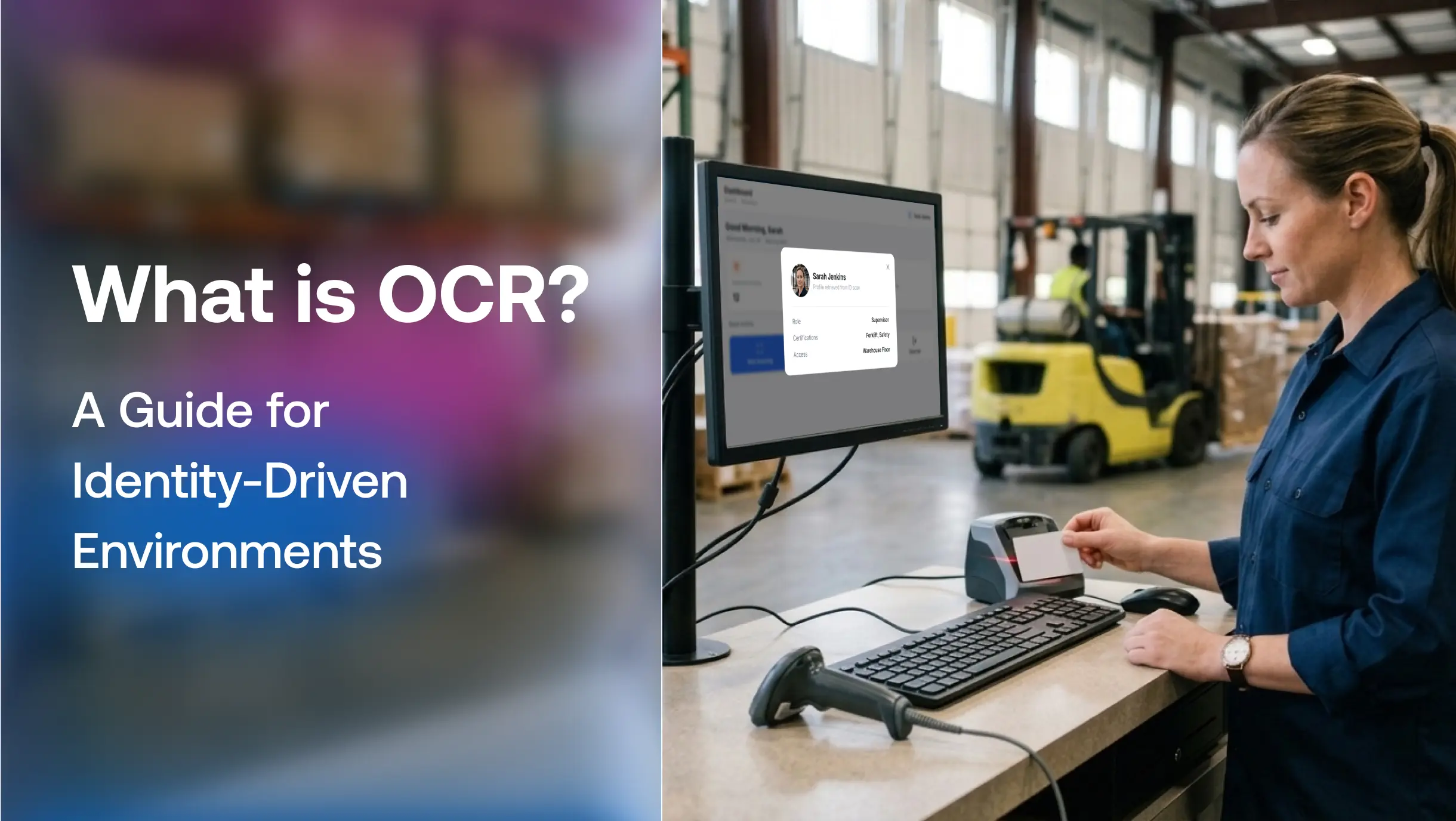
What is OCR? A Guide for Identity-Driven Environments
Optical character recognition converts scanned images and printed documents into machine-readable, editable data, eliminating manual re-entry and making static content actionable. Most organizations understand OCR as a document tool but underestimate its role as the first step in identity verification and access control workflows. This guide covers how OCR works at a technical level, the four types of OCR technology, where accuracy degrades in operational environments, and how OCR connects to passwordless authentication and IAM in shared-device and frontline workplaces.
Types of Biometric Authentication Methods: A Decision Guide for Security and IT Teams
Biometric authentication methods verify identity using physical traits like fingerprints, iris patterns, and facial geometry, or behavioral patterns like keystroke rhythm and gait, replacing passwords with something that cannot be shared or phished. Most organizations understand the basics but underestimate the architectural decisions that determine whether a deployment actually works: on-device vs. centralized storage, FAR/FRR trade-offs, liveness detection requirements, and the gap between standard biometric tools and the shared-device environments common in healthcare, manufacturing, logistics, and retail. This guide covers how each biometric method works, how to choose the right one for your environment, what happens when biometric data is compromised, and how biometrics relate to passkeys and FIDO2 in a modern passwordless architecture.
Healthcare IAM Best Practices: A Step-by-Step Guide
Healthcare identity and access management governs who authenticates into clinical systems, what they can access, and how long that access stays active. Most healthcare organizations underestimate where their IAM programs actually fail: orphaned contractor accounts, shared workstation credentials, manual audit prep, and access models that were never designed for rotating frontline workforces. This guide covers the healthcare IAM best practices that address both the security and operational gaps, from RBAC and MFA to automated provisioning, HIPAA compliance mapping, and purpose-built access control for shared-device and high-turnover environments.
What is Lateral Movement? How Attackers Move Through Your Network Undetected
Lateral movement is the phase of a cyberattack where an adversary navigates from an initial entry point across systems, escalating privileges, and collecting credentials until they reach high-value targets. Most organizations detect lateral movement too late because attackers use valid credentials and native OS tools that generate no unusual signatures. This guide covers how lateral movement works, the specific techniques involved, why shared-device and frontline environments are structurally more exposed, and the identity-first controls that stop it at the source.
Identity Proofing vs Identity Verification: Key Differences and Why You Need Both
Identity proofing establishes that a claimed identity is real and belongs to the person presenting it, once, before access is granted. Identity verification confirms the same proofed person is present at every login, transaction, and sensitive event afterward. Confusing the two leaves organizations exposed on both ends: fake hires and synthetic identities enter through weak proofing, while account takeover exploits weak verification. This guide breaks down how each process works, the NIST IAL/AAL framework behind them, how they differ from authentication and KYC, and why shared-device frontline environments need both redesigned.

Making every day-in-the-life of frontline workers frictionless & secure!
Get the latest updates! Subscribe now!
