




What is POS Security? The Complete Guide for Businesses

Key Takeaways
- 80% of retailers faced cyberattacks last year, and 50% targeted POS systems directly
- POS attacks follow a pattern: phishing or vendor access, then silent malware, then months of undetected data theft
- Threats are not just external. Insider fraud, physical tampering, and compromised vendor credentials cause equal damage
- Retail breaches average $3.48M, take 280 days to contain, and leave 53% of businesses with lasting reputational damage
- PCI DSS sets the minimum. MFA, network segmentation, and continuous monitoring are what actually keep you secure
- Shared terminals are a hidden vulnerability. Every unverified handoff between frontline workers is an open door
- Vendor access is where most security discipline breaks down. Vet continuously, not just at onboarding
- Speed is everything. Faster detection directly reduces the cost and scope of damage
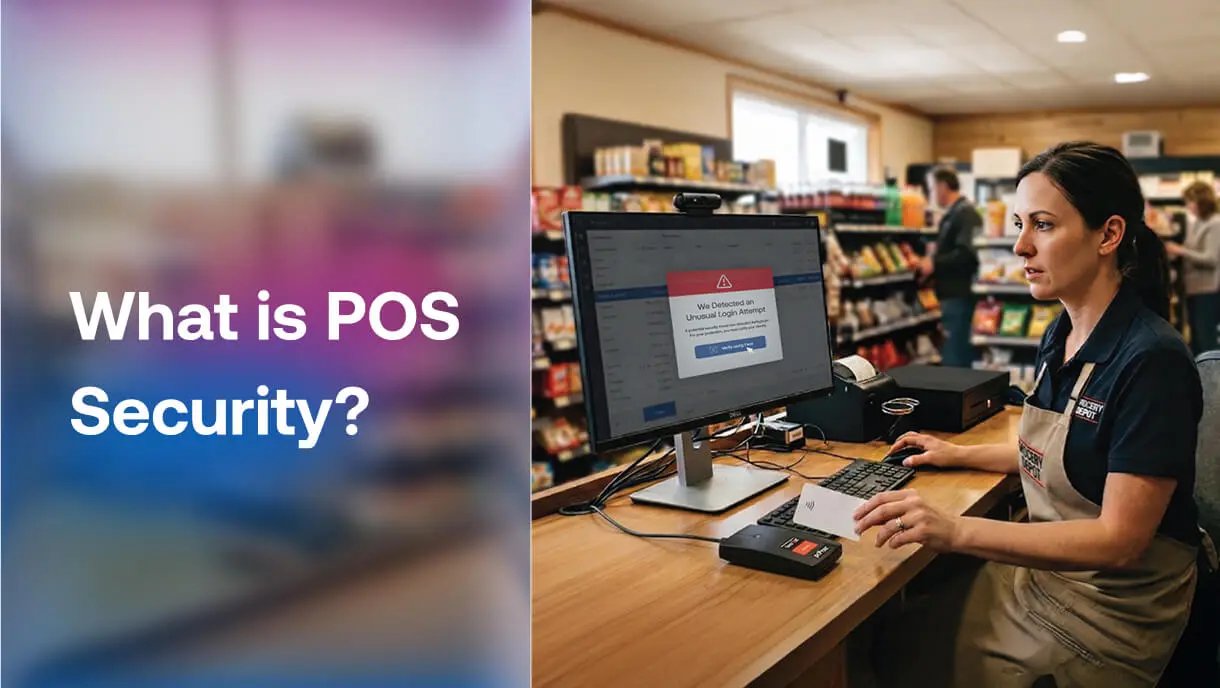
A retail shift starts like any other. Cashiers clock in, grab their shared terminal, and begin processing transactions. Between the morning rush and the afternoon lull, nobody notices that a piece of malware has been quietly running in the background for weeks, reading card data from memory every time a customer swipes. No alert fires, no system flags it. The data just leaves.
This is not a hypothetical. It is the playbook behind some of the largest payment breaches in retail history, including the 2013 Target attack that exposed card data from nearly 40 million customers, all traced back to a compromised third-party HVAC vendor. And it keeps happening. According to VikingCloud's Retail Cyber Threat Survey, 80% of retailers experienced a cyberattack in the past year, and 50% of those attacks directly targeted point-of-sale systems. That is not a fringe risk. That is a coin flip playing out against every business that runs a checkout counter.
[[content-box]]
In high-throughput environments such as retail stores, warehouses, and healthcare facilities, where frontline workers share terminals across shifts, the attack surface grows with every unchecked login. This blog explores how POS attacks happen, what threats businesses actually face, and the concrete practices that keep payment systems secure.
What is POS Security?
A point-of-sale system does more than ring up transactions. It holds cardholder data, personally identifiable information (PII), transaction histories, and in many cases, employee credentials. That combination makes it one of the richest targets in any business environment.
Point of Sale security wraps layers of protection around all of that: the hardware at the counter, the software processing payments, the network carrying that data, and the people touching the system throughout the day. Done right, it prevents attackers from stealing data, manipulating transactions, or using the POS as a stepping stone into broader business systems.
What is POS Authentication?
[[content-box-2]]
In shared-device environments like retail stores, warehouses, and hospital floors, this matters more than anywhere else. Multiple frontline workers cycle through the same terminal across a shift. When that handoff relies on a shared PIN or a password taped to the monitor, authentication has already failed. Strong POS authentication requires each user to verify their identity at every login, fast enough for high-throughput operations, strong enough for enterprise security. Platforms like OLOID enable passwordless verification through biometrics or badges on shared devices, so every session starts clean, and every action stays attributed.
Types of POS Systems and Their Risk Profiles
The architecture of a POS system determines its attack surface. Not every setup carries the same risk.
Cloud-based POS systems store data remotely and receive automatic updates, which reduces patch lag. The tradeoff is network dependency and exposure to cloud misconfiguration vulnerabilities.
On-premise POS systems keep data local and give businesses direct control. The risk is that patch management falls entirely on the business. Delayed updates create windows that attackers actively look for.
Mobile POS systems run on tablets or smartphones, often in environments where devices move between hands frequently. In shared-device settings such as retail checkout lines, logistics hubs, or hospital floors, weak or absent POS authentication turns every device handoff into a potential access risk.
How POS Attacks Work
Attackers follow a deliberate sequence. They do not randomly guess their way in.
First, they find an entry point: an unpatched vulnerability, a phishing email that tricks an employee into surrendering credentials, or a third-party vendor with network access whose own systems have been compromised. Once inside, they deploy POS malware specifically designed to read payment card data from terminal memory during the fraction of a second it exists in an unencrypted state. Tools like BlackPOS scrape this data silently as transactions are processed, aggregate it, and send it to an external server that the attacker controls.
The Target breach followed this exact sequence. Vendor credentials led to network access, which led to malware on POS terminals, which led to 11 GB of stolen card data appearing on dark web marketplaces weeks later.
Common POS Security Threats
Threats arrive from multiple directions, and businesses that only defend against external hackers tend to miss the others.
External threats include RAM-scraping malware, card skimmers attached to physical terminals, phishing campaigns targeting employees, and rogue Wi-Fi hotspots designed to intercept payment traffic.
Internal threats are consistently underestimated. Sweethearting, where employees give unauthorized discounts to friends, phantom refunds are processed to accounts the employee controls, and collusion between staff members represents real and recurring losses in retail and hospitality.
Physical threats include device theft, hardware tampering at the terminal itself, and hidden cameras positioned to capture PIN entries.
Third-party and vendor risk deserves its own category. Vendors, maintenance contractors, and software integrators often hold network access. If their credentials get compromised, attackers inherit that access. Thirty percent of all breaches in 2024 involved a third-party compromise, nearly double the rate from 2023, according to Shopify's retail cybersecurity research.
Why POS Security Matters
A POS breach does not end when the malware gets removed.
Financial consequences compound quickly. Fraud liability, chargebacks, forensic investigation costs, and regulatory fines pile up fast. Data breaches in retail result in an average cost of $3.48 million per incident.
Reputational damage follows closely behind. According to VikingCloud's research, 53% of retailers report reputational damage after a breach, with many customers moving to competitors without ever returning.
Operational disruption is severe and prolonged. IBM's research shows breaches take an average of 258 days to identify and contain. Nearly two-thirds of breached organizations are still recovering well after the breach has been officially contained.
Legal and compliance penalties add another layer, particularly when businesses fail PCI DSS requirements or violate data protection regulations tied to consumer payment information.
How POS Security Works
Effective POS security runs across several layers at once.
- Encryption and tokenization ensure card data never travels or rests in readable form. Tokenization replaces sensitive values with unique identifiers that carry no exploitable meaning outside the original payment system.
- POS authentication verifies who is actually accessing the system before granting entry. Two-factor authentication (2FA) and multi-factor authentication (MFA) add a verification step that stops unauthorized access even when passwords have been stolen. In shared-device environments, where multiple frontline workers rotate through the same terminal across a shift, authentication design matters enormously.
Platforms like OLOID solve this by enabling fast, passwordless identity verification built for high-throughput operational settings, so security does not become a bottleneck at the register.
- Network segmentation keeps the POS environment isolated. If another business system gets compromised, payment data stays protected behind its own network boundary.
- Monitoring, logging, and automated alerts create visibility across every transaction and access event, enabling fast detection of anomalous behavior before it escalates.
- Video-linked transaction monitoring pairs surveillance footage with transaction records, so businesses can review exactly what happened at a terminal during any flagged event.
POS Security Best Practices
- Use end-to-end encryption and tokenization on all payment data
- Enable MFA for every user who accesses the POS system
- Apply role-based access controls so employees can only access what their role requires
- Maintain audit trails that log who accessed what and when
- Apply every software and firmware update immediately upon release
- Segment the POS network from all other business systems
- Deploy antivirus and intrusion detection tools
- Pair video monitoring with transaction data to flag suspicious activity
- Conduct regular security audits and penetration tests
- Lock down physical devices at the end of each shift and restrict device handling to trusted personnel
- Review and restrict app permissions on any application integrated with the POS
- Define a data retention and deletion policy and enforce it consistently
PCI DSS Compliance: What It Covers and What It Does Not
PCI DSS sets the baseline for any business that handles card payments. It covers encryption standards, access controls, network security requirements, regular testing protocols, and cardholder data handling rules across terminals, networks, servers, and paper records.
What it does not do is guarantee security. PCI DSS is a minimum threshold, not a ceiling. Businesses that treat compliance as their entire security strategy leave significant gaps, particularly around insider threats, vendor access management, physical device security, and authentication for shared-device environments.
Layer MFA, network segmentation, vendor access controls, and continuous monitoring on top of PCI requirements. Compliance keeps you legal. These layers keep you secure.
[[cta]]
Third-Party and Vendor Risk Management
Most businesses secure their own systems reasonably well. Third-party vendors are where that discipline breaks down.
Suppliers, maintenance contractors, and software integrators often hold active credentials in business networks. If their systems get compromised, attackers walk through that access like an unlocked door. This is not theoretical: the Target breach, the Home Depot breach, and dozens of smaller incidents all started through vendor access.
To manage vendor risk, require all third parties to meet defined security standards before granting network access. Apply the principle of least privilege to every vendor credential. Monitor vendor sessions during active access. Revoke credentials immediately when an engagement ends. Review vendor security posture regularly, not just at onboarding.
Incident Response: What to Do If Your POS is Breached
Speed determines how much damage a breach ultimately causes.
Immediate steps: Isolate the compromised system from the network. Do not wipe it. Preserve logs and system state for forensic investigation.
Who to contact: Notify your payment processor right away. Engage legal counsel. Depending on the scope, regulatory bodies and law enforcement may also need to be notified.
Customer communication: If cardholder data was exposed, affected customers need timely notification and access to remediation, such as credit monitoring.
Recovery: Conduct a full forensic investigation to identify the entry point and the full scope of the breach. Patch the vulnerability, strengthen authentication across all access points, and audit all user and vendor credentials before bringing systems back online. Document everything for your PCI assessor and cyber insurance provider.
Securing the Front Line Starts at Login
Most POS security investments focus on what happens after a transaction: encrypting data, segmenting networks, and monitoring logs. But breaches often start somewhere simpler, at the login screen.
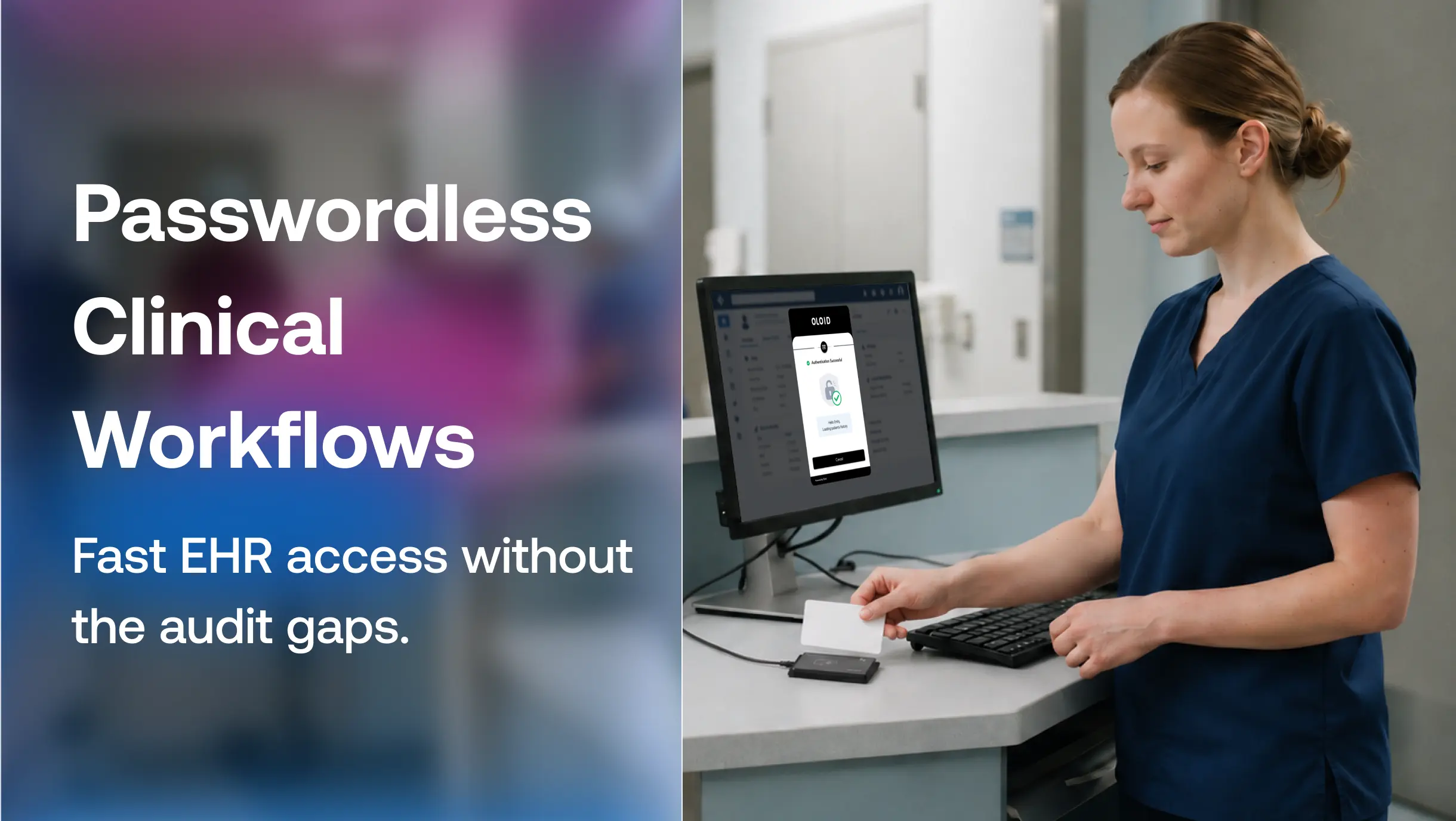
In retail stores, warehouses, and healthcare facilities, frontline workers share terminals across shifts. When every handoff relies on a shared PIN or a password scribbled on a sticky note, every handoff is a vulnerability. This is where POS authentication becomes a frontline security control.. OLOID for retail is built for exactly this: shared-device environments where workers need fast, passwordless identity verification without slowing down operations. Staff authenticates in seconds using biometrics or a badge, a clean audit trail gets logged automatically, and no open session gets left behind for the next person to inherit.
No shared credentials, no forgotten logouts. Just secure, seamless access at every shift change.
FAQs
1. What is POS security?
POS security is the combination of technical controls, access policies, physical safeguards, and compliance standards that protect point-of-sale systems from data breaches, malware, fraud, and unauthorized access.
2. What are the most common POS security threats?
RAM-scraping malware, card skimming, phishing attacks on employees, insider fraud such as phantom refunds and sweethearting, and compromised third-party vendor credentials.
3. Does PCI compliance make my POS system secure?
PCI DSS establishes minimum standards. Businesses need additional layers, including MFA, network segmentation, vendor access management, and continuous monitoring to be genuinely secure.
4. What should I do immediately after a POS breach?
Isolate the compromised system, preserve logs, notify your payment processor and legal team, assess the full scope, communicate with affected customers, and rebuild access controls before restoring operations.
5. How often should POS software be updated?
Every update and security patch should be applied as soon as it is released. Delayed updates are among the most preventable causes of successful POS attacks.

Get the latest updates! Subscribe now!
