




10 Multi-factor Authentication Trends to Watch Out for in 2026
Multi-factor authentication (MFA) is evolving to meet rising cybersecurity challenges. Emerging trends such as biometrics, behavioral and contextual authentication, AI-driven systems, and passwordless methods are making MFA more secure and user-friendly. These advancements aim to reduce friction, prevent breaches, and align with Zero Trust principles. As businesses and individuals adopt these modern MFA solutions, they strengthen their defense against increasingly sophisticated threats.


Stolen credentials remain one of the most common entry points for cyberattacks, and businesses are under pressure to strengthen authentication. Multi-factor authentication (MFA) has become a standard defense, but it’s no longer limited to text codes and authenticator apps.
In 2026, organizations want to know which MFA methods are most secure, user-friendly, and compliant with evolving regulations. This blog highlights the 10 biggest multi-factor authentication trends shaping multi-factor authentication, from passwordless authentication and adaptive security to biometric verification and shared-device MFA.
Whether you’re upgrading your security stack, evaluating vendors, or planning for compliance, these insights will help you understand where MFA is headed and how to prepare your organization for the future. Let’s get started.
1. The Rise of Passwordless Authentication
Passwords have become the most significant liability in cybersecurity. Daily phishing attacks and brute force attempts expose fundamental weaknesses in traditional credential systems. Forward-thinking organizations are embracing FIDO2-compliant solutions such as passkeys, biometric authentication, and hardware tokens that eliminate these vulnerabilities.
A Microsoft report states that the organization has experienced an 87% cost reduction after implementing passwordless systems and also dramatically improving security. As solutions like facial recognition and NFC badges prove both secure and user-friendly, enterprises are rapidly transitioning from password-dependent MFA to truly passwordless authentication frameworks.
Platforms like OLOID’s passwordless authentication solution support this shift with passwordless authentication options designed for frontline workforces. By focusing on usability as well as security, OLOID helps organizations accelerate passwordless adoption.
2. AI- and ML-Powered Adaptive Authentication
Security systems are getting smarter, not stricter. AI-powered adaptive authentication analyzes real-time risk factors, location, device fingerprinting, and behavioral patterns to make intelligent access decisions. Instead of blanket security rules, machine learning algorithms assess each login attempt individually.
According to PR Newswire, the risk-based adaptive authentication market is projected to reach $2.98 billion by 2030, growing at a 15.52% CAGR. Advanced anomaly detection identifies suspicious activities instantly.
Users logging in from familiar devices and locations experience frictionless access, while unusual patterns trigger additional verification steps automatically. This approach transforms user experience by eliminating unnecessary friction while strengthening security where it matters most.
[[cta]]
3. Biometric Authentication 2.0
Biometric authentication has evolved dramatically beyond simple fingerprint scanning into sophisticated multi-modal ecosystems. Today's advanced systems seamlessly integrate facial recognition, iris scanning, voice patterns, and behavioral analytics like typing rhythms to create comprehensive identity profiles.
This layered approach eliminates single points of failure while delivering the frictionless user experiences that modern workforces demand. Organizations can now deploy authentication that adapts to different environments and user preferences without compromising security.
The adoption of MFA technology spans critical industries like finance and government, where security cannot be compromised. This widespread adoption reflects biometrics' evolution from a convenience feature to an essential security infrastructure across enterprise environments.
4. Blockchain and Decentralized Identity (DID)
Traditional authentication relies on centralized databases that create massive security vulnerabilities. Blockchain-based decentralized identity flips this model entirely. Users store their own credentials in secure digital wallets and prove their identity through cryptographic verification rather than passwords. This eliminates the single points of failure that hackers aim to target.
The technology integrates seamlessly with existing multi-factor authentication systems while adding unprecedented security layers. Financial services and healthcare organizations are leading the adoption because blockchain identity systems provide both stronger security and better regulatory compliance.
Users can selectively share only the information needed for authentication while maintaining complete control over their personal data across all enterprise applications.
5. MFA for Shared Devices and Frontline Workers
Traditional multi-factor authentication breaks down completely in frontline environments where workers share tablets, kiosks, and workstations across shifts. Retail associates, healthcare staff, warehouse workers, and manufacturing teams rarely have corporate-issued smartphones for SMS codes or push notifications.
These workers often resort to sharing passwords or bypassing security entirely, creating massive compliance gaps in regulated industries. The disconnect between office-designed authentication systems and real-world frontline workflows has left millions of workers without practical security solutions.
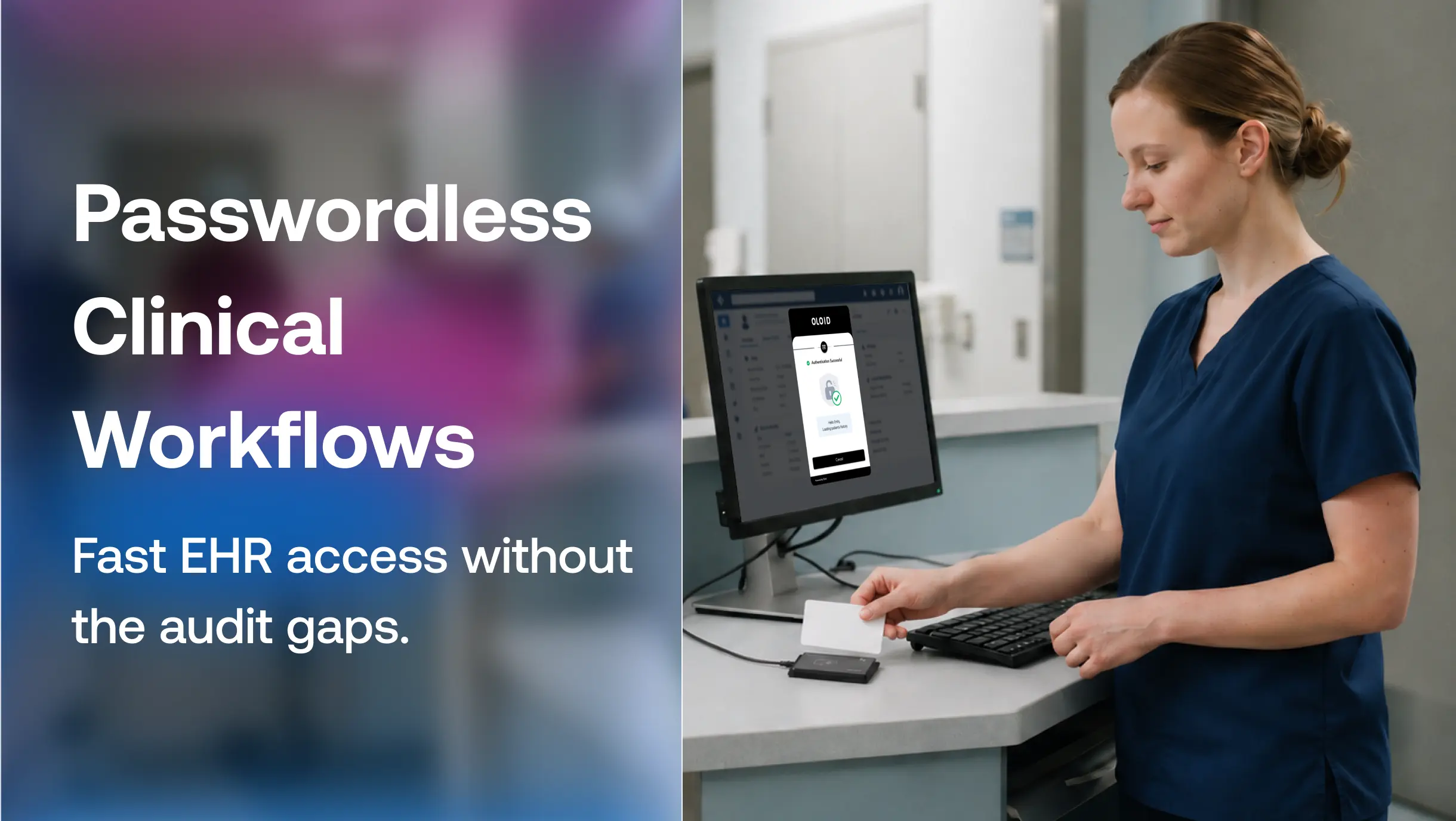
Leading authentication platforms like OLOID use the latest passwordless technologies that finally address these challenges. Such solutions are purpose-designed for shared device environments and frontline workers. Facial recognition, NFC employee badges, QR codes, and short PINs tied to workforce identity systems enable instant, secure authentication without the need for personal devices.
[[cta-2]]
6. MFA in the Expanding IoT and Edge Ecosystem
The explosion of connected devices creates massive attack surfaces that traditional authentication cannot protect. Smart sensors, industrial controllers, and edge devices lack processing power for conventional MFA while operating in remote locations with limited connectivity. When compromised, these devices become gateways for attackers to infiltrate entire networks and critical infrastructure systems.
Specialized MFA solutions are emerging for resource-constrained IoT environments. Proximity-based authentication uses nearby trusted devices or employee credentials to verify access without direct user interaction.
Device-based MFA leverages hardware security modules and cryptographic certificates to ensure only authorized devices communicate within industrial networks. These approaches provide security depth while accommodating the operational realities of distributed systems where traditional authentication simply cannot function.
7. Zero Trust Security and Continuous Authentication
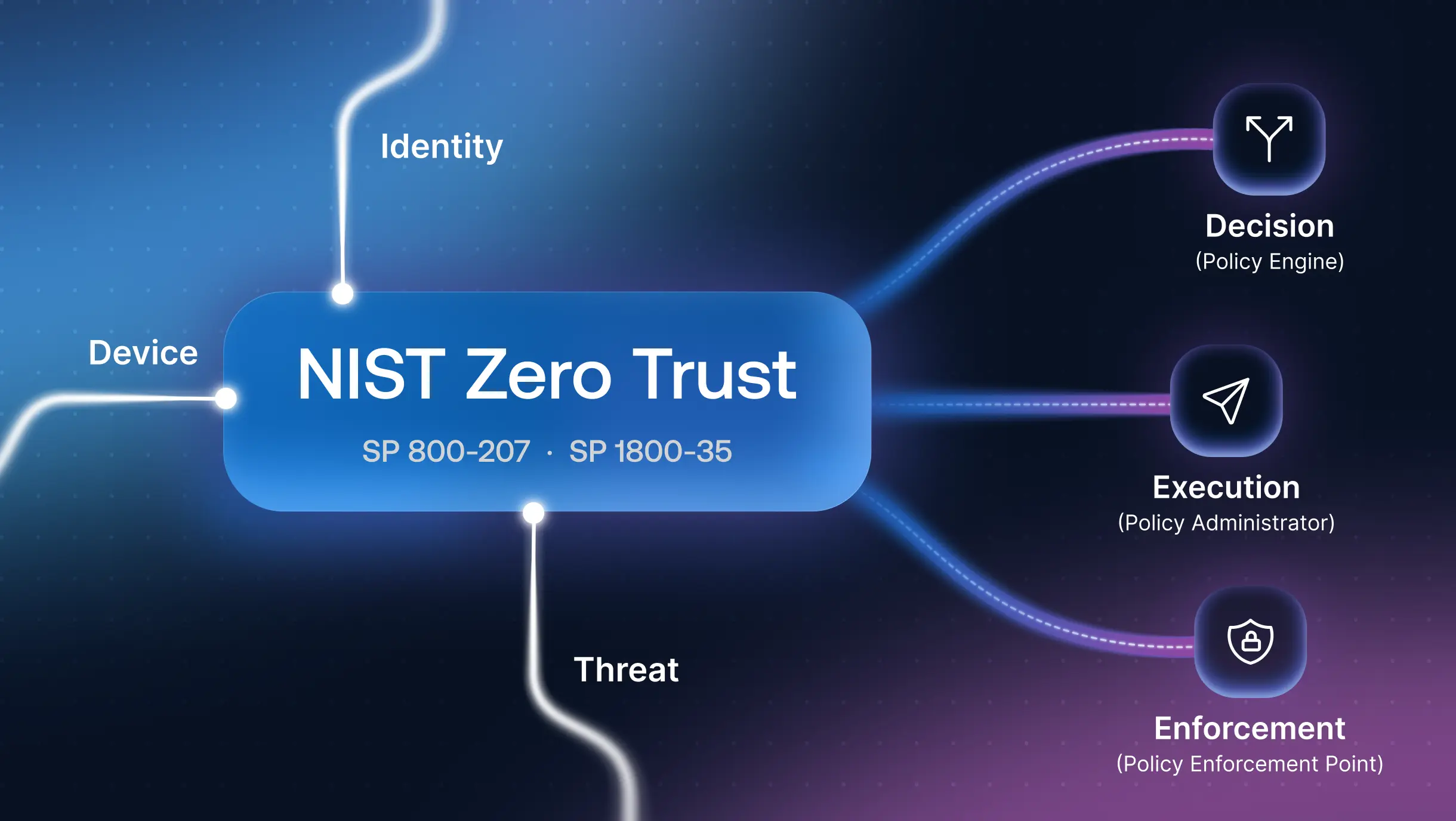
Zero trust operates on "never trust, always verify," rejecting traditional security perimeters entirely. Instead of granting broad access after single login verification, systems continuously monitor user behavior, device health, and location changes throughout entire sessions.
Any anomaly triggers immediate re-verification or access restrictions, transforming authentication from a one-time gateway into ongoing protection. This approach proves essential in defense, government, and regulated industries where data sensitivity demands constant vigilance.
Military agencies monitor for unusual behavior patterns while financial services use continuous verification to meet compliance requirements. Healthcare organizations maintain session-long authentication to protect patient data. Zero trust transforms MFA into an adaptive security fabric that responds to changing risk levels in real-time.
8. Cloud-First MFA Solutions
Organizations are abandoning expensive on-premise authentication infrastructure for scalable MFA-as-a-service platforms. These cloud-native solutions eliminate hardware deployments and maintenance headaches while providing instant scalability for hybrid workforces.
Businesses can deploy robust authentication across thousands of users without upfront infrastructure investments or lengthy implementations. Deep integration with Microsoft Azure, AWS, and Google Cloud creates unified identity ecosystems spanning entire enterprise environments.
Global organizations benefit from reduced latency and simplified management as remote teams access corporate resources securely from anywhere. Cloud-first MFA transforms authentication from a technical burden into a flexible business enabler that adapts to modern distributed work patterns.
9. MFA and SSO Integration
Single sign-on integration with multi-factor authentication solves the productivity versus security dilemma by eliminating password fatigue while strengthening access controls. Users authenticate once with strong MFA factors, then access all enterprise applications seamlessly without repeated login prompts.
This approach reduces the security risks associated with password reuse and weak credentials while dramatically improving user experience across complex application ecosystems. Enterprise deployments typically integrate MFA with OLOID to create unified access management.
Employees use biometrics, hardware tokens, or mobile authentication to unlock their entire digital workspace instantly. This integration maintains strict compliance requirements for regulated industries while boosting productivity as workers spend less time managing credentials and more time on actual work tasks.
10. Expanding MFA Adoption in SMBs and Consumer Applications
Small and medium-sized businesses are increasingly targeted by cybercriminals who view them as easier prey due to their weaker security defenses. These attacks have forced SMBs to recognize that basic password protection leaves them vulnerable to devastating breaches that can destroy customer trust and business operations.
Cost-effective, easy-to-deploy MFA solutions now make enterprise-grade security accessible to organizations previously unable to afford complex authentication systems. Consumer-facing platforms in e-Commerce, banking, and social media are rapidly implementing user-friendly MFA options to protect customer accounts and maintain platform integrity.
Simple authentication methods like SMS codes, authenticator apps, and biometric verification have become standard features rather than premium add-ons. This widespread adoption reflects growing consumer awareness of security risks and platforms' recognition that strong authentication builds competitive advantage through enhanced user trust and reduced fraud losses.
This concludes the 10 leading Multi-factor Authentication (MFA) trends reshaping how organizations secure access. To put these trends into practice, businesses need a powerful authentication platform that is secure, compliant, and user-friendly. That’s where OLOID comes in, delivering passwordless, adaptive, and frictionless MFA.
Need Seamless Authentication for Employees, Contractors, and Frontline Teams? Try OLOID
OLOID delivers next-generation multi-factor authentication designed for today’s diverse workforce. Its passwordless, AI-driven platform eliminates the weaknesses of traditional MFA by combining facial recognition, NFC badges, biometrics, and contextual intelligence into a single, frictionless experience.
This allows organizations to extend secure authentication beyond desk workers to frontline teams in healthcare, retail, manufacturing, and logistics, where shared devices and fast-paced environments make security more complex. Unlike generic MFA systems, OLOID is purpose-built to balance strong security, workforce productivity, and compliance readiness.
It integrates seamlessly with leading identity providers like Microsoft Azure AD, Okta, Ping Identity, Auth0, and Google Workspace, while also connecting with workforce management systems including ADP, Kronos, Paychex, Paylocity, and Ceridian. With OLOID, businesses can strengthen their security posture, reduce operational friction, and ensure authentication becomes an invisible enabler of work rather than a barrier.
Ready to future-proof your authentication strategy? Request a demo with OLOID today and see how passwordless, adaptive MFA can transform your workforce experience.

Get the latest updates! Subscribe now!

