



About
As Chief Commercial Officer at OLOID, Dhruv Markandey leads the company's revenue growth, strategic partnerships, and go-to-market initiatives. He is passionate about transforming how frontline workers authenticate and operate in shared-device environments, helping organizations strengthen security while delivering seamless access experiences. His work focuses on bringing enterprise-grade identity and access solutions to the workers who power industries such as healthcare, manufacturing, retail, and others.
Usually writes about
Security Doesn't End When Access is Granted
Most identity programs focus on the login, but the real exposure often sits in the hours that follow. Stolen session tokens bypass MFA, shift-long sessions outlast the conditions that justified them, and shared devices change hands without any alert. This blog explains why timeouts and SSO leave gaps on busy frontline devices, how step-up verification protects high-risk actions, why disabled accounts can keep working through open sessions, and four questions leaders can use to measure security after login.

Authentication Friction on the Frontline Becomes a Security Risk
Authentication friction on the frontline isn't just a usability complaint. It's the direct cause of shared credentials, persistent sessions, and broken audit trails that compliance frameworks can't account for. This post makes the case that frictionless, person-bound authentication is security work, not a nice-to-have, and explains what that looks like in environments where standard MFA was never designed to operate.
From Passwords to Verified Identity: The Next Security Layer
Verified identity replaces secret-based authentication with cryptographic or biometric proof tied to a confirmed individual. This post covers why the credential model fails structurally, what verified identity architecture requires, where implementation stalls in operational environments, and how to build the business case for the transition.
Shared Passwords on the Frontline Break Audit Trails
Compliance frameworks like HIPAA and FDA 21 CFR Part 11 rest on one assumption: every access event can be traced to a specific individual. Shared logins on frontline devices quietly break that, producing audit trails that look complete but fail the attribution requirement entirely, breach or no breach. The requirement hasn't changed; digitization has pushed regulated system access onto shared devices, the rule was never stress-tested against. Fixing it means identity infrastructure that attributes access to the person on shift, without slowing frontline work down.
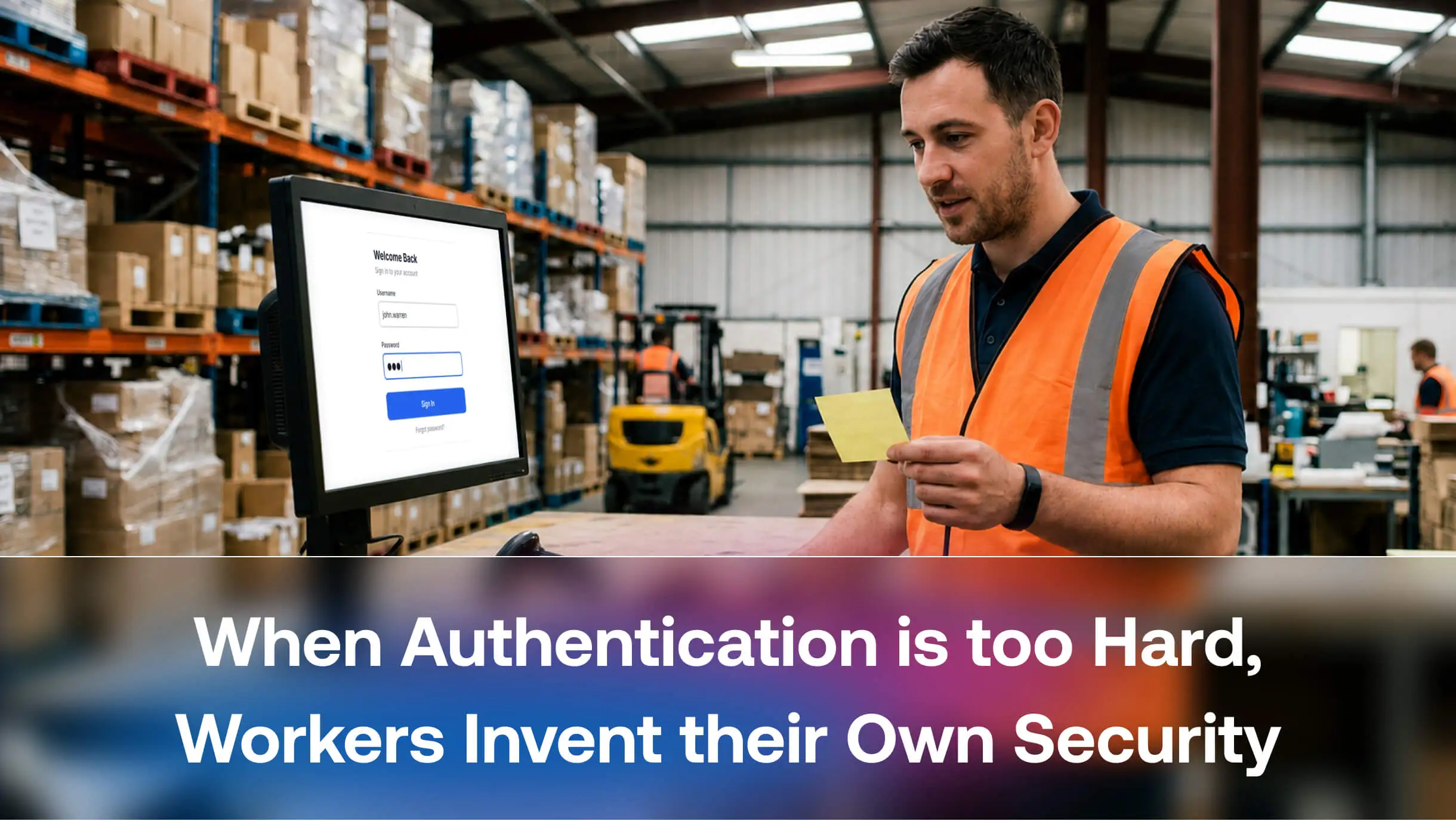
The Workaround Problem: When Authentication is too Hard, Workers Invent their Own Security
Frontline workers don't bypass authentication because they're careless. They do it because the system makes compliance slower than the job allows. Authentication designed for desk workers fails in shared-device, high-speed environments, and no amount of training changes that. The real cost isn't just breach exposure; it's the operational drag that security teams never measure and operations teams quietly absorb. Fixing this means designing authentication that is fast and secure by default, built around the frontline environment rather than retrofitted onto it.
Making every day-in-the-life of frontline workers frictionless & secure!
Get the latest updates! Subscribe now!
