




What are the top benefits of mobile access control system?
Mobile Access Control Systems are transforming traditional security by using smartphones as virtual credentials, eliminating the need for physical cards or keys. These systems offer enhanced security, convenience, and cost-effectiveness while enabling remote access management, real-time monitoring, and seamless integration with existing infrastructure. OLOID’s M-Tag solution allows easy retrofit on existing RFID readers, providing a scalable and user-friendly upgrade to mobile access. This modern approach improves efficiency, reduces administrative burden, and strengthens physical access security across organizations.

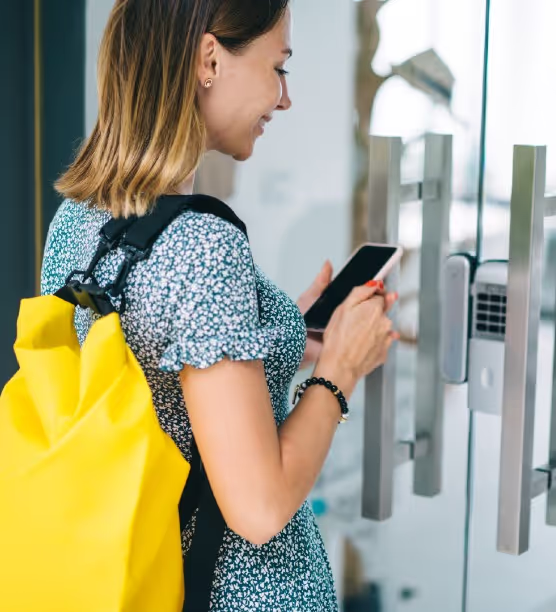
Accessing secured and restricted areas in the past involved the use of key cards, printed documents, and physical verification procedures, which often resulted in delays, productivity loss, and inconvenience.
However, the advancements in Information and Communications Technology (ICT) have revolutionized access control systems, addressing these challenges and enhancing security and reliability. Mobile Access Control Systems now represent the forefront of access control technology.
By leveraging the power of mobile devices, these systems have overcome the limitations of traditional methods, offering streamlined and efficient access management. With mobile access control, authorized individuals can conveniently gain entry using their smartphones as virtual credentials, eliminating the need for physical cards or documents. This cutting-edge technology combines seamless access, improved security, and enhanced user experience, marking a significant advancement in the field of access control.
What is a Mobile Access Control System?
A Mobile Access Control System is an access control mechanism that allows the use of mobile phones, smartphones, tablets, and wearable electronic devices to carry a user's credentials for providing access to restricted spaces, such as offices and business facilities. Such systems are increasingly being used by corporates and government establishments alike to control access to restricted areas.
Benefits of Mobile Access Control System
Smartphone-based access control essentially uses the capabilities of smartphones to provide secure credentials for access to restricted spaces in company premises. The transition to a new system may seem daunting and challenging. However, the benefits tilt the scales a long way in favor of its implementation.
Convenience
Mobile access control eliminates the need for physical keys or access cards. Users can use their smartphones or other mobile devices as virtual credentials to gain access to secured areas. This convenience means users no longer have to carry multiple keys or access cards and reduces the risk of losing or misplacing them.
Enhanced Security
Mobile access control systems provide an added layer of security compared to traditional access methods. Virtual credentials on mobile devices are encrypted and can be protected with biometric authentication methods like fingerprint or facial recognition, making it harder for unauthorized individuals to gain access. Additionally, mobile access control systems offer remote management capabilities, allowing administrators to grant or revoke access remotely in real-time, increasing overall security control.
Cost-Effectiveness
Implementing a mobile access control system can be cost-effective in the long run. Instead of issuing and managing physical access cards or keys, organizations can rely on existing mobile devices, eliminating the need for additional hardware. Additionally, if an employee leaves the organization or a credential is lost, it can be easily deactivated or replaced digitally, reducing replacement costs. This is especially true for SMEs opting for mobile access control solutions.
Flexibility and Scalability
Mobile access control systems provide flexibility and scalability for organizations. Administrators can easily add or remove users, grant or revoke access permissions, and manage multiple locations from a centralized platform. This flexibility makes it easier to adapt access control to changing organizational needs and enables efficient access management across various sites.
Auditability and Reporting
Mobile access control systems offer robust audit trails and reporting capabilities. Administrators can track and monitor access events in real-time, providing valuable insights into who accessed which areas and at what times. This information can be useful for security investigations, compliance requirements, and improving overall security protocols.
Integration with Other Systems
Mobile access control systems can integrate with other security systems and technologies, such as video surveillance, intrusion detection systems, and visitor management systems. This integration enables a more comprehensive and streamlined security infrastructure, allowing organizations to leverage data from multiple sources for better situational awareness and incident response.
Remote Access Management
Mobile access control systems allow administrators to manage access remotely from anywhere with an internet connection. This feature is particularly useful for organizations with multiple locations or distributed teams. Administrators can grant temporary access, monitor access events, and make real-time access changes, even when they are not physically present at the site.
User-Friendly Experience
Mobile access control systems offer a user-friendly experience. Employees and authorized personnel can simply use their smartphones to unlock doors or gain access to secured areas, eliminating the need for complex key management or access card swiping. The intuitive interface and familiar device make the overall access control process more convenient and seamless.
Geolocation and Time-Based Access
Mobile access control systems can leverage geolocation technology to enable access based on the user's physical location. This feature ensures that access is granted only when the user is in the specified vicinity, adding an extra layer of security. Similarly, time-based access controls can be implemented, allowing access permissions to be automatically granted or revoked based on pre-defined schedules.
Integration with Mobile Services
Mobile access control systems can integrate with other mobile services, such as parking management or building automation systems. For example, when a user enters a parking lot, the mobile access control system can trigger the opening of a parking gate or activate a parking payment app on their smartphone. This integration enhances user convenience and improves the overall experience.
Emergency Lockdown and Alerts
Mobile access control systems can be used to initiate emergency lockdown procedures swiftly. In case of a security threat or emergency situation, administrators can activate a lockdown mode remotely, restricting access to specific areas or the entire facility. Additionally, the system can send real-time alerts to authorized personnel or security personnel, notifying them of potential security breaches or incidents.
Reduced Administrative Burden
Mobile access control systems automate many administrative tasks associated with traditional access control methods. It eliminates the need for manual key distribution, card activation, or physical infrastructure management. This reduces the administrative burden on security personnel and frees up their time for more critical security tasks.
OLOID Enables Mobile Access with M-Tag
OLOID's retrofit mobile access product, M-Tag, is the world’s first self-install product that clips on an existing RFID reader and enables mobile access to transform traditional access control systems into a modern and convenient experience.
With M-Tag, organizations can seamlessly upgrade their existing infrastructure by leveraging the power of smartphones. The M-Tag is designed for hassle-free installation, requiring no additional hardware or complex setup processes. Administrators can easily manage access permissions remotely, granting or revoking access with a few clicks.
Real-time monitoring and audit trails provide valuable insights into access events. The M-Tag integrates smoothly with existing access control systems, making it a cost-effective solution that enhances security without the need for extensive infrastructure changes. With its user-friendly interface and robust features, OLOID's M-Tag is revolutionizing mobile access control, providing organizations with a seamless and efficient solution.
Conclusion
Employing technology to transform access control systems has brought numerous benefits to organizations worldwide. Mobile access control, in particular, has emerged as a game-changer, revolutionizing the way we manage and secure physical spaces.
By leveraging smartphones as virtual credentials, mobile access control systems offer unparalleled convenience, enhanced security, and cost-effectiveness. The ability to grant or revoke access remotely, the integration with other security systems, and the robust auditability and reporting capabilities empower organizations with greater control and situational awareness.
Furthermore, by employing technology to transform access control, organizations can streamline operations, reduce administrative burdens, and improve the overall user experience. As we embrace the future of access control, the benefits of mobile access control systems continue to shape the way we secure our environments and redefine what is possible in the realm of physical security.

.webp)

Get the latest updates! Subscribe now!

