




Security challenges and predictions for 2026
The blog explains how cyber threats are rapidly evolving, highlighting rising ransomware, supply chain and phishing attacks, growing risks from AI‑driven threats, and insecure IoT devices, while also discussing both the promise and privacy challenges of biometric authentication and physical access control, and urging organizations to adopt strong, proactive cybersecurity measures.


Cybersecurity is an ever-evolving field, and we must remain vigilant to stay ahead of cyber threats. In recent years, we saw an increase in ransomware attacks, cyber attacks on critical infrastructure. The attack on the Colonial Pipeline in 2021 highlighted just how vulnerable our infrastructure can be to cyber threats. Cybercriminals can cause significant damage by disrupting energy, transportation, and communication systems, which can have a ripple effect across the entire economy.
As technology keeps getting better, the field of security has to deal with new problems all the time. DDoS attacks and attacks on the internet of things are at a level that is way above and beyond. Because of this, it's important to be careful and use strong security measures. In this article, we'll talk about some security trends and problems that could come up in near future.
Biometric Authentication Methods
More and more people are using BAM, and this is likely to continue. These methods are very helpful for systems that control who gets in and out. They have technology that can read your fingerprints and which recognize your face. People no longer need to remember passwords or carry tokens. It's also harder to fake than other ways to prove who you are.
But there may also be worries about the privacy and safety of this system. Biometric data is sensitive personal information that, if breached, can be used to impersonate individuals or commit fraud. This data is often stored in centralized databases, making them a prime target for hackers. If a biometric database is breached, it can be difficult or impossible to change the compromised biometric data, unlike passwords, which can be changed easily.
Also, Biometric authentication methods are not perfect and can produce both false positives and false negatives. False positives occur when an individual is incorrectly identified as someone else, while false negatives occur when the system fails to identify an authorized user. These errors can result in security breaches, or frustration for users who are denied access to systems or services they are authorized to use. Other challenges are spoofing attacks, where attackers attempt to fool the system by presenting fake biometric data, privacy concerns and regulatory compliance.
Integration with Physical Access Control: Biometric authentication is essential not just for IT access but for physical security. Modern organizations use facial recognition, fingerprint readers, and mobile push-based authentication to control entry to sensitive areas (data centers, offices, labs). This unified authentication approach—whether digital or physical—reduces reliance on passwords and tokens, strengthens security, and improves user experience. Organizations investing in biometric infrastructure for physical access control often expand to IT access management, creating a seamless passwordless authentication environment.
Cybersecurity attacks
In 2026, cybersecurity attacks can be a major risk for businesses. These attacks can cause sensitive data to be stolen, money to be lost, and damage to a company's reputation. Some of the problems that businesses may face in the coming years:
Open-source software libraries
More often than not, attackers try to break into these libraries first. They can be used to make a wide range of software. Most of the time, these have flaws that hackers can take advantage of. Organizations have to make sure their open-source software is always up-to-date. Hence, it would be a smart move to use maximum encryption and safe data handling.
Ransomware
Ransomware attacks have been on the rise in recent years, and this trend is expected to continue in 2026. These attacks can be incredibly damaging to businesses and individuals, often resulting in the loss of critical data and significant financial losses. In Ransomware attacks, hackers hold a company's data for ransom until they get paid. These attacks can cause a lot of trouble and cost a lot of money. Organizations need to be prepared for such threats.
Recovery and Business Continuity: When a ransomware attack occurs, organizations face critical decisions:
- Whether to pay the ransom (FBI generally advises against this, as it funds future attacks)
- How to isolate affected systems to prevent spread
- How to restore from clean backups (which should be maintained offline)
- How to communicate with stakeholders and law enforcement
Organizations should maintain offline, immutable backups of critical data and test recovery procedures regularly. A 3-2-1 backup strategy (3 copies, 2 different media types, 1 offsite) can be the difference between recovery and paying millions in ransom.
Third-party risk
Many businesses rely on vendors and suppliers who are not part of their company. If the right security measures are not in place, these relationships can pose a risk. Organizations must carefully evaluate the third-party integrations, and put measures in place to defend against possible attacks.
Phishing
Phishing attacks will probably still be common in 2026. By sending fake emails or websites, hackers try to get people to give them sensitive information. These attacks can be hard to spot. They can cause serious trouble, like money being lost or sensitive information being stolen. Thus, organizations will have to push their employees to get training and use authentication protocols.
Supply chain attacks
In recent years, supply chain attacks have become a popular method for hackers to gain access to sensitive information. By targeting a third-party vendor that has access to a target's network, hackers can bypass traditional security measures. This trend is expected to continue in 2026, with more attacks targeting supply chain vulnerabilities.
Artificial Intelligence (AI) security
Artificial Intelligence is rapidly transforming the cybersecurity landscape, serving as both a powerful defence tool and a dangerous weapon for cybercriminals.
On the threat side, hackers are using AI to create more convincing phishing emails, generate deepfakes for social engineering attacks, and develop adaptive malware that can evade traditional security measures. Generative AI tools have also lowered the barrier for less-skilled attackers to craft sophisticated attacks.
On the defence side, organizations are adopting AI-driven security solutions that can analyse vast amounts of data in real-time, detect anomalies, and respond to threats faster than human teams alone. In 2026, AI is expected to play an even larger role in threat intelligence, behavioural analysis, and automated incident response.
The coming years will see an ongoing arms race between AI-powered attackers and defenders. Organizations that fail to embrace AI-driven security measures risk falling behind in this evolving threat landscape.
Additionally, organizations should conduct regular vulnerability assessments and penetration testing to identify weaknesses before attackers do. These activities—including automated vulnerability scanning and manual penetration tests—help organizations understand their security posture, prioritize remediation efforts, and validate that their defenses are effective. Combined with AI-driven detection tools, proactive vulnerability management dramatically reduces breach risk.
The Internet of Things (IoT)
Another trend that is likely to be prominent throughout 2026 is the "Internet of Things". The number of IoT devices continues to grow, and with it, the potential for security breaches. Many IoT devices are poorly secured, making them an easy target for hackers. In 2026, we can expect to see more attacks targeting IoT devices, as well as increased efforts to develop better security measures, which can pose serious risks to industries such as healthcare and finance.
To deal with these problems, organizations will need to take strong security steps. Some ways to do this are to use strong passwords and keep software and firmware up to date. Another way to limit the damage that could be done by a security breach is to use network segmentation.
Compliance and Regulatory Drivers
Cybersecurity is no longer just a technical concern—it is a business and legal imperative. Organizations operating in regulated industries face compliance mandates:
- Healthcare (HIPAA): Requires protection of patient data and breach notification
- Finance (PCI DSS): Mandates secure handling of payment card data
- EU/Global (GDPR): Requires data protection impact assessments and breach notification within 72 hours
- US Federal (NIST Cybersecurity Framework): Many government contracts require NIST compliance
- Enterprise SOC 2 Type II: A common requirement for B2B SaaS and service providers
Organizations should map their security practices to relevant frameworks and maintain audit documentation. Failing to meet compliance requirements can result in fines (GDPR fines up to 4% of global revenue), contract loss, and reputational damage.
Compliance and Regulatory Drivers
Cybersecurity is no longer just a technical concern—it is a business and legal imperative. Organizations operating in regulated industries face compliance mandates:
- Healthcare (HIPAA): Requires protection of patient data and breach notification
- Finance (PCI DSS): Mandates secure handling of payment card data
- EU/Global (GDPR): Requires data protection impact assessments and breach notification within 72 hours
- US Federal (NIST Cybersecurity Framework): Many government contracts require NIST compliance
- Enterprise SOC 2 Type II: A common requirement for B2B SaaS and service providers
Organizations should map their security practices to relevant frameworks and maintain audit documentation. Failing to meet compliance requirements can result in fines (GDPR fines up to 4% of global revenue), contract loss, and reputational damage.
Future Cybersecurity Trends for 2026 and Beyond
As we look ahead, several trends will shape the cybersecurity landscape:
1. Expansion of Zero Trust Architecture
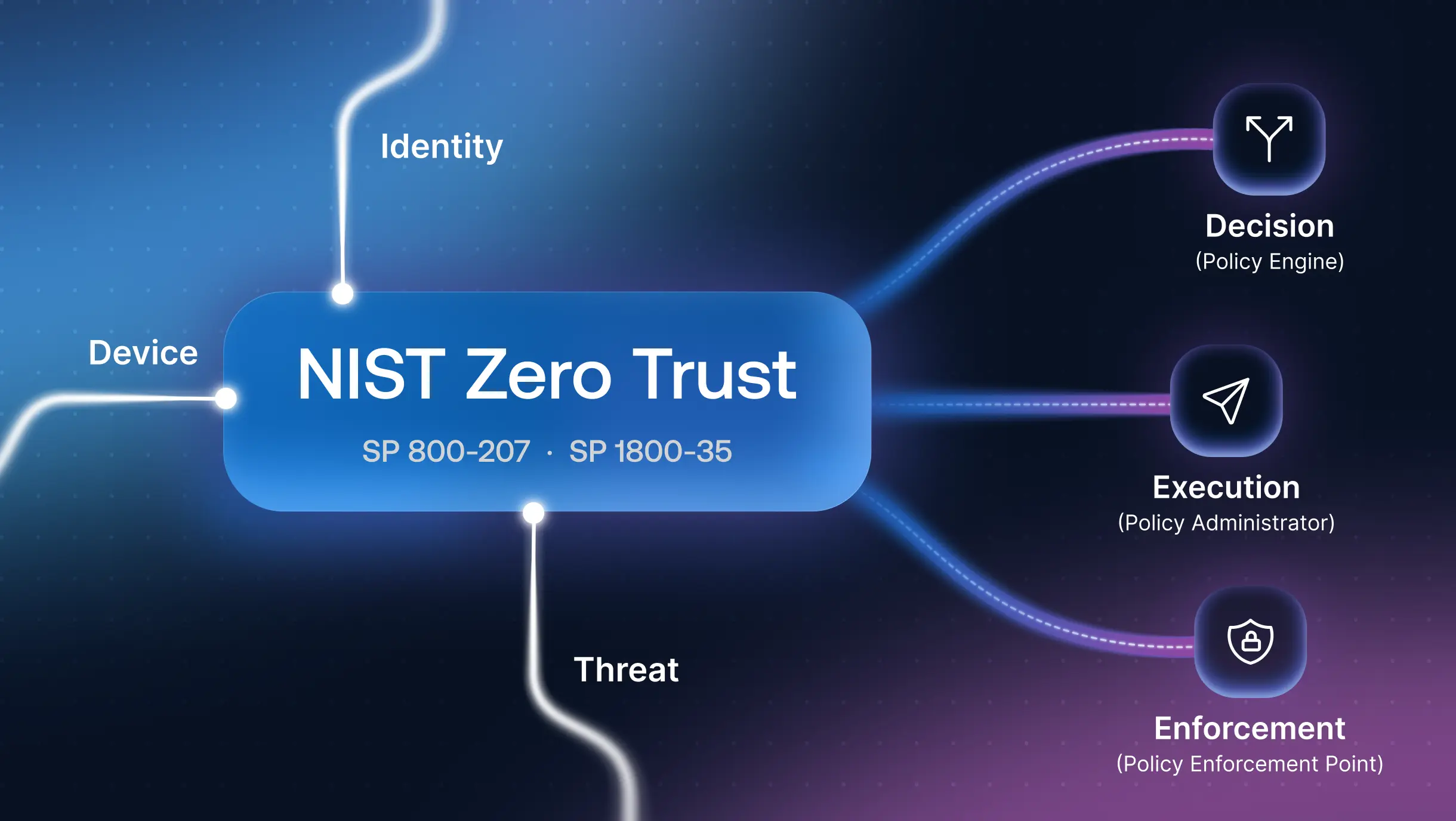
Zero Trust assumes no user or device is inherently trusted. Every access request is verified—regardless of network location. In 2026, expect rapid Zero Trust adoption as organizations move beyond traditional perimeter-based security to defend against supply chain attacks and insider threats.
2. AI and Machine Learning Acceleration
Both defenders and attackers will increasingly deploy AI/ML. On defense: real-time threat detection, behavioral analysis, and automated incident response. On attack: AI-generated phishing, adaptive malware, and deepfake social engineering. The organization that effectively deploys AI-driven security will have a significant advantage.
3. Quantum Computing Threats
Quantum computers can break current encryption standards. Organizations should inventory their cryptographic dependencies and begin transitioning to quantum-resistant algorithms to prepare for a future quantum threat landscape.
4. Growth of Ransomware-as-a-Service (RaaS)
Ransomware will continue to be commoditized, with operators offering "RaaS platforms" that enable less-skilled criminals to launch attacks. This democratization of ransomware will lead to more frequent but less sophisticated attacks alongside advanced targeted campaigns.
5. Mandatory Cybersecurity Governance and Oversight
Regulatory bodies (GDPR, SEC, NIST, FedRAMP) are raising the bar for cybersecurity governance. Expect:
- CISOs reporting directly to CEOs and boards
- Mandatory breach notification timelines (now 72 hours under GDPR)
- Third-party security assessments becoming table-stakes for vendors
- Cyber risk quantification and reporting to financial stakeholders
Conclusion: Proactive Cybersecurity as a Business Imperative
The cybersecurity landscape in 2026 will be marked by sophisticated attacks, AI-driven threats, supply chain vulnerabilities, and regulatory mandates. Organizations cannot afford a reactive posture.
Proactive security requires:
- Strong foundations: Passwordless authentication, multi-factor verification, and Zero Trust principles
- Continuous monitoring: Vulnerability assessments, threat intelligence, and incident response readiness
- Employee engagement: Security training, clear policies, and a culture of security awareness
- Compliance alignment: Understanding regulatory drivers and maintaining audit-ready documentation
- Technology investment: Modern security tools (endpoint detection, SIEM, API security) and AI-driven threat analysis
Organizations that invest in these areas today will be better positioned to defend against tomorrow's threats. The question is not whether you will face a cyberattack—it's whether you'll be prepared when you do.
For teams managing multiple devices and shift-based workers, passwordless authentication eliminates the weakest link in the security chain: the password itself. Biometric and device-based authentication provides both stronger security and better user experience—a rare combination that benefits security teams and end users alike.
Frequently Asked Questions (FAQs)
1. What are the biggest cybersecurity challenges in 2026?
The top challenges include:
- Ransomware attacks
- AI-driven threats
- Supply chain vulnerabilities
- IoT device compromise
- Phishing sophistication
- Open-source library exploitation
- Third-party risks
- Identity-based attacks
Organizations must also address:
- Shortage of skilled security professionals
- Complexity of managing security across hybrid and multi-cloud environments
2. How can organizations defend against ransomware attacks?
Defense strategies include:
- Regular backups with offline copies
- Network segmentation to limit lateral movement
- Endpoint protection and threat detection
- Employee security training to reduce phishing success
- Keeping software and firmware updated
- Incident response planning
3. What is the role of biometric authentication in cybersecurity?
Biometric authentication (fingerprint, facial recognition):
- Eliminates password-based vulnerabilities
- Reduces friction for users
However:
- Biometric data must be protected with encryption
- It cannot be changed if compromised (unlike passwords)
4. What is a supply chain attack?
A supply chain attack occurs when:
- A hacker targets a third-party vendor or supplier
- Uses that access to infiltrate a larger organization
This allows attackers to bypass direct security measures.
5. How is AI being used both as a cyber threat and a defense?
As a threat:
- Generates convincing phishing emails
- Creates deepfakes
- Develops adaptive malware
As a defense:
- Enables real-time data analysis
- Detects anomalies
- Responds to threats faster than human teams
6. Why are IoT devices a growing cybersecurity risk?
IoT devices are risky because:
- Often poorly secured by default
- Run outdated firmware
- Cannot be easily patched
As IoT adoption grows:
- The attack surface expands
- Compromised devices can infiltrate networks or attack infrastructure
7. What is an open-source software library attack?
- Developers rely on open-source libraries
- Vulnerabilities in widely-used libraries can affect many organizations
Key action:
- Keep libraries regularly updated
8. What should organizations do if a ransomware attack occurs?
Organizations should:
- Isolate affected systems to prevent spread
- Engage incident response teams and law enforcement
- Preserve evidence
- Restore from offline backups
- Conduct a post-incident review to improve defenses
Note: Paying ransom is generally not recommended and may fund future attacks.

Get the latest updates! Subscribe now!

