

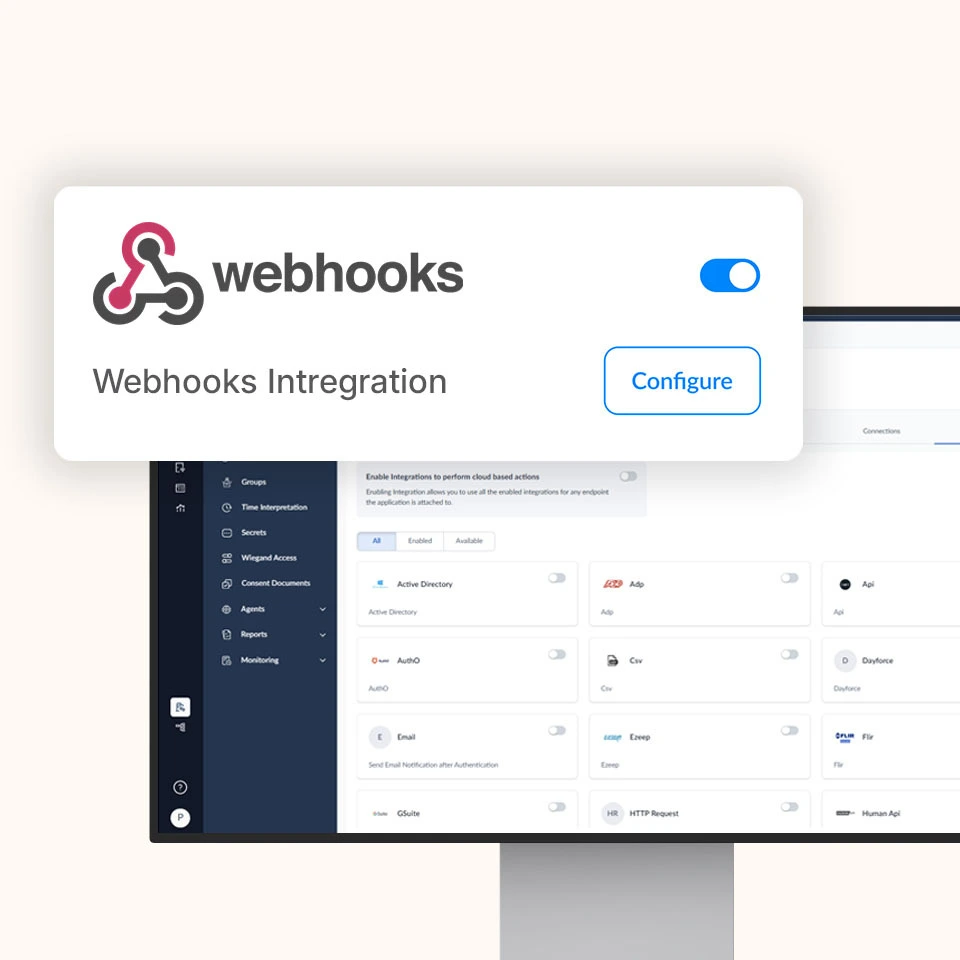
OLOID + Webhooks Integration

Passwordless identity events driving real-time automation

Enable secure, event-driven integrations that connect OLOID’s authentication and access platform with external systems and workflows using webhooks, allowing real-time responses and streamlined automation across your environment.

Features & benefits

Multiple modes for establishing identity at your workplace Modern physical access for smartphone & non-smartphone users

Powering Event-Driven Access Automation

Extend your identity and access environment with real-time automation by connecting OLOID’s platform events to external systems using webhook-based integrations.

Access Events as Automation Signals

OLOID generates events for authentication, session lifecycle, and device handoff that can be used to trigger downstream workflows.

Real-Time Responses Without Polling

Replace batch jobs and polling-based integrations with instant event delivery using webhooks.

Built for Shared and Frontline Environments

Support kiosks, tablets, and shift-based devices by automating workflows tied to login, logout, and handoff events.

Security Actions Triggered by Behavior

Use OLOID session and risk signals to initiate alerts, remediation, or step-up authentication in connected systems.

Integration Without Platform Lock-In

Send OLOID events to ticketing systems, orchestration tools, IoT platforms, and custom applications without modifying core platforms.

Key Capabilities & Use Cases

Capability Description Benefit
Access Event → Workflow Trigger Send OLOID login, logout, and device-switch events to external systems via webhook Automates operational processes
Shared Device Handoff Automation Emit events when users switch or log off shared devices Keeps devices ready and secure
Session Monitoring & Alerting Trigger webhooks on anomalies or policy violations Enables real-time response
Lifecycle Event Integration Send onboarding, role change, and offboarding events to downstream systems Keeps systems in sync
Operational & Analytics Pipelines Stream access and session data into dashboards and reporting tools Improves visibility and compliance
API-Based Integration Connect to any system that accepts HTTP webhooks Fast and flexible integration

How It Works

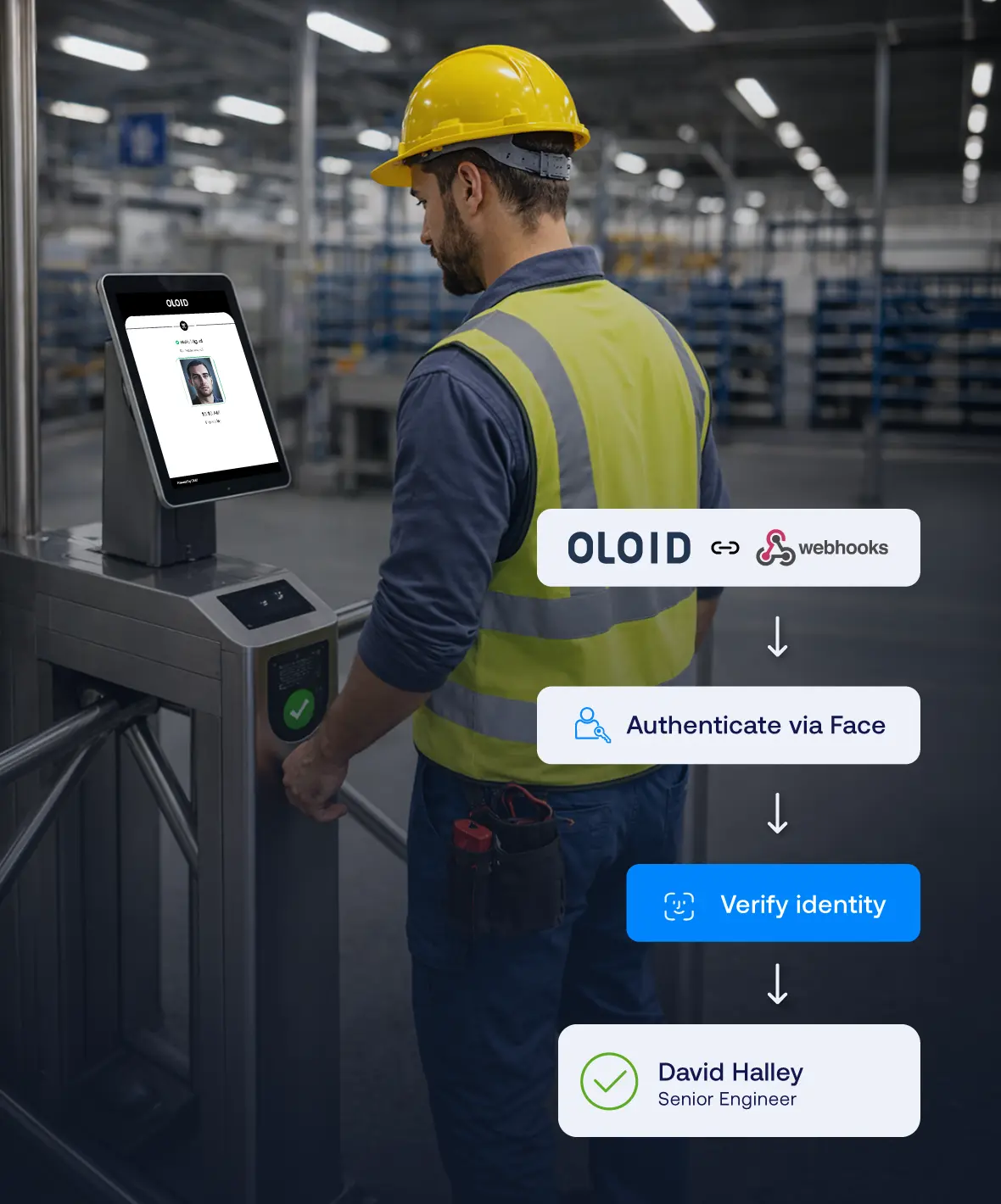
Below is a representative flow for using OLOID + Webhooks together:

  1. Access or Session Event Occurs

    An authentication, logout, device handoff, or policy violation happens within OLOID.

  2. Webhook Dispatched by OLOID

    OLOID sends an HTTP POST request containing event data to the configured external endpoint.

  3. External System Processes the Event

    The receiving system interprets the payload and triggers workflows such as alerts, updates, or automation tasks.

  4. Action Taken by Downstream Systems

    Based on the event, systems can reset devices, create tickets, notify teams, or update records.

  5. Continuous Event-Driven Automation

    OLOID continues emitting events across the session lifecycle to enable near-real-time automation.
Benefits You Can Quantify

Save time icon – clock and hand

Save Time

Save 45–60 seconds per authentication & reclaim hours of clinician time every week
Reduce IT burden icon – keyboard with gear

Reduce IT Burden

80% fewer password‑reset tickets means IT teams focus on higher‑value work
Stronger security icon – shield

Stronger Security

Phishing‑resistant factors and real‑time policy controls
Happier clinicians icon – smiling medical figure

Happier Clinicians

Frictionless login keeps attention on patient care, not passwords

Compliance & Certifications

EPCS
Security & Privacy Rules
Authenticator Assurance
Level 2/3
Audited infrastructure

Related posts

Blog Thumbnail
Blog thumbnail
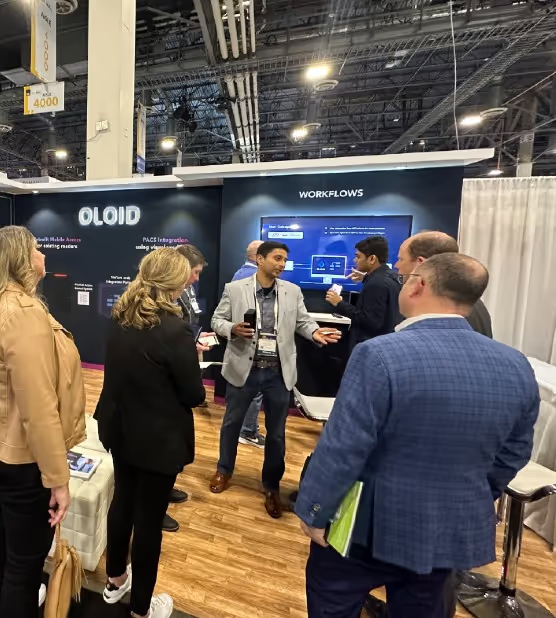
OLOID Workflows at ISC West: Automate Security & PACS Value
At the recent ISC West event in Las Vegas, OLOID unveiled its newest product, OLOID Workflows. The product is designed to help organizations automate physical security and business operations using no-code/low-code workflows, allowing them to extract more value from their existing Physical Access Control Systems (PACS) and other systems.
OLOID Desk
Last Updated:
October 18, 2025
Blog Thumbnail
Blog thumbnail
Time & Attendance Tracking with Security Workflow Automation
Security workflow automation is transforming time and attendance tracking by improving accuracy, saving time, reducing costs, and enabling real-time insights. With features like biometric logins and seamless integration, it helps businesses boost productivity and streamline workforce management.
OLOID Desk
Last Updated:
October 17, 2025
Blog Thumbnail
Blog thumbnail
Workforce Identity and Access Management Explained: Framework, Benefits, and Best Practices
Workforce Identity and Access Management (IAM) is the foundation of modern enterprise security. It controls how employees, contractors, and partners access digital resources. This guide covers core IAM components, architecture patterns, implementation strategies, and best practices. Learn how to automate identity lifecycles, enforce authentication standards, and meet compliance requirements.
Garima Bharti Mehta
Last Updated:
March 12, 2026

Frequently Asked Questions (FAQ)

What types of events can OLOID send via webhooks?

blue angle icon
OLOID can emit events such as authentication success or failure, session start and stop, device handoff, policy violations, and lifecycle changes.

Can webhooks be used for security automation?

blue angle icon
Yes. Webhooks can trigger alerts, remediation workflows, or step-up authentication when abnormal behavior or risk is detected.

Does this work for shared and frontline devices?

blue angle icon
Yes. OLOID is purpose-built for shared and frontline environments and can emit events for login, logout, and user switching scenarios.

Do webhooks replace APIs?

blue angle icon
No. Webhooks complement APIs by enabling event-driven automation instead of polling for changes.

Accelerate Your Journey to Event-Driven Identity Operations

Transform how your organization responds to authentication and session events with OLOID’s privacy-first, passwordless identity platform and webhook-based automation.