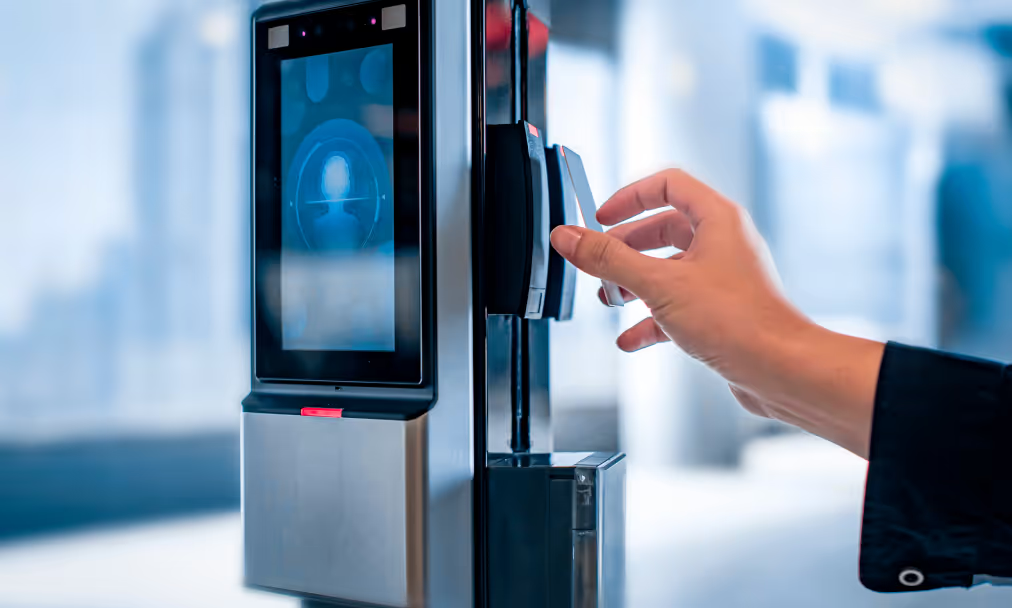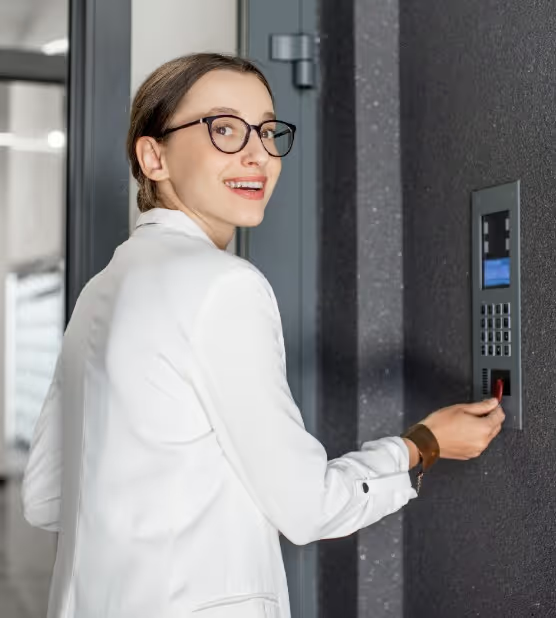


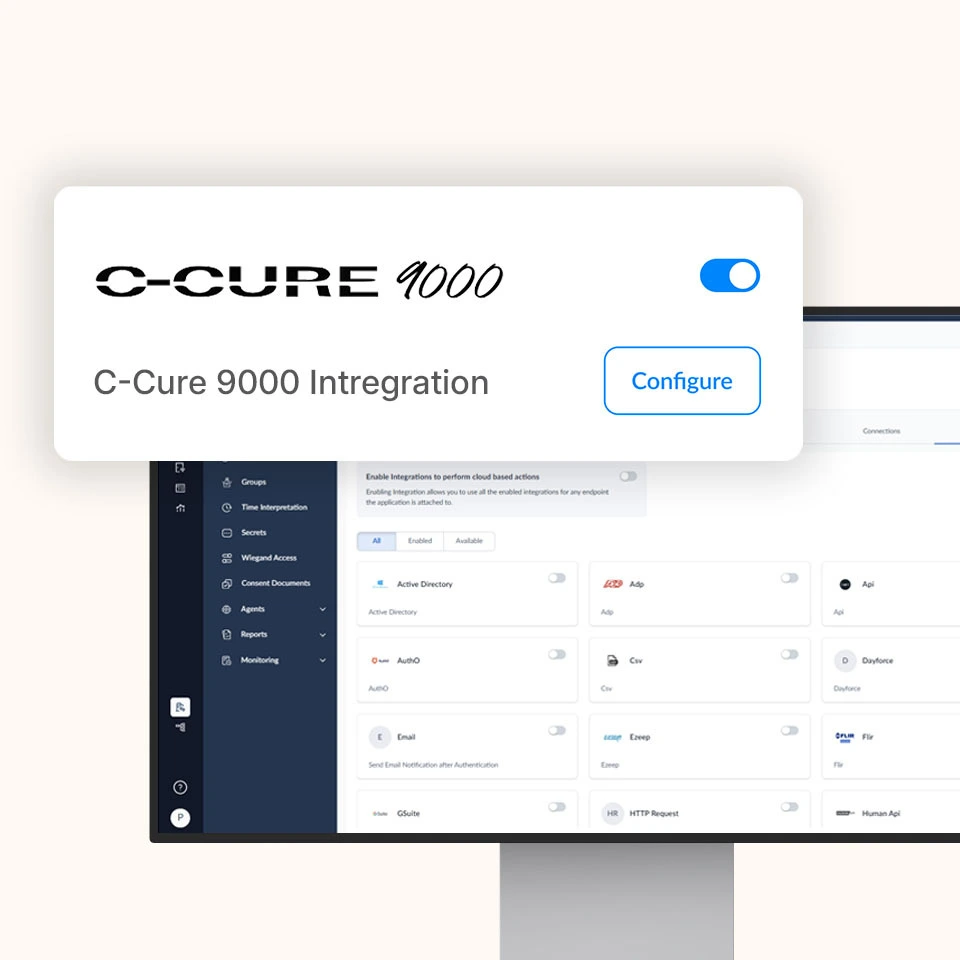
OLOID + C•CURE 9000 Integration

Passwordless identity for enterprise facilities and digital systems

Enable secure, context-aware access across C•CURE 9000–managed physical environments and digital applications while OLOID delivers phishing-resistant authentication and continuous session control across shared and personal endpoints.

Features & benefits

Multiple modes for establishing identity at your workplace Modern physical access for smartphone & non-smartphone users

Modernizing Enterprise Access with Unified Identity

Extend your physical access-control environment with modern identity and authentication by combining C•CURE 9000’s enterprise access and event-management platform with OLOID’s passwordless workforce identity layer.

Identity-Driven Physical Security

C•CURE 9000 manages doors, readers, and security zones, while OLOID verifies user identity and enforces access policies across physical and digital environments.

One Credential for Doors and Applications

Use biometrics, passkeys, or badge-based credentials to enter secured areas and authenticate into digital systems.

Designed for Shared and Shift-Based Devices

Support kiosks, tablets, and shared workstations with fast user switching and identity-linked auditing.

Decisions Powered by Events and Session Context

Combine C•CURE 9000 access and zone signals with OLOID’s session intelligence to enforce adaptive access rules.

Deployment Without Infrastructure Replacement

Integrate OLOID into existing C•CURE 9000 environments using supported APIs without redesigning your access stack.

Key Capabilities & Use Cases

Capability Description Benefit
Passwordless Physical & Digital Access Enforce biometrics, passkeys, or badge/NFC credentials for C•CURE 9000–controlled doors and applications Eliminates shared credentials
Shared Device & Shift Handoff Support Enable secure user switching on kiosks and shared workstations Prevents session overlap
Context-Aware Access Policies Combine C•CURE 9000 door and zone signals with OLOID identity context Stronger security with less friction
Continuous Monitoring & Session Protection Monitor access behavior and trigger re-authentication on risk Reduces misuse after login
Unified Identity Experience Deliver one authentication flow for doors, devices, and applications Improves user adoption
API-Based Integration Integrate into existing C•CURE 9000 deployments Faster rollout with lower impact

How It Works

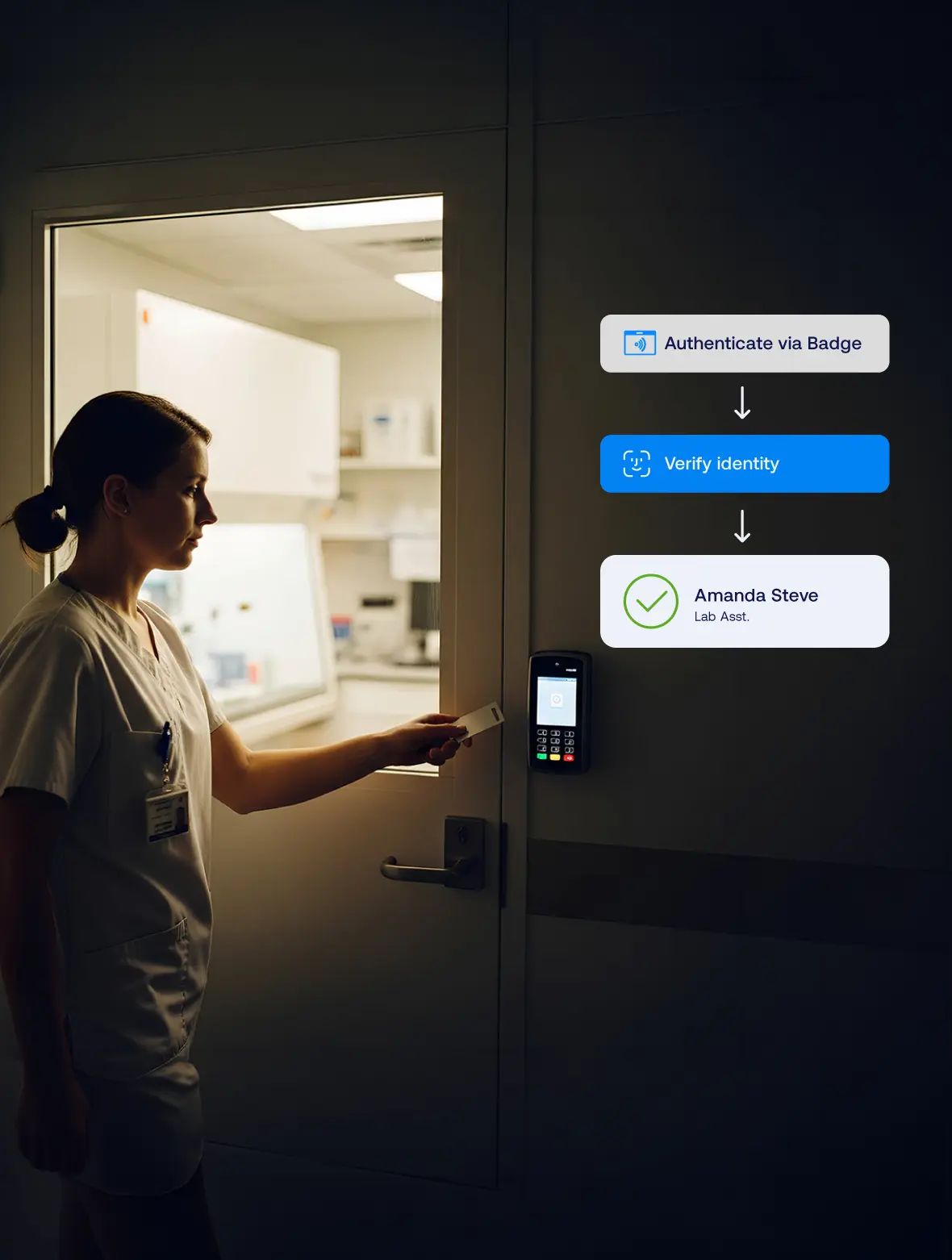
Below is a representative flow for using OLOID + C•CURE 9000 together:

  1. User Initiates Entry or Login

    A user attempts to unlock a C•CURE 9000–controlled door or sign in to a digital application.

  2. Authentication Routed to OLOID

    The authentication request is routed to OLOID to invoke strong credentials such as biometrics, passkeys, or badges.

  3. Identity & Access Context Evaluation

    OLOID evaluates user identity, device posture, session state, and C•CURE 9000 access signals including door, reader, and zone events.

  4. Access Enforcement

    If policy conditions are met, C•CURE 9000 unlocks the door or OLOID establishes a secure digital session.

  5. Continuous Oversight & Re-Auth

    OLOID continuously monitors behavior and can require re-authentication or terminate access if risk conditions arise.
Benefits You Can Quantify

Save time icon – clock and hand

Save Time

Save 45–60 seconds per authentication & reclaim hours of clinician time every week
Reduce IT burden icon – keyboard with gear

Reduce IT Burden

80% fewer password‑reset tickets means IT teams focus on higher‑value work
Stronger security icon – shield

Stronger Security

Phishing‑resistant factors and real‑time policy controls
Happier clinicians icon – smiling medical figure

Happier Clinicians

Frictionless login keeps attention on patient care, not passwords

Compliance & Certifications

EPCS
Security & Privacy Rules
Authenticator Assurance
Level 2/3
Audited infrastructure

Related posts

Blog Thumbnail
Blog thumbnail
How to Create an Effective Physical Access Control Policy (Best Practices)
A physical access control policy defines how access to buildings, rooms, and sensitive areas is authorized, monitored, and enforced within an organization. In this blog, you will learn the importance of having a well-defined policy, its core elements such as roles, permissions, and authentication methods, and practical tips to manage physical access efficiently. The article also covers best practices to strengthen security, reduce unauthorized entry, and maintain compliance across facilities.
OLOID Desk
Last Updated:
December 29, 2025
Blog Thumbnail
Blog thumbnail
Unifying Physical & Cyber Identities for Workplace Security
Organizations managing physical and cyber identities separately create dangerous security gaps that hackers and malicious insiders can exploit. This post explores how unified Identity and Access Management solutions bridge this divide, combining badge access and digital credentials into a single integrated system. Learn how identity unification strengthens security posture, simplifies employee lifecycle management, enhances user experience with single sign-on capabilities, and ensures compliance with regulations like HIPAA and GDPR.
OLOID Desk
Last Updated:
December 24, 2025
Blog Thumbnail
Blog thumbnail
Retrofit vs Replace: Best Approach for Access Control Systems
This article explores the decision between retrofitting or replacing access control systems, helping organizations choose the best approach for their security needs. Learn about the advantages and disadvantages of both strategies, including cost, convenience, and when each option makes sense. The post provides practical guidance and key considerations for evaluating current systems and planning future upgrades.
OLOID Desk
Last Updated:
October 12, 2025

Frequently Asked Questions (FAQ)

Does OLOID replace C•CURE 9000’s access-control system?

blue angle icon
No. C•CURE 9000 continues to manage physical security, including doors, readers, and zones. OLOID complements C•CURE 9000 by adding passwordless authentication, unified identity, and session security.

What authentication methods are supported?

blue angle icon
OLOID supports FaceVault™ biometrics, mobile passkeys, RFID or NFC badges, QR codes, and PIN as a fallback when required.

Can digital access depend on physical access events?

blue angle icon
Yes. C•CURE 9000 door, reader, and zone events can be used as context for enforcing step-up authentication, restricting access, or terminating sessions.

Does this support shared and frontline devices?

blue angle icon
Yes. OLOID is designed for shared and frontline environments, enabling fast user switching on kiosks, tablets, and shared workstations without session overlap.

Accelerate Your Journey to Passwordless Facility Access

Modernize how users access C•CURE 9000–managed facilities and digital systems with OLOID’s privacy-first, passwordless identity platform.