




Access Control in Healthcare: Models, Best Practices, and Compliance Explained
Access control in healthcare manages who can access sensitive patient data, clinical systems, and physical facilities. This comprehensive guide explores both digital and physical access control strategies. It covers regulatory compliance requirements, implementation challenges, and emerging technologies. Learn how healthcare organizations protect data, ensure patient safety, and maintain operational efficiency through robust access management.


Healthcare systems handle large volumes of patient data every day, and much of it flows across EHR platforms, medical devices, clinical apps, and physical facilities. This constant movement of sensitive information makes hospitals an attractive target for cybercriminals and a high-risk environment for insider access misuse.
The financial impact of a breach is also severe because even a single compromised account can expose thousands of patient records. According to the HIPAA Journal, the average cost of a healthcare data breach has fallen to 7.42 million dollars, highlighting how expensive access lapses can be for providers.
With clinicians, administrative staff, contractors, and third-party vendors accessing multiple systems throughout the day, healthcare organizations need strong and well-structured access control to protect patient data without disrupting clinical workflows.
This guide explains what access control means in a healthcare setting, why it is essential for HIPAA compliance, and how hospitals can strengthen both digital and physical access. Learn about key access control models, common challenges, and best practices to strengthen your access control strategy.
What Is Access Control in Healthcare?
Access control in healthcare refers to the policies, processes, and technologies that determine who can access patient information, clinical systems, and restricted physical spaces within a medical environment. It ensures that only authorized individuals can view, use, or modify sensitive data and resources, based on their role, responsibilities, and level of trust.
In a healthcare setting, access control is not just a security measure but a requirement for safe, compliant, and efficient care delivery. Effective access control is essential because healthcare environments operate with constant movement of staff, high patient volumes, and rapid clinical decision-making.
When access to systems is not properly governed, it increases the risk of data breaches, unauthorized disclosures, and workflow disruptions. Strong access controls help maintain the confidentiality of patient data, improve operational efficiency, and ensure compliance with regulations such as the HIPAA Security Rule.
Who Does Access Control Protect in Healthcare
Access control safeguards both digital and physical assets across hospitals and clinics by ensuring only authorized users can access sensitive resources.
- Electronic Health Records: Protects patient information by allowing clinicians to view only the records relevant to their role while blocking unauthorized access.
- Clinical Applications: Limits access to diagnostic tools, imaging systems, scheduling platforms, and pharmacy applications based on user responsibilities.
- Connected Medical Devices: Prevents unauthorized interaction with network-connected devices, reducing risks of tampering, data exposure, or device malfunction.
- Physical Spaces such as Labs, Pharmacies, and Data Centers: Controls entry into restricted areas that store medications, lab samples, high-value equipment, and critical IT infrastructure.
Together, these controls help maintain patient privacy, reduce security risks, and support a safe clinical environment. Next, let’s explore why strong access control is essential in the healthcare industry.
The Growing Need for Strong Access Control in the Healthcare Industry
Healthcare’s expanding digital footprint and rising security risks have made strong access control essential for protecting patient data and keeping clinical operations secure and efficient. Here’s why strong access control is essential in the healthcare industry:
1. Rising Cyber Threats and Data Breaches in Healthcare
According to the HIPAA Journal, healthcare organizations reported 725 significant data breaches in 2024, exposing over 276 million patient records, representing 81% of the U.S. population. Cybercriminals target medical records because they contain comprehensive personal and financial information worth significant sums.
Weak access controls enable both external hackers and insider threats to steal sensitive data. These breaches erode patient trust and result in multimillion-dollar penalties for noncompliant organizations.
2. Physical Security Risks in Clinical Environments
Hospitals and clinics experience high foot traffic with diverse populations entering facilities daily. Unauthorized individuals can access restricted areas, including pharmacies, laboratory facilities, and storage facilities for medical equipment.
Infant abduction, violence against staff, and theft of controlled substances remain persistent physical threats. Without proper access control, healthcare facilities cannot adequately protect patients, staff, or valuable assets.
3. Compliance and Regulatory Requirements (HIPAA, GDPR, etc.)
HIPAA mandates strict access controls for all systems that store or transmit protected health information. The General Data Protection Regulation imposes even more stringent requirements for healthcare organizations operating in Europe.
State laws and industry standards add additional layers of compliance obligations for access management. Failure to implement proper access controls results in severe financial penalties and legal consequences.
4. Integration of Digital and Physical Systems
Modern healthcare security demands unified management of both digital systems and physical facility access. Separate systems create security gaps that allow unauthorized users to exploit inconsistencies between physical and digital controls.
Integrated platforms enable centralized identity management, consistent policy enforcement, and comprehensive audit trails, providing a unified approach to security. This convergence improves security effectiveness while reducing administrative overhead and complexity for security teams.
5. Operational Challenges and Human Factors
Healthcare facilities operate around the clock with rotating shifts, temporary staff, and frequent personnel changes. Vendors, contractors, and visiting medical professionals require temporary access that must be carefully managed and controlled.
Human errors, such as sharing credentials or failing to log out, create vulnerabilities in systems. High-pressure clinical environments often lead staff to circumvent security measures they perceive as obstacles.
6. Consequences of Weak Access Control
Poor access governance exposes healthcare organizations to catastrophic data breaches that compromise millions of records. Inadequate physical security can result in patient harm, medication diversion, and equipment theft.
Regulatory violations stemming from weak access controls result in multimillion-dollar fines and mandatory corrective actions. Beyond financial impacts, security failures can destroy patient trust and irreparably damage an organization's reputation.
Strong access control is therefore essential for protecting patient data, supporting compliance, and maintaining efficient clinical workflows. This makes understanding how these controls actually work the next key step.
[[cta]]
How Access Control Works in Healthcare Settings
Healthcare access control works by verifying a user’s identity, determining their level of authorization, and granting access only to the systems, data, or spaces that match their role and responsibilities.
1. Authentication: Verifying Identities
Authentication verifies a user's identity using credentials before granting access to any healthcare system or area. Traditional password-based methods are giving way to stronger authentication mechanisms, such as biometric fingerprint scanning.
Multi-factor authentication requires users to provide multiple forms of verification before they can gain access. Modern healthcare systems are increasingly adopting passwordless authentication, using mobile devices or security tokens to enhance security. These methods support HIPAA-compliant authentication requirements when properly implemented.
2. Authorization: Defining Who Can Access What
Authorization systems assign permissions based on job roles, departmental affiliations, and specific responsibilities. A nurse receives different system access than physicians, pharmacists, or administrative staff members.
Context-aware authorization considers additional factors, including time of day, location, and device type. Dynamic authorization policies can automatically adjust permissions in response to changing circumstances or detected risks.
3. Auditing and Monitoring: Ensuring Accountability
Every access attempt, whether successful or failed, is logged with detailed information about the event. Automated monitoring systems analyze access patterns to detect suspicious activities that may indicate security threats.
Regular audit reviews ensure that access permissions remain appropriate as job roles and responsibilities evolve. Comprehensive audit trails provide crucial evidence for compliance reporting and security incident investigations.
4. Unified Identity Management
Integrated identity management links physical badge access to digital system credentials under one user profile. This unified approach ensures consistent policy enforcement across all entry points and systems.
When employees leave or change roles, centralized management allows for instant permission updates across all platforms. Single sign-on capabilities improve user experience while maintaining strong security through consolidated identity verification.
5. Dynamic Access and Emergency Protocols
Emergencies require immediate access to critical resources, even when standard authorization rules are in place. Break-glass access mechanisms enable the temporary override of standard controls in life-threatening situations or disasters.
All emergency access events are logged with detailed justification and automatically flagged for review. Temporary access provisions can be granted to visiting specialists or emergency responders with full traceability.
By understanding how access control functions across users, systems, and physical spaces, healthcare teams can better evaluate which specific models will meet their needs. Next, let’s explore the different types of access control methods and models used in the industry.
Types and Models of Access Control Used in Healthcare
Healthcare organizations use different access control models to ensure the right people access the right systems at the right time. Since hospitals have varied user roles and strict compliance requirements, they rely on a mix of role-based, attribute-based, and policy-driven approaches to maintain security without slowing down clinical workflows.
1. Role-Based Access Control (RBAC)
Role-based access control assigns permissions to users based on their job functions within the organization. Nurses, physicians, administrators, and technicians each receive predefined access rights that match their respective responsibilities.
This model simplifies permission management by grouping users into roles rather than managing individual accounts. RBAC works effectively in stable environments where job functions remain relatively consistent over time.
How RBAC is Used in Healthcare
- Emergency department nurses access triage systems, medication dispensing records, and patient monitoring dashboards automatically.
- Physicians receive permissions for electronic prescribing, diagnostic imaging systems, and comprehensive access to patient records.
- Laboratory technicians gain access to test ordering systems, result entry platforms, and quality control databases.
- Billing staff can view patient demographics and insurance information without accessing clinical treatment records.
- Pharmacists utilize medication inventory systems, prescription verification tools, and drug interaction databases to ensure patient safety and optimal medication management.
2. Attribute-Based Access Control (ABAC)
Attribute-based access control evaluates multiple user and environmental attributes before granting access to resources. These attributes include role, department, location, time, device security status, and current patient assignments.
ABAC enables highly granular, context-sensitive access decisions that adapt dynamically to changing circumstances. This model proves particularly valuable in complex healthcare environments with diverse access requirements and scenarios.
How ABAC is Used in Healthcare
- A traveling nurse receives temporary access to specific patient records only during assigned shift hours.
- Physicians access patient data only when physically present in the hospital facility or clinic.
- Remote access to sensitive systems requires additional authentication factors compared to on-premises access attempts.
- Attending physicians gain expanded privileges for patients under their direct care while maintaining limited access to these privileges.
- Medical students access educational records and supervise patient cases, but they cannot independently approve medication orders.
3. Risk-Based or Context-Aware Access Control (RiBAC)
Risk-based access control continuously evaluates threat levels and adjusts access permissions based on detected risks. The system analyzes user behavior patterns, login locations, device security posture, and network conditions to provide insights.
Unusual access patterns trigger additional verification requirements or temporary access restrictions automatically. This adaptive approach provides strong security without unnecessarily hindering legitimate users during normal operations.
How RiBAC is Used in Healthcare
- Login attempts from unfamiliar locations or devices trigger immediate multi-factor authentication requirements before access is granted.
- Unusual data download volumes automatically alert security teams and may temporarily suspend access while an investigation is pending.
- After-hours access to sensitive patient records requires additional justification and enhanced authentication measures automatically.
- Access from potentially compromised networks is restricted until device security scans verify system integrity.
- Repeated failed authentication attempts trigger account locks and prompt immediate notifications to the security team for investigation.
4. Usage Control (UCON)
Usage control extends beyond initial access decisions to manage how resources are used during sessions. UCON continuously monitors activities and can revoke permissions if usage patterns violate established policies.
This model is particularly valuable for protecting sensitive data from inappropriate copying, printing, or sharing. Real-time policy enforcement ensures compliance even after users have been granted initial access to systems.
How UCON is Used in Healthcare
- Healthcare workers can view patient records, but copying or printing requires additional authorization and justification.
- Downloaded medical images are automatically watermarked with user identification and access timestamp information embedded.
- Bulk data exports trigger immediate security reviews before large-scale downloads of patient information are allowed to proceed.
- Time-limited access automatically expires after predetermined periods, requiring renewal to continue accessing the resource.
- Screen capture attempts are blocked when viewing highly sensitive patient data or confidential research information.
5. Physical vs Logical Access Control
Physical access control manages entry to buildings, floors, departments, and specific rooms using badges and locks. Logical access control regulates permissions for computer systems, networks, databases, and software applications.
Modern healthcare security requires coordinating these two control types to ensure comprehensive protection across environments. Integrated systems enable consistent policy enforcement and simplified management of both access domains simultaneously.
How Physical and Logical Access Controls are Used in Healthcare
- Employee badges grant entry to authorized facility areas and automatically log users into workstation systems.
- Operating room access requires both physical badge authentication and digital system login for controlling and managing equipment.
- Pharmacy access combines physical entry restrictions with digital authentication of medication dispensing systems for controlled substances.
- Data center entry logs all physical access while simultaneously recording digital system logins for correlation and analysis.
- Visitor badges provide limited facility access while preventing access to any digital system or patient records.
6. Vendor and Third-Party Access Management
External vendors, contractors, and consultants frequently require temporary access to healthcare facilities and systems. Managing third-party access presents unique challenges because these individuals aren't permanent organizational employees.
Time-limited credentials, supervised access, and enhanced monitoring protect organizations from third-party security risks. Proper vendor access management ensures business continuity while maintaining strict security and compliance standards.
How Vendor Access Management is Used in Healthcare
- Medical equipment vendors are granted supervised access to specific devices for maintenance, without broader network privileges.
- IT consultants gain temporary system access that automatically expires after the project completion dates pass.
- Construction contractors receive physical access to renovation areas, but not to clinical zones.
- Auditors obtain read-only access to specific compliance records for limited review periods, with logging enabled.
- Research partners access anonymized datasets through secure portals, without directly accessing identifiable patient information.
7. Emergency or "Break-the-Glass" Access Models
Emergency access mechanisms enable the immediate override of standard controls in life-threatening situations that require urgent intervention. These systems require justification and are subject to immediate review by security and compliance teams.
Every break-glass event generates detailed audit logs documenting the emergency circumstances and actions taken. Balancing urgent care needs with security accountability remains critical for patient safety and data protection.
How Emergency Access is Used in Healthcare
- Emergency physicians have access to complete patient records during trauma situations, regardless of normal authorization restrictions.
- Code blue teams instantly access medication dispensing systems during cardiac arrest events without delays.
- Disaster response protocols grant temporary, expanded privileges to all clinical staff during mass casualty incidents.
- System administrators override security controls to restore critical infrastructure during technology failures impacting care.
- Visiting specialists gain immediate access to consult on critical cases, complete with thorough documentation and review.
These access control models give healthcare organizations a structured way to manage who can access critical systems and spaces. Next, let’s explore the components that make up an effective healthcare access control ecosystem.
Key Components of an Effective Access Control Strategy in Healthcare
Successful access control requires integrating multiple technical and policy components into a cohesive security framework. Each element plays a specific role in creating a layered defense that protects against diverse threats.
Centralized Identity and Access Management (IAM)
IAM platforms provide unified user identity management and policy enforcement across all systems and locations. These solutions eliminate identity silos by maintaining a single authoritative user directory accessible to all applications.
Centralized control simplifies administration while ensuring the consistent application of a security policy across the entire technology ecosystem. Modern IAM systems support federation, enabling seamless collaboration with external partners while maintaining security.
Multi-Factor and Biometric Authentication
Advanced authentication methods verify user identity through multiple independent factors beyond simple password entry. Biometric authentication, such as fingerprint, facial recognition, or iris scanning, provides stronger security than traditional credentials.
These technologies mitigate risks associated with password theft, sharing, and phishing attacks that compromise authentication. Modern multi-factor authentication systems strike a balance between strong authentication and user convenience through passwordless and mobile-based verification.
Policy-Based Access Controls
Granular policies define exactly who can access specific resources under what circumstances based on attributes. These rules consider factors including job role, department, location, time, device security, and sensitivity.
Policy engines evaluate multiple conditions in real-time before granting or denying each access request. Centralized policy management ensures consistent enforcement while enabling rapid updates to address emerging threats.
Real-Time Monitoring and Audit Trails
Continuous activity monitoring detects suspicious access patterns that may indicate security threats or policy violations. Automated alerts notify security teams immediately when unusual behaviors occur, enabling rapid incident response.
Comprehensive audit logs capture all access events with sufficient detail to support compliance reporting and analysis. Long-term log retention enables historical analysis that identifies trends and promotes continuous improvement.
Integration with Physical Security Infrastructure
Linking access control with video surveillance, alarm systems, and physical locks creates comprehensive facility protection. Integrated systems correlate digital system access with physical location data to detect suspicious activities.
Video verification of badge access attempts reduces the risks associated with stolen credentials or unauthorized tailgating entries. Unified management of physical and digital security reduces complexity while improving overall effectiveness.
Scalability and Interoperability
Access control solutions must support growth across multiple facilities, departments, and thousands of users efficiently and effectively. Cloud-based platforms offer elastic scalability, eliminating the need for significant infrastructure investments during expansion.
Interoperability with diverse systems through standard protocols ensures new technologies integrate smoothly with investments. Flexible architectures accommodate future requirements, such as IoT medical devices and emerging authentication technologies.
[[cta-2]]
Benefits of Strong Access Control in Healthcare
Robust access control delivers measurable improvements in security, compliance, efficiency, and trust across healthcare operations. Businesses that invest in comprehensive identity and access management see reduced security incidents and regulatory violations. The return on investment encompasses both tangible cost savings and intangible benefits related to reputation protection.
1. Enhances Patient Data Protection
Strong access controls prevent unauthorized viewing, modification, or theft of sensitive patient health information. Granular permissions ensure that clinical staff access only the specific patient records necessary for care.
Real-time monitoring detects suspicious access patterns before data breaches escalate into major security incidents. Comprehensive protection maintains patient privacy while supporting legitimate clinical workflows and information sharing needs.
2. Improves Staff and Visitor Safety
Physical access restrictions prevent unauthorized individuals from entering sensitive areas, such as nurseries and psychiatric units. Badge-based entry systems track everyone entering facilities, enabling rapid response during security incidents or emergencies.
Controlled access to medication storage areas prevents diversion and ensures proper dispensing to authorized personnel. Enhanced safety measures protect healthcare workers from workplace violence while maintaining welcoming environments for patients.
3. Enhances Regulatory Compliance and Audit Readiness
Automated access controls ensure consistent enforcement of HIPAA, GDPR, and other regulatory requirements across systems. Detailed audit trails document all access activities, providing evidence of compliance during regulatory audits.
Policy-based controls reduce human errors that could lead to compliance violations and costly penalties. Organizations demonstrate due diligence through comprehensive access governance frameworks that meet or exceed standards.
4. Increases Operational Efficiency
Automated provisioning reduces IT workload by instantly granting appropriate permissions when employees join or change roles. Single sign-on capabilities eliminate password management overhead while improving user experience for clinical staff.
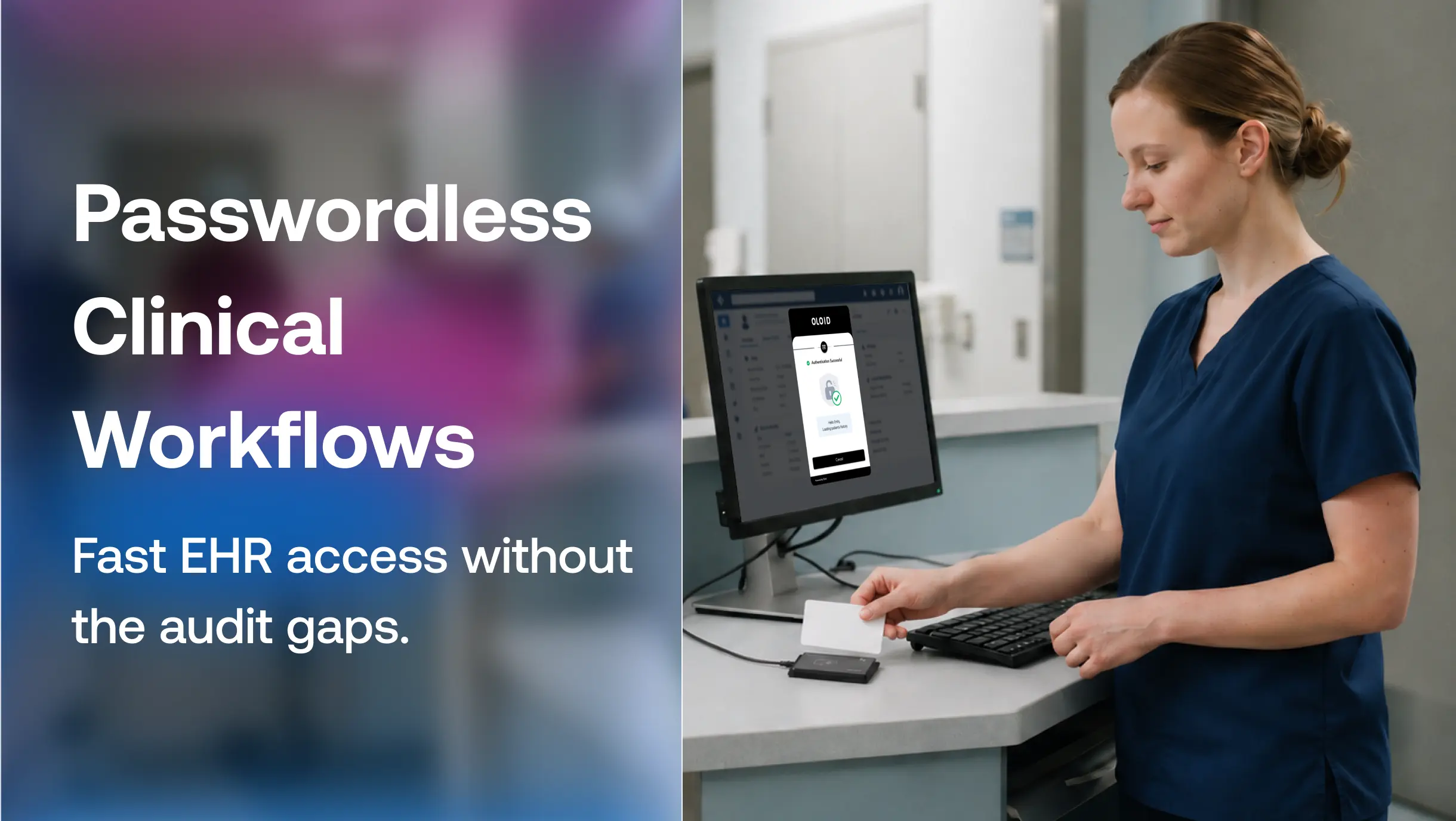
Organizations use a healthcare passwordless authentication platform to improve access control without increasing authentication time. This streamlines access workflows and reduces delays in patient care delivery and administrative processes across departments. Efficient access management frees IT resources to focus on strategic initiatives rather than routine access.
5. Minimizes Insider Threats
Access monitoring detects employees attempting to view records of family members, celebrities, or other inappropriate cases. Least-privilege principles limit damage potential by ensuring users have access only to the resources required for legitimate duties.
Automated deprovisioning immediately revokes access when employees leave, preventing former staff from retaining system access. Regular access reviews identify and remove unnecessary permissions that accumulate over time through role changes.
6. Safeguards Reputation and Builds Trust
Visible security measures demonstrate organizational commitment to protecting patient privacy and safety to stakeholders. Preventing data breaches avoids negative media coverage and maintains a positive community reputation for healthcare providers.
Patients trust organizations that take security seriously with their most sensitive personal health information. A strong security posture becomes a competitive advantage in markets where patients choose providers based on trust and confidence.
Together, these benefits show how effective access control strengthens security and supports smoother clinical operations. Yet, many healthcare providers still face significant challenges when putting these controls into practice.
[[cta-3]]
Common Implementation Challenges & How to Overcome Them
Implementing access control in healthcare is not always straightforward. Hospitals must navigate complex workflows, legacy systems, and constantly changing user roles, all of which can create gaps that weaken overall protection. Here are the most common implementation challenges and practical ways to address them:
1. Legacy System Integration
Problem Statement
Many healthcare facilities operate aging infrastructure that lacks modern security capabilities or standard integration protocols. These legacy systems cannot often support multi-factor authentication, centralized identity management, or real-time access monitoring.
Replacing entire systems is prohibitively expensive and disruptive to ongoing clinical care delivery operations. The result is fragmented security with gaps that expose organizations to significant data breach risks.
How to Overcome This Challenge
- Implement middleware solutions that bridge legacy systems with modern access control platforms, eliminating the need for replacement.
- Prioritize upgrading the most critical systems first while developing phased migration plans for others.
- Deploy identity federation technologies that enable centralized authentication across disparate legacy and modern systems, thereby enhancing security and reducing complexity.
- Consider cloud-based access control platforms that integrate with legacy systems through standard APIs and protocols.
- Collaborate with vendors specializing in healthcare system integration to develop custom connectors as needed.
2. User Resistance and Change Management
Problem Statement
Clinical staff often resist new security measures they perceive as obstacles to efficient patient care delivery. Healthcare workers accustomed to convenient but insecure practices may circumvent controls to maintain familiar workflows.
Inadequate training leads to frustration, errors, and poor adoption rates for new access control systems. Without user buy-in, even technically sound security implementations fail to deliver intended protection benefits.
How to Overcome This Challenge
- Involve clinical staff in access control design processes to ensure that systems support, rather than hinder, workflows.
- Provide comprehensive training that emphasizes how security measures effectively protect both patients and healthcare workers.
- Implement changes gradually through pilot programs that allow for refinement based on real-world feedback before a full rollout.
- Demonstrate leadership commitment to security by ensuring executives and managers follow the same access controls.
- Establish clear policies with consequences for security violations while recognizing and rewarding good security practices.
3. Data Silos Across Departments
Problem Statement
Healthcare organizations often operate with separate access control systems for different departments or facility locations. These silos create management complexity and inconsistent security policy enforcement across the entire organization.
Users with roles spanning multiple departments often face challenges with credential management and inefficient access provisioning processes. Fragmented systems also complicate the achievement of comprehensive security monitoring and audit trail analysis.
How to Overcome This Challenge
- Adopt centralized identity and access management platforms that unify user directories across all departments to streamline user access management and administration.
- Establish cross-functional governance committees that develop consistent access control policies organization-wide rather than departmentally.
- Implement data integration tools that synchronize user information and access permissions across legacy departmental systems to ensure seamless data exchange and integration.
- Migrate to cloud-based access control solutions that naturally support multi-location deployment with centralized management.
- Create federated identity systems that enable single sign-on across departmental boundaries without requiring the merging of separate systems.
4. Balancing Security and Usability
Problem Statement
Overly restrictive access controls can frustrate users and even harm patient care in time-critical situations. Healthcare workers facing cumbersome security measures may develop workarounds that completely undermine intended protection mechanisms.
Finding the right balance between strong security and operational efficiency remains challenging for most organizations. Security measures that work well for administrative systems often prove impractical in fast-paced clinical environments.
How to Overcome This Challenge
- Deploy risk-based authentication that applies stronger controls only when actual security risks warrant additional measures.
- Implement single sign-on and passwordless authentication to enhance both security and user experience simultaneously.
- Design security policies collaboratively with clinical staff to understand workflow requirements before implementing restrictions.
- Utilize context-aware access controls that adapt security requirements based on location, time, and sensitivity levels.
- Continuously monitor user feedback and system usage patterns to identify and eliminate unnecessary security friction.
Overcoming these challenges requires a clear, structured approach to healthcare access governance. This is why adopting proven best practices is the next step for building a secure and efficient access control framework in healthcare.
7 Best Practices for Seamlessly Implementing Access Control in Healthcare
Following established best practices significantly increases the likelihood of successful access control implementation. These proven approaches help organizations avoid common pitfalls while maximizing the effectiveness of their security.
1. Conduct Comprehensive Risk Assessments
Regular risk assessments identify vulnerabilities in physical facilities, digital systems, and access control processes. These evaluations should cover all departments, locations, and user populations to ensure complete coverage.
- Document all systems containing protected health information and catalog users with access to each system.
- Evaluate physical security risks, including high-traffic areas, unsecured entry points, and inadequate monitoring capabilities.
- Assess current access control effectiveness through penetration testing and simulated social engineering attack scenarios.
- Identify gaps between current controls and regulatory requirements, such as HIPAA or GDPR compliance standards.
- Prioritize remediation efforts based on the severity of risk, regulatory requirements, and realistic budget resources.
2. Adopt Least-Privilege and Role Segregation Principles
Least-privilege access ensures users receive only the minimum permissions necessary to perform their legitimate job duties. Role segregation prevents any single individual from controlling entire processes that should require oversight.
- Define granular job roles with specific permission sets rather than broad categories, such as general staff access.
- Implement approval workflows requiring manager authorization before granting elevated privileges to any system user.
- Regularly review user permissions to remove unnecessary access that accumulates as roles and responsibilities evolve.
- Separate incompatible duties, such as ordering and approving medication, or processing and auditing financial transactions.
- Document justification for all access grants to establish accountability and clearly support compliance audit requirements.
3. Automate Provisioning and Deprovisioning
Automated systems instantly grant appropriate access when employees are hired or change roles within the organization. Immediate deprovisioning upon termination prevents former employees from retaining access to sensitive systems or facilities, ensuring the security of these resources.
- Integrate access control systems with human resources platforms to trigger automatic provisioning and deprovisioning workflows.
- Implement role-based templates that automatically assign appropriate permissions based on job titles and department assignments.
- Set up alerts that notify managers when team members gain or lose access to critical systems.
- Schedule regular automated reviews to identify dormant accounts that require deactivation due to prolonged periods of inactivity.
- Establish emergency procedures for immediately revoking all access following involuntary terminations or security incidents.
4. Ensure Regular Auditing and Policy Review
Periodic evaluation identifies access control weaknesses and ensures policies remain effective as threats and regulations evolve. Regular reviews also detect privilege creep, where users accumulate unnecessary permissions over time.
- Schedule quarterly access reviews where managers certify that team member permissions remain appropriate and necessary.
- Analyze audit logs monthly to identify unusual access patterns that may indicate security threats or policy violations.
- Conduct annual policy reviews to ensure access control standards align with current regulatory requirements and practices.
- Test emergency access procedures annually to verify break-glass mechanisms function correctly during crises when needed.
- Document all review findings and remediation actions to consistently demonstrate due diligence during compliance audits.
5. Use Multi-Factor Authentication (MFA) Across All Systems
Multi-factor authentication requires users to provide multiple forms of verification before accessing sensitive systems or data. This approach significantly reduces the risks associated with stolen passwords, phishing attacks, and credential sharing among staff.
- Deploy MFA for all systems containing protected health information, regardless of whether access is remote or on-site.
- Implement adaptive authentication that requires additional factors when detecting unusual login locations or device usage patterns.
- Offer multiple authentication options, including mobile apps, hardware tokens, and biometrics, to accommodate diverse user preferences.
- Enforce MFA for privileged accounts with elevated system administration or security control capabilities without exception.
- Educate users about the benefits of MFA and provide clear instructions to minimize confusion and reduce support ticket volumes.
6. Integrate Physical and Logical Access Controls
Unified management of facility access and system permissions improves security effectiveness while reducing administrative complexity. Integration enables consistent policy enforcement and comprehensive audit trails across all access points.
- Deploy access control platforms that manage both badge-based facility entry and digital system authentication centrally, ensuring seamless integration and centralized control.
- Link user identities across physical and logical systems to enable instant deprovisioning across all access points.
- Implement correlation tools that analyze physical and digital access patterns to detect suspicious activities across domains.
- Utilize physical presence detection to enhance digital security by requiring physical presence for accessing sensitive systems.
- Create unified reporting dashboards that provide comprehensive visibility into all access activities across the entire organization.
7. Leverage Cloud-Based Access Control Platforms
Cloud solutions offer scalability, automatic updates, and reduced infrastructure maintenance compared to traditional on-premises systems. Modern cloud platforms offer advanced features, including AI-driven threat detection and predictive security insights, all without incurring major upfront costs. Explore the key benefits of cloud-based access control to see how it can strengthen your organization’s security.
- Evaluate cloud access control vendors based on healthcare industry experience, compliance certifications, and integration capabilities thoroughly.
- Migrate access control infrastructure gradually, starting with non-critical systems before moving to production clinical system authentication.
- Ensure cloud platforms meet all regulatory requirements, including data residency, encryption, and audit trail retention standards.
- Implement hybrid approaches that keep some sensitive authentication components on-premises while leveraging cloud management capabilities to optimize security and efficiency.
- Train IT staff on cloud platform management and establish clear vendor support escalation procedures for any issues that may arise.
[[cta-4]]
How OLOID Simplifies Secure Access Control in Healthcare
As healthcare systems continue to digitize, the need for strong and reliable access control has never been greater. Hospitals must protect patient data, secure clinical applications, and manage access across a diverse and constantly shifting workforce.
Traditional password-based systems add friction for clinicians and leave organizations vulnerable to credential theft, unauthorized access, and workflow slowdowns. This is why healthcare leaders are moving toward modern, frictionless access control that strengthens security while keeping care delivery fast and uninterrupted.
OLOID helps healthcare organizations achieve this balance with a unified, passwordless authentication platform designed specifically for frontline environments. Instead of relying on passwords or physical badges that can be shared, stolen, or lost, OLOID enables secure access using facial authentication, mobile credentials, and biometric verification.
With OLOID, healthcare teams can eliminate credential fatigue, streamline staff movement across departments, and reduce the risk of unauthorized access. The platform is built for compliance, supporting HIPAA-aligned authentication practices and offering secure, consent-based biometric data handling.
Book a demo to see how OLOID can help your organization modernize access control and protect every point of care.
FAQs On Healthcare Access Control
1. How does access control impact patient experience in hospitals?
Well-implemented access control improves patient experience by protecting privacy and creating safer, more secure environments. Patients feel more confident sharing sensitive health information when visible security measures demonstrate commitment.
- Reduced wait times through streamlined check-in processes using integrated identity verification across facility entry.
- Enhanced privacy through restrictions preventing unauthorized individuals from accessing patient rooms or viewing information.
- Improved safety through controlled access to sensitive areas, protecting vulnerable patient populations from threats.
- Greater trust when patients observe staff authentication processes protecting their medical records from unauthorized viewing.
2. What are the main differences between access control in healthcare and other industries?
Healthcare access control faces unique challenges, including the life-or-death urgency of patient care, strict regulatory requirements, and the diverse needs of various populations. The industry must strike a balance between robust security and immediate access during medical emergencies.
- Emergency override mechanisms provide immediate access during critical situations, accompanied by complete audit trail documentation.
- Regulatory compliance requirements, such as HIPAA and GDPR, mandate specific technical safeguards that are not required in other contexts.
- Physical and digital system integration comprehensively protects both facility access and sensitive patient data, ensuring comprehensive protection.
- Diverse user types, including employees, contractors, visitors, patients, and emergency responders, require flexible provisioning.
- High turnover and shift-based staffing require efficient onboarding and role-based permission management that scales.
3. How can hospitals manage temporary or third-party access securely?
Hospitals should implement time-limited credentials that automatically expire after predetermined periods without requiring manual actions. Visitor management systems create temporary badges with restricted access to only approved areas for dates.
Third-party access requires sponsorship by internal employees who assume responsibility for vendor activities. All temporary access should be monitored more closely than regular staff, with immediate alerts. Regular audits of temporary accounts identify and remove unnecessary access, preventing security gaps from credentials.
4. What role does mobile technology play in modern healthcare access control?
Mobile devices are transforming healthcare access control by enabling credential storage directly on smartphones that staff carry. Mobile credentials eliminate the risk of badge loss while providing enhanced security through device biometric authentication.
Healthcare workers can use smartphones as multifactor authentication tools for both physical and system access. Mobile apps enable self-service password resets and access requests, reducing IT support burden. Mobile technology also supports visitor management through digital registration and temporary passes, thereby eliminating the need for badges.
5. How does access control integrate with emergency response protocols?
Emergency access control systems automatically unlock designated egress routes in the event of fire alarms or other emergencies, ensuring rapid evacuation in the case of an emergency. Break-glass mechanisms provide emergency responders with immediate access to critical areas and systems, along with documentation.
Mass notification systems coordinate with access control to guide evacuations and lockdowns based on location. Emergency operations centers receive real-time access control data, which shows facility population and location for verification.


Get the latest updates! Subscribe now!

