




Advancing Security with Face-Based Authentication
Face-based authentication combines facial recognition with multi-factor authentication to offer a secure, convenient, and user-friendly login experience. By using unique facial features, it reduces the risks of password theft, improves user efficiency, and minimizes fraud. While it enhances security, organizations must also address privacy concerns, accessibility challenges, and accuracy limitations to ensure effective implementation.

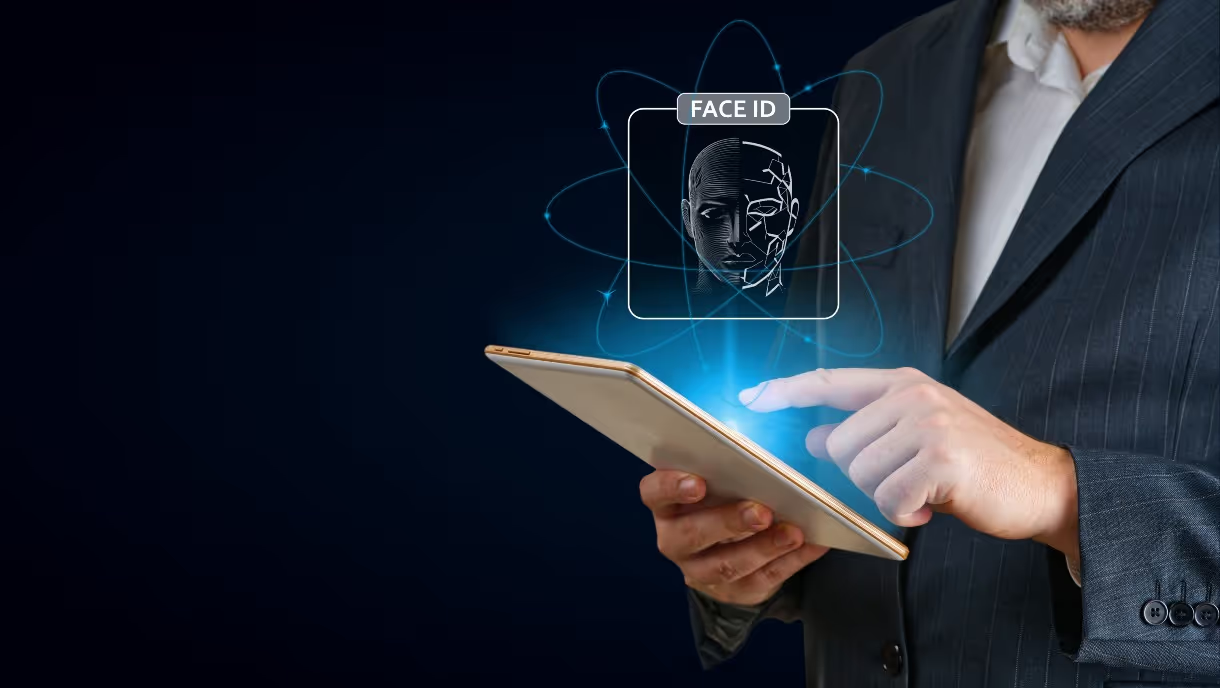
Traditional methods of authentication, such as passwords and PINs, are increasingly vulnerable to sophisticated hacking techniques. As a result, there's a growing demand for more robust security measures that can adapt to the evolving threat landscape. One such solution gaining traction is Face-Based Authentication.
Facial authentication MFA leverages the unique biological features of an individual's face to verify their identity. By combining facial recognition technology with multi-factor authentication, this approach offers a higher level of security compared to traditional methods.
Let's delve deeper into the benefits and workings of this innovative authentication method.
DID YOU KNOW:
A 2022 study revealed that 68% of smartphone users globally have used facial recognition for unlocking their devices
How Does Face-Based Authentication Work?
Enrollment
During the enrollment process, users provide their facial biometric data, which is captured and stored securely. This data includes unique facial features such as the distance between the eyes, the shape of the nose, and the contours of the face.
Authentication
When a user attempts to access a protected system or application, they are prompted to provide their facial biometric data. The system captures an image or video of the user's face and compares it to the stored biometric data. If the facial features match within an acceptable margin of error, access is granted.
Multi-Factor Authentication
Face-based authentication goes a step further by incorporating additional factors for verification. This could include something the user knows (e.g., a password or PIN) or something they have (e.g., a security token or smartphone). By combining facial recognition with these additional factors, the authentication process becomes more robust and resistant to unauthorized access.
Benefits of Face-Based Authentication
Enhanced Security
Facial authentication MFA offers a higher level of security compared to traditional authentication methods. Facial biometric data is unique to each individual and difficult to replicate, making it a reliable form of identification.
Convenience
Unlike passwords and PINs, which can be forgotten, stolen, or mistyped, facial authentication offers a seamless and user-friendly experience. Users can simply look at their device's camera to authenticate their identity, eliminating the need to remember complex passwords.
Improved User Experience
Facial authentication MFA enhances the user experience by streamlining the authentication process. This can lead to increased productivity and efficiency, particularly in organizations where employees need to access multiple systems and applications throughout the day.
Reduced Fraud and Identity Theft
By adding an extra layer of security through facial recognition, organizations can significantly reduce the risk of fraud and identity theft. Unauthorized users are less likely to gain access to sensitive information, protecting both individuals and businesses from potential harm.
Accessibility
Facial authentication also offers a hands-free login option, which is particularly useful for users who might struggle with traditional methods.
Challenges and Considerations
Privacy Concerns
Collecting and storing facial biometric data raises privacy concerns, particularly regarding how this data is used and protected. Organizations must implement robust security measures and adhere to strict privacy regulations to safeguard this sensitive information.
Accuracy and Reliability
Facial recognition technology may not always be accurate, especially in challenging lighting conditions or with obscured faces. Organizations need to invest in high-quality facial recognition systems and regularly update their algorithms to improve accuracy and reliability.
Accessibility
Facial authentication may not be suitable for all users, particularly those with certain disabilities or facial conditions that affect recognition. Organizations should provide alternative authentication methods to ensure accessibility for all users.
Security Risks
While Face-based authentication can enhance security, it's not immune to hacking attempts or spoofing attacks. Organizations must remain vigilant and continuously monitor for potential security threats, implementing additional measures such as liveness detection to prevent unauthorized access.
Conclusion
Face-based authentication represents a significant advancement in security technology, offering a potent combination of convenience, reliability, and enhanced security. By leveraging the unique biological features of an individual's face, organizations can better protect sensitive information and mitigate the risk of fraud and identity theft.
However, it's essential to approach Face-based authentication with caution, addressing privacy concerns, ensuring accessibility, and remaining vigilant against emerging security threats.
With proper implementation and ongoing refinement, Face-based authentication has the potential to become a cornerstone of modern authentication systems, empowering organizations to stay ahead of evolving cyber threats while delivering a seamless user experience. See how OLOID puts this into practice by leveraging facial authentication for worker identity.
FAQs
1. What is Face-based authentication?
Face-based authentication is a security system that combines facial recognition technology with another authentication method for increased protection. While a user's face is recognized as the first factor, an additional step like a PIN, fingerprint scan, or code is required for complete access.
2. How does Face-based authentication work?
During enrollment, the user's face is scanned and stored as a unique template. When attempting access, the system first captures a live facial image. This image is then compared against the stored template. If the face matches, the user proceeds to the second factor, such as entering a PIN or receiving a temporary code. Only after successfully completing both steps is access granted.
3. What are the benefits of Face-based authentication?
Face-based authentication offers several advantages:
- Increased Security: Adding face recognition makes unauthorized access through stolen passwords or compromised accounts significantly harder.
- Convenience: Facial recognition can be faster and more user-friendly than manually entering passwords or codes.
- Reduced Reliance on Physical Tokens: F-MFA eliminates the need to carry keycards or security tokens, which can be lost or stolen.
4. How does face authentication technology work in a face recognition security system?
Face authentication technology relies on face detection and recognition. The system first captures an image or video using a face recognition device. Advanced algorithms then perform biometric face recognition, analyzing the unique characteristics of your face (like the distance between your eyes or the shape of your jawline). This extracted facial data is then compared against a stored template (enrolled during setup). If the features match within a certain threshold, the face recognition access control system grants access.
5. What are the benefits of using a face recognition attendance system compared to traditional methods like ID cards?
Face recognition attendance systems offer several advantages:
- Convenience: Employees simply need to look at the device for their attendance to be registered, eliminating the need to swipe cards or enter codes.
- Reduced Risk of Buddy Punching: The system relies on unique biological features, making it difficult for someone to clock in for another employee.
- Improved Accuracy: Biometric face recognition minimizes the chances of errors compared to manual attendance recording.
6. Are there any security concerns associated with face authentication technology?
Yes, there are potential security risks:
- Data Breaches: If facial recognition data is compromised, it could be misused for identity theft or unauthorized access.
- Privacy Concerns: Storing personal biometric information raises privacy issues, and robust data security measures are essential.
- Accuracy Limitations: Facial recognition technology can be susceptible to errors under certain lighting conditions or with the use of disguises.


Get the latest updates! Subscribe now!

